


Decorative Brass Bell
A decorative brass bell brings functional metalwork into domestic rooms, offering clear tone and period character from dining tables to hallways.
Decorative Brass Bell
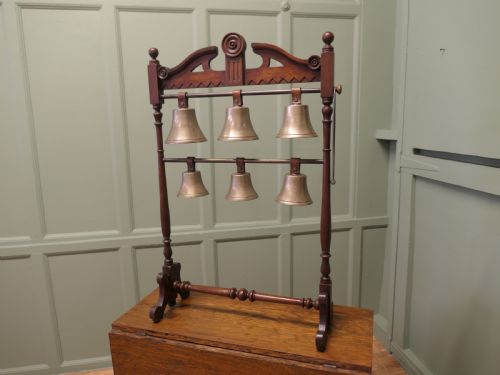
A decorative brass bell spans a range of household objects designed for signalling, timekeeping and daily convenience. When you search for decorative brass bell, you encounter dinner gongs, door hardware, table chimes and hand bells dating from the Georgian period through to the 1920s.
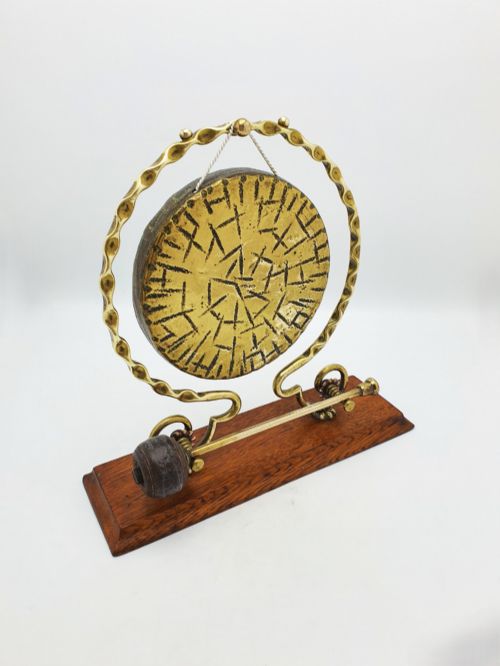
The most common forms on this page are table gongs and dinner gongs mounted on timber bases, alongside wall chimes and functional door hardware. These pieces reflect Victorian, Edwardian and Art Nouveau tastes, utilising metal alongside oak, walnut and cord.
Origins vary from English workshops to continental European makers, encompassing French Directoire, Belle Epoque and Anglo-Indian designs. Buyers select these items for their acoustic quality and visual presence in period interiors.
Distinctions in quality and execution
Quality in a decorative brass bell rests on the clarity of the cast metal and the resonance of the strike. Heavier gauges of brass and well-balanced strikers produce a sustained tone that distinguishes superior examples from simpler utilitarian items.
The integration of secondary materials defines the upper tier of the range. Finely grained oak or walnut bases, intricate Art Nouveau castings, and complete matched strikers demonstrate the care taken by the original maker.
Materials recorded across the archive include brass, oak, glass, silver plate, walnut, cord, bamboo, and fabric.
Japy Freres·E Portelance
The Decorative Brass Bell Glossary
- Dinner Gong
- A suspended metal plate or bowl struck with a mallet to announce meals. These are frequently mounted on timber frames.
- Table Chime
- A small musical or striking device placed on a surface for signalling. They often feature multiple tuned elements.
- Carriage Clock
- A small spring-driven timepiece designed for travel during the nineteenth century. They usually feature bevelled glass panels in brass cases.
- Bell Ringer
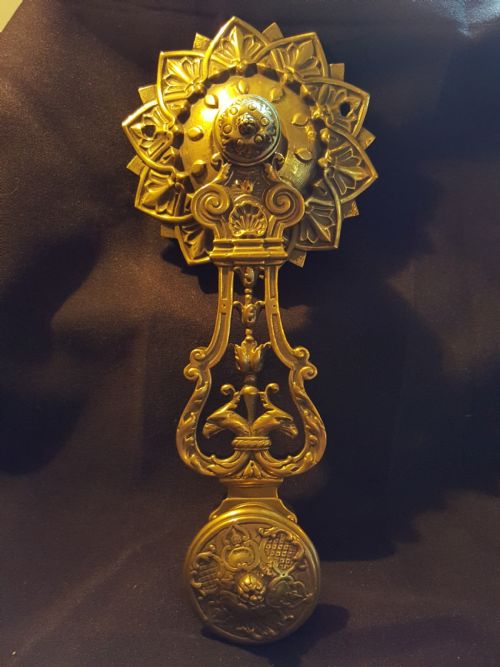
- A mechanical device mounted on a door or wall to operate a bell via a pull or lever. These pieces combine hardware function with decorative cast metalwork.
Decorative Brass Bell: Frequently Asked Questions
How do I clean a brass bell?
Dust the surface gently with a soft cloth to maintain the aged patina. Avoid harsh chemical cleaners that strip the historic finish.
For stubborn residue, use a mild soapy solution on a damp cloth, drying the metal immediately afterwards.
Were dinner gongs used daily?
Victorian and Edwardian households utilised dinner gongs to summon residents and guests to meals. They sat in hallways or dining rooms for regular daily service.
Many examples retain their original strikers, showing clear signs of active domestic use.
What is an Art Nouveau bell?
Art Nouveau examples display characteristic organic motifs, flowing plant lines and asymmetric forms. These pieces date from around 1900 and embrace decorative curves.
Cast iron and brass were frequently shaped into sinuous floral patterns during this period.
How do I date a brass gong?
Examine the mounting timber, fixing screws and casting style to determine the era. Oak bases with turned supports often point to the Victorian period or the 1920s.
Stylistic cues like Art Nouveau framing or French Belle Epoque finishing help narrow down the decade of production.