





Decorative Bookends
These decorative bookends span periods from the Victorian era to Art Deco, offering solid materials and sculptural forms to hold your volumes.
Decorative Bookends
Decorative bookends encompass functional shelf supports fashioned as animals, figures, and architectural motifs. When searching for decorative bookends, buyers encounter matched pairs and extending book slides designed to organise shelves.
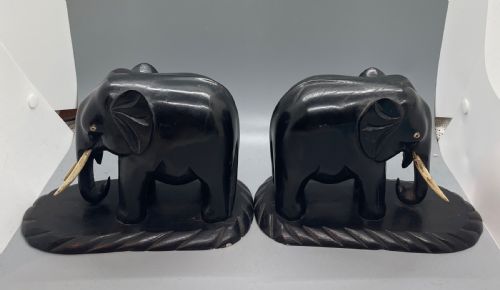
The selections on this page range from Victorian and Edwardian examples to Art Deco pieces from nineteen thirty. You will find sculptural subjects including elephants, owls, sea lions, horses, squirrels, archers, foo dogs, and tall ships.
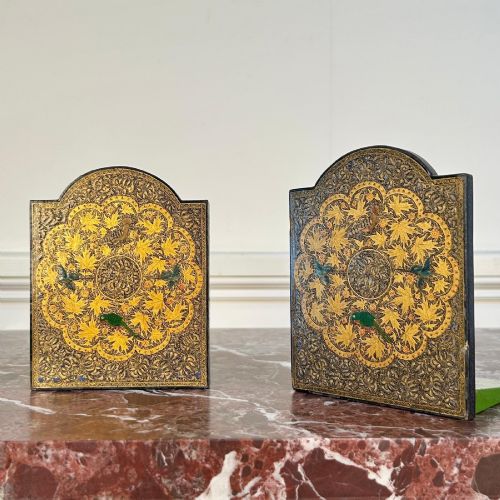
Origins span Britain, France, Italy, India, and Kashmir, reflecting diverse cultural influences and international trade. Forms vary from heavy cast metals to intricately carved hardwoods and ceramic figures.
Materials and Techniques
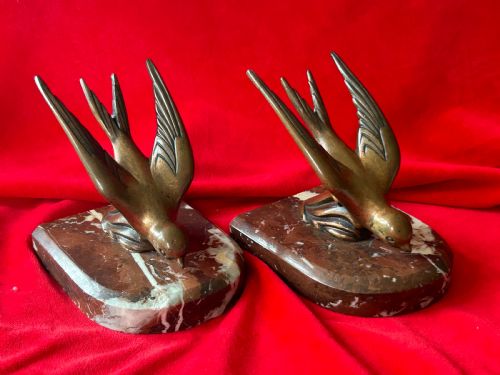
Maker construction relies on casting metals such as bronze, spelter, brass, and iron, often mounted onto heavy bases of marble or olive wood to provide necessary weight. Artisans also utilised carving techniques on dense natural materials like ebony, beech, and bone.
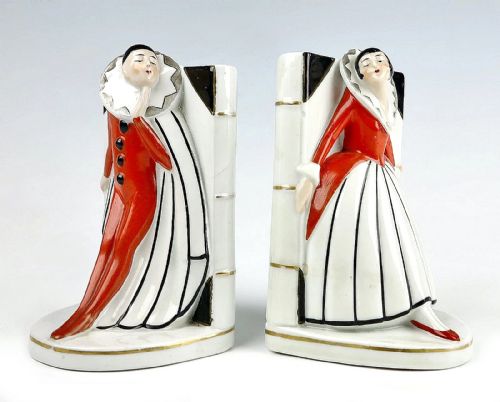
Surface decoration incorporates enamel work, penwork details, and gilding to enhance the visual appeal of the subjects. Ceramic production appears alongside carved wood and metal casting, demonstrating a wide breadth of studio and foundry practices.
Decorative Bookends Retail Price Guide 2026
Typical asking prices for decorative bookends among the pieces listed under this phrase on Sellingantiques today, from the lower quarter to the upper quarter. They describe what is for sale here now, not the wider market.
Pierrot and Pierrette share shelf-watching duties with brass tall ships, stone owls, and carved wooden elephants.
Judging Quality
Quality in these pieces rests upon the crispness of the casting or the depth of the carving. Superior items display refined anatomical details in figures like bronze sea lions or carved wooden eagles, rather than soft or repetitive moulding.
The choice of base materials also distinguishes better examples, particularly where heavy marble or dense hardwood provides structural stability alongside aesthetic balance. Original patination and intact surface finishes preserve the integrity of the design.
C Omin·Compton Potters Art Guild·Tiffany & Co
The Decorative Bookends Glossary
- Spelter
- A zinc alloy commonly used as a cost-effective substitute for bronze in decorative figures. It is frequently painted or bronzed to simulate more expensive metals.
- Book Slide
- An extending desk or shelf accessory with sliding ends designed to hold a varying number of volumes upright. These often match the decorative vocabulary of paired bookends.
- Foo Dog
- A traditional guardian lion motif originating in Chinese art, frequently rendered in pairs for decorative objects. They appear in cast iron and carved wood across nineteenth-century and later pieces.
- Chinoiserie
- A European artistic style reflecting Chinese motifs and techniques, applied to furniture and decorative objects. This style appears on carved wooden pieces with penwork decoration.
Decorative Bookends: Frequently Asked Questions
How do I date a pair?
Dating relies on stylistic markers such as the geometric lines of Art Deco pieces from nineteen thirty versus the ornate detailing of Victorian and nineteenth-century examples. Material choices and manufacturing techniques also provide clear chronological indicators.
Examination of the base construction and any foundry marks helps narrow the period of origin. Comparing the subject matter to established artistic movements confirms the likely decade of manufacture.
Are these heavy enough for books?
Most examples utilise dense materials like marble bases, cast bronze, or heavy hardwoods to provide the weight necessary for supporting standard volumes. Figures cast in spelter or iron are similarly weighted for functional shelf use.
Lighter wooden or ceramic versions rely on a wide footprint to maintain stability against heavy texts. Checking the base material ensures the pair can manage your specific book collection.
How should I clean them?
Maintenance requires gentle dusting with a soft dry cloth to protect delicate surfaces like enamel, penwork, or gilding. Avoid using harsh chemical polishes that can strip original patination from metals or damage wooden finishes.
Ebony and other hardwoods benefit from occasional light conditioning suitable for antique timber. Metal components should remain unwashed unless supervised by a specialist conservator.