




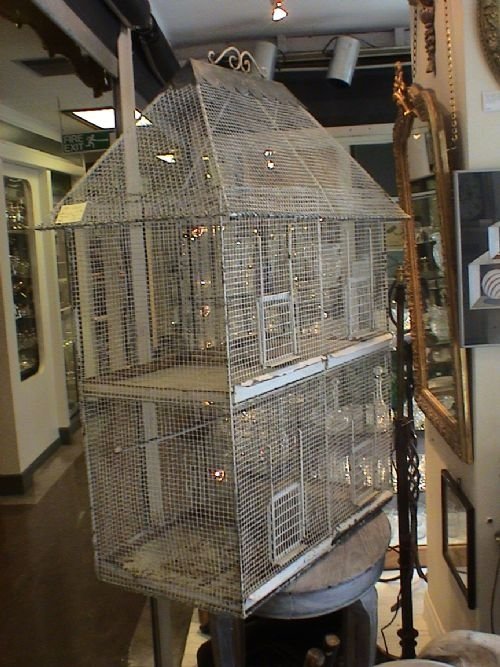
Decorative Aviary
A decorative aviary brings architectural form and structural wirework indoors, offering a focal point that transforms a room.
Decorative Aviary
When you search for a decorative aviary, you find bird cages and birdcages built for display rather than active keeping, spanning the nineteenth and early twentieth centuries. These objects range from modest table forms to large structures on stands designed for country houses and chateaus.
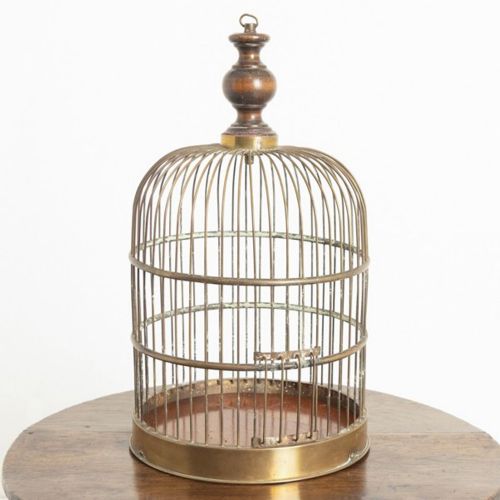
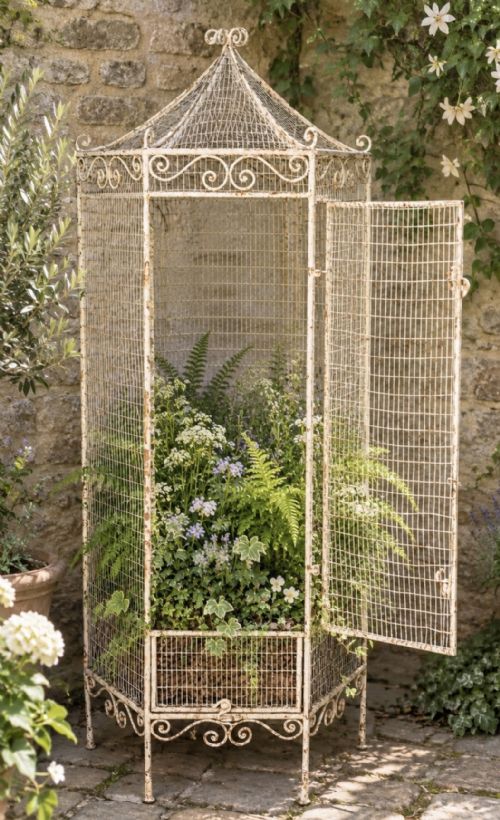
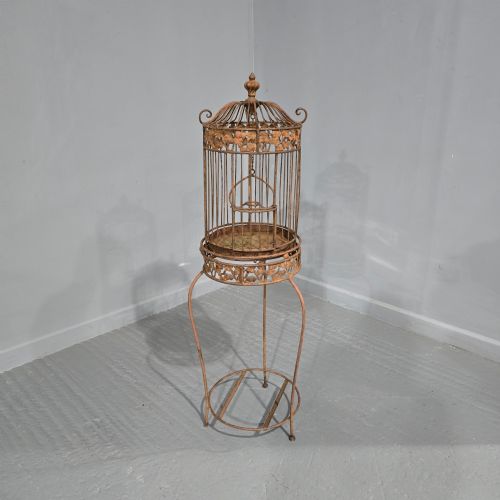
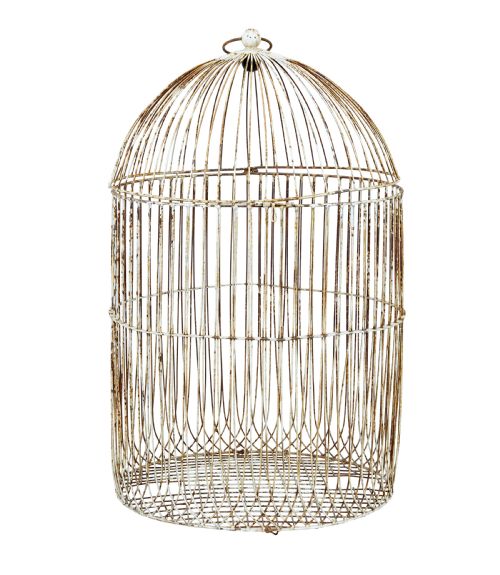
The versions you meet most frequently on this page are constructed from brass, wire mesh, and iron, reflecting Victorian and Edwardian tastes. French provincial and rustic country styles also appear, alongside substantial round parrot cages and hanging designs.
Makers shaped these cages to serve as ornamental focal points within domestic interiors. They combine functional wirework with decorative metal or wooden frames that capture the period aesthetic of English and French country houses.
How they were made
Craftsmen built these pieces using durable metals such as brass, copper, cast iron, and wrought iron alongside wire mesh and wood. Frames were often formed from heavy cast iron or soldered brass, while wire mesh created the enclosing walls.
Surface treatments included original paint and polished metal finishes that have aged over decades. Structural elements were joined using period metalworking techniques, supporting large round and rectangular forms that required stable internal framing.
Materials across these listings include brass, wrought iron, wood, wire mesh, paint, copper, iron, and cast iron, spanning the nineteenth and early twentieth centuries.
What varies in quality
Quality rests in the integrity of the metalwork, the weight of the materials used, and the complexity of the design. Substantial brass frames and cast iron stands represent a higher standard of construction than lighter, simpler wire frames.
The balance of proportions and the refinement of decorative details separate standard utilitarian cages from grander architectural pieces made for chateaus and country houses. Original patination on brass and copper further distinguishes superior examples.
The Decorative Aviary Glossary
- Wire Mesh
- A network of interwoven or welded wire forming the enclosing walls of the cage. It allowed ventilation while keeping birds secure inside.
- Cast Iron
- Iron melted and poured into a mould to create rigid structural supports and ornate stands. This heavy material provided stability for large cage designs.
- Patina
- The surface sheen and colour acquired by metals such as brass and copper through age and handling. It indicates genuine period use.
- Chateau
- A large French country house or estate home. Pieces associated with this origin often display robust proportions and architectural styling.
Decorative Aviary: Frequently Asked Questions
How were these cages originally used?
These cages served primarily as ornamental enclosures for pet birds within affluent homes during the nineteenth and early twentieth centuries. They functioned as drawing room decorations that highlighted the owner's taste.
Larger versions on stands or meant for breeding were housed in specific rooms or garden spaces. Over time, their role shifted entirely to decorative interior objects.
How do I style a decorative aviary at home?
Place a substantial brass or iron cage on a sturdy table, sideboard, or directly on the floor if it includes an original stand. Large round or parrot cages work well as standalone sculptural elements in living spaces.
Smaller hanging designs can be suspended to draw the eye upward in high-ceilinged rooms. They pair naturally with botanical displays and vintage furnishings.
How can I tell Victorian cages apart from later pieces?
Victorian examples often utilise heavy cast iron components, distinct patination, and ornate detailing suited to mid-to-late nineteenth-century interiors. They frequently feature robust stands and darker, heavier metals.
Later Edwardian and early twentieth-century pieces tend to feature brighter brass construction and lighter wire frames. Art Nouveau examples introduce fluid, organic lines into the metalwork.
What materials are most common in these pieces?
Brass and wire mesh form the basis of many surviving examples, often paired with copper or iron elements. Wooden frameworks also appear in specific breeding and country house designs.
Cast iron is reserved for heavy structural bases and stands that support large enclosures. Painted surfaces and zinc elements are characteristic of specific regional styles.