

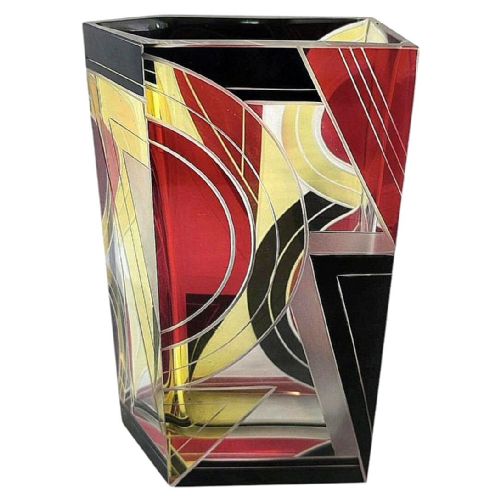


Decorated Glass Vase
These decorated glass vase examples span Victorian to Art Deco periods, bringing vibrant colour and hand-painted artistry to any interior.
Decorated Glass Vase
A decorated glass vase is a vessel designed to hold stems or stand alone as an ornamental piece, shaped through blowing and moulding. These objects take forms such as tall geometric cylinders, oviform bodies, and mantle lustres across the Victorian and Art Deco eras.
The versions most commonly met on this page span the nineteenth and twentieth centuries, featuring British, French, and Bohemian origins. Makers applied enamel, gold leaf, and paint to glass surfaces to create intricate floral, landscape, and geometric scenes.
Victorian examples lean toward opaque glass and elaborate gilding, while later twentieth-century pieces embrace the streamlined geometries of Art Deco and Art Nouveau styling. Buyers select these vessels to add period character and colour to a room.
How they were made
Makers shaped vessels using hand-blown and mould-blown techniques, working with transparent, opaque, and cameo glass. Artisans then applied surface decoration using enamels, gold leaf, and hand-painted pigments.
Techniques such as engraving and gilding added textural depth to the glass body, while decalcomania methods introduced printed imagery. Firing fixed the enamel colours permanently to the outer surface of the vessel.
Decorated Glass Vase Retail Price Guide 2026
Typical asking prices for decorated glass vase among the pieces listed under this phrase on Sellingantiques today, from the lower quarter to the upper quarter. They describe what is for sale here now, not the wider market.
Some nineteenth-century makers decorated glass surfaces with fox hunting scenes to satisfy sporting tastes.
What varies in quality
Quality rests in the crispness of the hand-painted enamel work and the precision of the underlying glass form. Finer vessels show confident brushwork in scenes like landscapes or botanical motifs, whereas simpler pieces rely on basic geometric bands.
The weight of the glass and the richness of the gilding separate standard production from superior workshop output. Intricate engraving and multi-layered cameo carving require advanced skill that distinguishes finer examples.
Legras·Daum
The Decorated Glass Vase Glossary
- Cameo Glass
- Glass vessels created with multiple layers of different coloured glass, carved down to produce a raised design. This technique requires considerable skill from the artisan.
- Enamel
- Opaque vitreous composition applied to the glass surface and fired to create colourful painted designs. It provides a durable and glossy finish.
- Mantle Lustres
- Decorative glass vases fitted with hanging glass prisms, traditionally placed on a fireplace mantle. They reflect light from surrounding lamps and candles.
- Decalcomania
- A technique where printed designs are transferred onto the glass surface from specially prepared paper. It was popular in nineteenth-century decorative arts.
- Peachblow
- A nineteenth-century art glass type known for its shaded colour effect, typically transitioning from pink to white or yellow. This finish imitates Chinese porcelain glazes.
Decorated Glass Vase: Frequently Asked Questions
How do I clean my decorated glass vase?
Dust the surface gently with a soft, dry cloth to protect delicate enamel and gold leaf decorations. Avoid submerging pieces with paper or painted transfers in water.
For sturdier glass vessels, use lukewarm water and mild soap, drying immediately with a lint-free towel.
Can I use these vases for fresh flowers?
Many of these vessels were designed primarily as decorative objects rather than functional water holders. Using them dry protects the interior surface from mineral deposits and moisture damage.
If you do place stems inside, use a small inner container to keep water away from antique glass walls.
How do I distinguish Victorian from Art Deco pieces?
Victorian pieces often feature opaque glass, elaborate hand-painted florals, and heavy gilding. They reflect a more ornate aesthetic.
Art Deco items display clean geometric lines, stylised motifs, and simplified forms dating from the early twentieth century.
What does Bohemian origin mean on these pieces?
Bohemian glass originates from the historical region of Bohemia, known for skilled glassmaking traditions. These items frequently showcase vibrant colours and detailed enamel painting.
Such pieces represent distinctive regional styles popular across European markets during the nineteenth and twentieth centuries.