

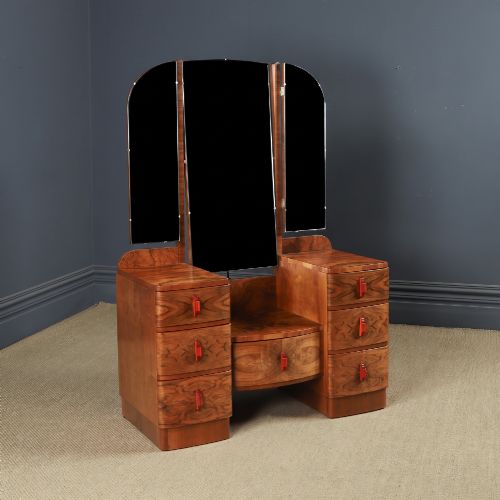

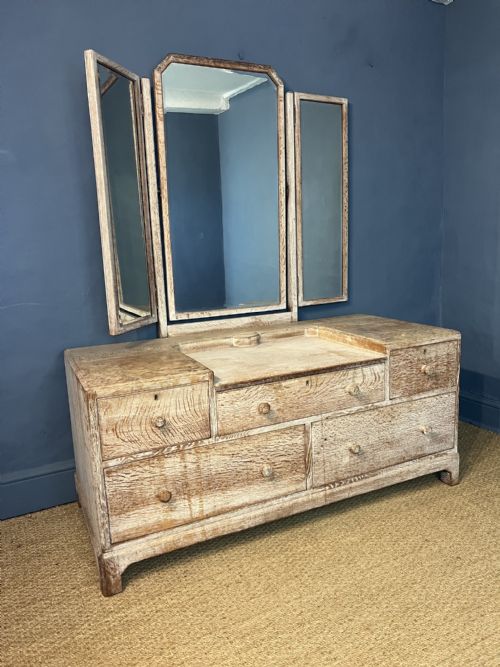
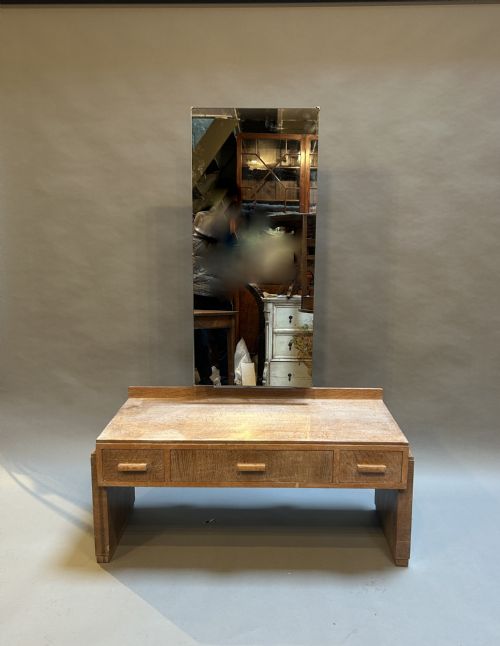
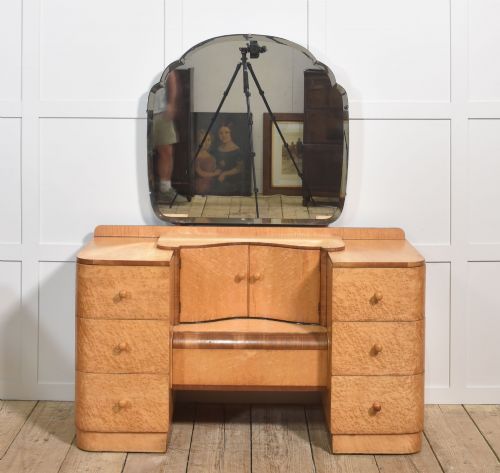


Deco Vanity Unit
A deco vanity unit brings unmistakable geometric grace to a bedroom, offering a striking focal point with built-in mirrors and ample storage.
Deco Vanity Unit
A deco vanity unit primarily takes the form of a dressing table, dressing chest, or washstand designed during the interwar decades. These pieces serve practical personal grooming functions while displaying characteristic symmetrical lines and architectural silhouettes.
The versions most commonly met on this page date from the 1920 and 1930 periods, encompassing both English and continental workshops. Buyers will encounter pedestal designs, mirrored dressing chests, and occasional washstands originating from this stylistic era.
Makers such as Heals, Harry and Lou Epstein, and Betty Joel shaped the output of these years, producing items in woods like burr walnut, oak, and maple. Swedish Grace and French regional influences also appear among the broader Art Deco selections.
Construction and materials
Makers utilised rich veneers like burr walnut and figured walnut to create striking grain patterns across large flat surfaces and curved drawer fronts. Solid oak and limed oak provide structural integrity while offering lighter, more textured finishes.
Glass and mirror glass form crucial components of these pieces, integrated into large tilting or fixed mirror plates that define the upper section. Metal and chromium elements appear on hardware and specific bathroom mirrors, introducing industrial sheen to the woodwork.
Deco Vanity Unit Retail Price Guide 2026
Typical asking prices for deco vanity unit among the pieces listed under this phrase on Sellingantiques today, from the lower quarter to the upper quarter. They describe what is for sale here now, not the wider market.
Listings feature pieces predominantly from 1930 and 1920, utilising glass, oak, metal, burr walnut, walnut, Bakelite, limed oak, and mirror glass.
Distinctions in quality
Quality in a deco vanity unit rests on the selection and matching of wood veneers, particularly on prominent surfaces such as drawer fronts and top panels. Superior pieces display continuous grain patterns that flow symmetrically across multiple drawers.
The integration of mirrors and the refinement of hardware, including Bakelite fittings and metal mounts, separate standard production items from pieces produced by notable makers. Substantial construction in timbers like burr walnut or maple indicates higher workshop standards.
Heals·Harry and Lou Epstein·Betty Joel
The Deco Vanity Unit Glossary
- Burr walnut
- A highly figured wood grain obtained from walnut tree growths, prized for its swirling patterns. It forms a luxurious decorative surface on top-tier furniture.
- Limed oak
- An oak treatment that leaves a white or pale pigment in the grain pores. This technique creates a lighter, bleached finish popular in interwar modern design.
- Pedestal dressing table
- A dressing table featuring supporting columns or banks of drawers on one or both sides. This layout creates a central kneehole space for a stool.
- Bakelite
- An early synthetic plastic used for handles, knobs, and electrical fittings. Its dark, durable composition is characteristic of period manufacturing details.
- Swedish Grace
- A refined classicist style popular in Sweden during the 1920s. It bridges traditional neoclassical restraint with early modern simplification.
Deco Vanity Unit: Frequently Asked Questions
What defines a deco vanity unit?
A deco vanity unit is a piece of bedroom or bathroom furniture from the 1920 or 1930 periods, characterised by geometric forms and integrated mirrors.
These pieces typically function as dressing tables or washstands, combining practical storage with distinct modernist styling.
How do I identify a piece by Heals?
Heals pieces from this era often utilise limed oak or straightforward geometric oak construction with clean architectural lines.
Look for functional dressing chests and wardrobes that prioritise honest materials and restrained proportions over heavy ornamentation.
What woods were used in these units?
Maker workshops predominantly worked with walnut, burr walnut, oak, limed oak, and maple.
Figured veneers were frequently applied to large surfaces to create decorative grain patterns, while solid timbers formed the structural frames.
How do I care for burr walnut veneer?
Burr walnut requires gentle cleaning with a soft, dry cloth and protection from direct sunlight and excessive moisture.
A light application of quality beeswax helps maintain the lustre of the polished wood surface without building up residue.