



Deco Lady Lamp
A deco lady lamp brings sculptural form and period illumination together, capturing the definitive aesthetic of the interwar years.
Deco Lady Lamp
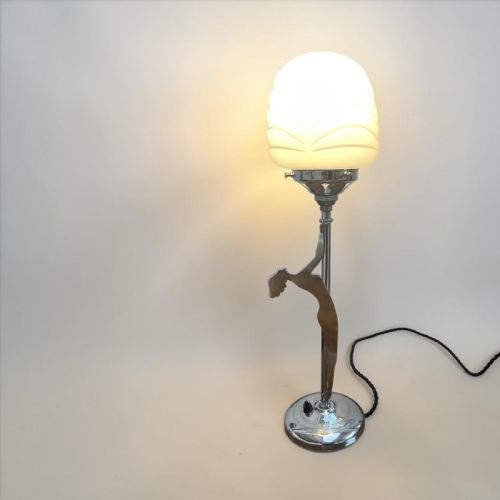
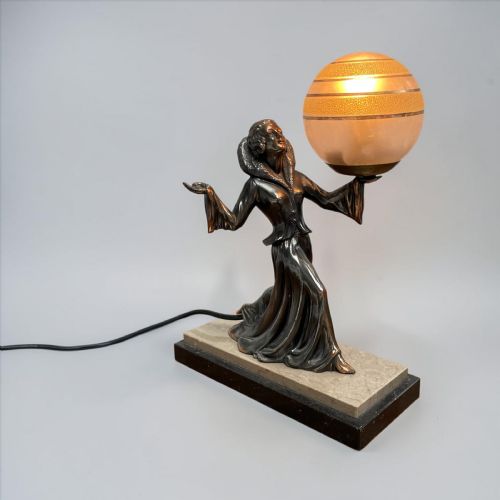
A deco lady lamp is a figural table or desk light from the 1930 and 1940 periods, typically taking the form of a female figure paired with glass or metal shades. These pieces function as both sculptural art and domestic lighting, capturing the characteristic silhouettes of the Art Deco style.
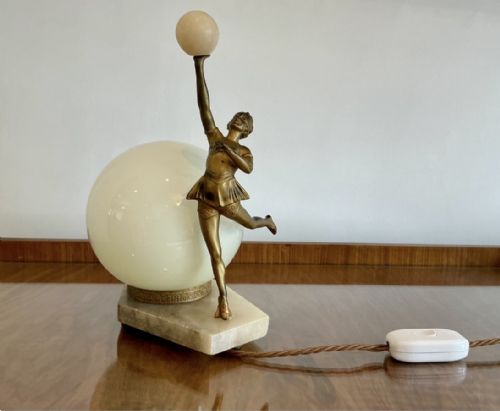
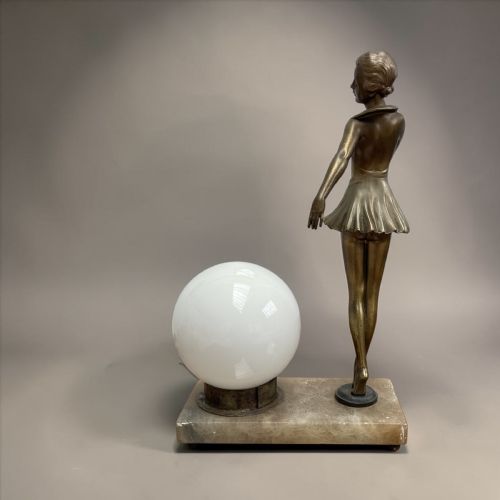
The versions most commonly met on this page are standing or nude female figures cast in spelter, bronze, or chrome, often positioned on marble or onyx bases. Some configurations feature single figures, while twin or double lady lamps provide extended illumination through paired shades.
How they were made
Makers utilised metal casting techniques to form the figural bodies, employing spelter, bronze, and silver plate to create durable statues. These metallic structures were frequently finished with patinated metal or polished chrome surfaces.
The illumination components rely heavily on glass, incorporating frosted glass or plain glass elements to diffuse light gently. Bases were constructed from solid materials such as marble and alabaster to anchor the substantial weight of the figural sculptures.
Deco Lady Lamp Retail Price Guide 2026
Typical asking prices for deco lady lamp among the pieces listed under this phrase on Sellingantiques today, from the lower quarter to the upper quarter. They describe what is for sale here now, not the wider market.
Current inventory spans the 1930 and 1940 periods, uniting glass, marble, patinated metal, frosted glass, chrome, spelter, bronze, and alabaster within Art Deco table lamps.
What varies in quality
Material selection and combination also define the tier of the piece, particularly the density and patterning of the marble or onyx bases and the weight of the bronze or chrome structure. The integration between the figural sculpture and the glass or lighting elements reveals the original ambition of the design.
The Deco Lady Lamp Glossary
- Spelter
- A zinc alloy commonly used as a cost-effective alternative to bronze for figural castings. It accepts patination and metallic finishes readily.
- Alabaster
- A fine-grained, translucent stone utilised for bases and sculptural elements. It allows subtle light diffusion when placed near illumination sources.
- Art Deco
- A design style dominant in the 1930 period characterised by stylised geometric forms, streamlined silhouettes, and modern industrial materials.
- Patinated Metal
- Metal treated with chemicals or heat to alter its surface colour and texture. This finish protects the underlying material while adding depth to figural details.
Deco Lady Lamp: Frequently Asked Questions
What materials make up a deco lady lamp?
These lamps combine cast metals such as spelter, bronze, and chrome with glass shades. Bases are frequently fashioned from marble, onyx, or alabaster to provide stability.
The integration of these diverse elements creates the characteristic weight and visual contrast defining the style of the 1930 period.
How do single and twin lady lamps differ?
Single versions feature one female figure supporting or accompanying the light source. Twin or double examples incorporate paired figures or dual illumination points for larger surface areas.
Both configurations maintain the central figural focus while varying in physical scale and light output.
Where were these figural lamps placed?
Owners typically positioned them on desks, side tables, or prominent surfaces within reception rooms. Their dual role as sculptures and functional lights suited domestic display.
Placement depended largely on the scale of the base and the reach of the illumination.
How can I identify the 1930 period style?
Characteristic markers include streamlined female forms, geometric bases, and the use of modern metals like chrome alongside frosted glass. These details reflect the prevailing Art Deco aesthetic.
Construction methods and material choices align closely with manufacturing standards from the 1930 and 1940 eras.