






Deco Globe Lamp
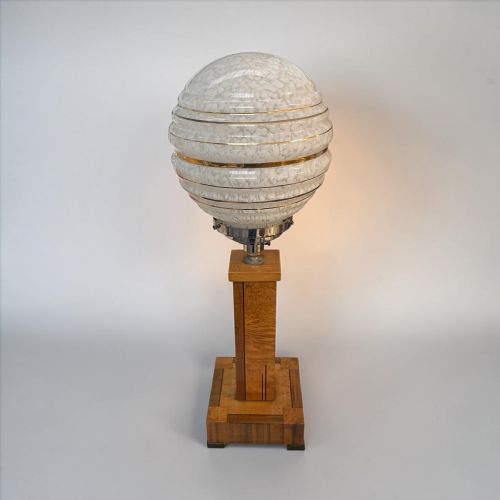
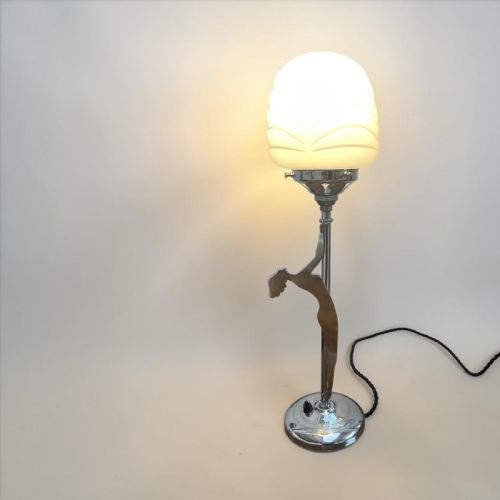
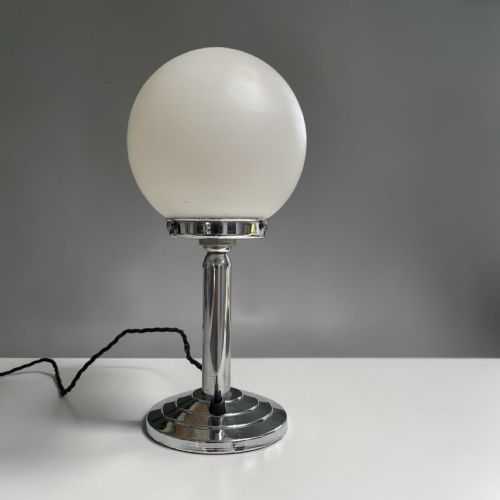
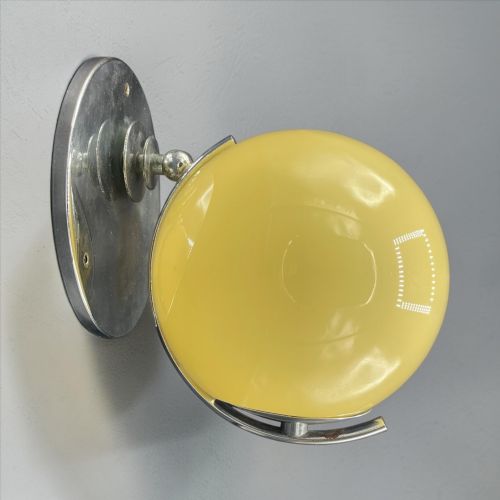
These deco globe lamp examples combine period metals and glass to bring sculptural illumination into a room.
Deco Globe Lamp
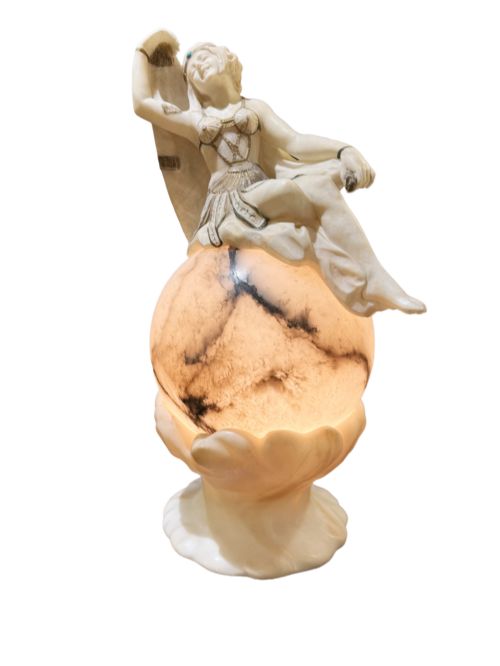
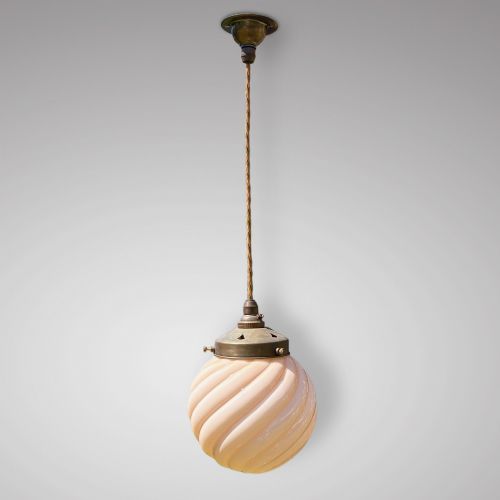
A deco globe lamp brings together the geometric lines and figural subjects characteristic of the interwar period, spanning table lamps, torcheres, and hanging pendants. When searching for a deco globe lamp, buyers encounter pieces incorporating spherical shades, glass balls, or figures balancing upon or holding a sphere. The selection ranges from compact desk lights to substantial ceiling fixtures, originating predominantly from French and English workshops.
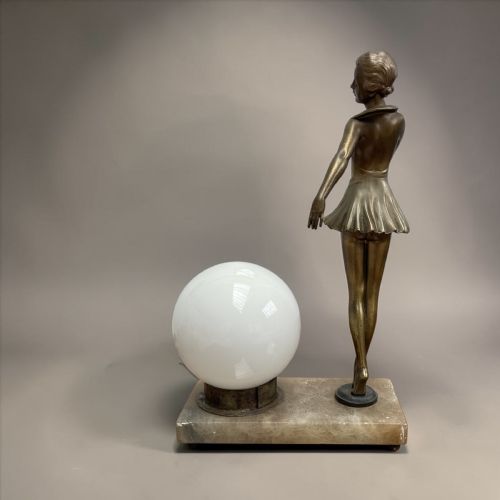
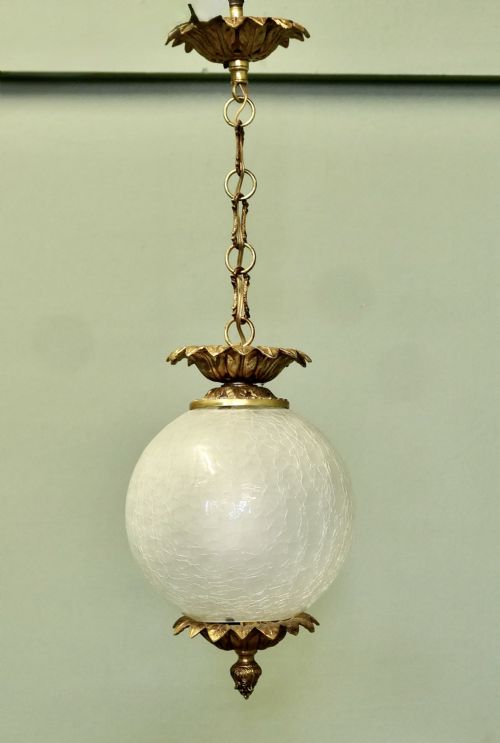
Table lamps frequently pair metal figures with glass globes, while pendant variations utilise opaline or frosted shades suspended from brass or bronze mountings. Materials such as chrome, spelter, marble, and alabaster form the structural bases and bodies of these lights. The designs reflect the broader stylistic shifts of the 1920s, 1930s, and 1940s, moving from classical figural compositions toward streamlined modernist forms.
Materials and Construction
The construction relies heavily on cast metals such as spelter, bronze, and brass, often finished with silver plating or chrome layers. Bases incorporate heavy stones including marble, onyx, granite, and alabaster to anchor the substantial weight of the figural standards and glass elements.
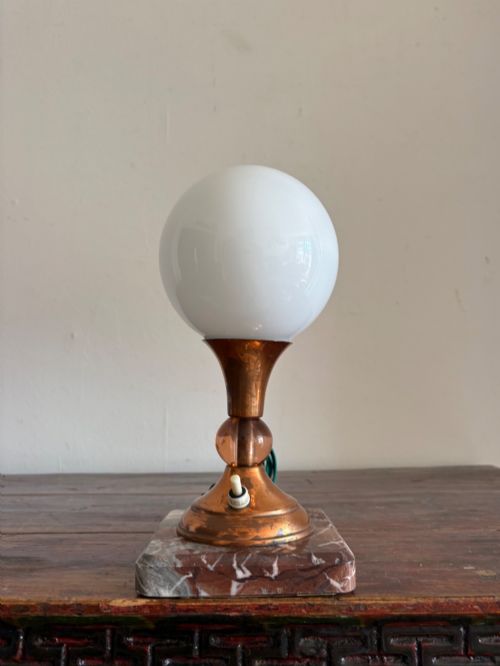
Glass components take the form of opaline, frosted, or etched crystal globes, sometimes paired with early synthetic materials like Bakelite and Catalin phenolic. Metalworking techniques combined die-cast figures with spun metal shades and turned stone bases to achieve the characteristic Machine Age aesthetic.
Deco Globe Lamp Retail Price Guide 2026
Typical asking prices for deco globe lamp among the pieces listed under this phrase on Sellingantiques today, from the lower quarter to the upper quarter. They describe what is for sale here now, not the wider market.
Several ladies balance steadfastly on spheres, proving that interwar interior design had a formidable sense of balance.
Assessing Quality and Execution
The finish applied to the metalwork, whether original silver plate, bronze patina, or polished chrome, dictates the visual coherence of the piece. Superior glass elements show even distribution of opalescence, clean etching, and robust thickness without bubbles or distortions.
Émile-Jacques Ruhlmann
The Deco Globe Lamp Glossary
- Spelter
- A zinc alloy commonly used as a base metal for cast figures and decorative objects during the period. It was frequently painted or electroplated to imitate bronze.
- Opaline Glass
- A milky, semi-translucent glass that diffuses light softly, widely utilised for globes and shades in domestic lighting.
- Torchiere
- A tall floor lamp designed to direct illumination upward toward the ceiling, creating ambient room light.
- Alabaster
- A fine-grained, translucent stone carved into sculptural bases and shades, valued for its natural veining and warm glow when lit.
- Catalin
- A cast phenolic formaldehyde resin developed in the 1920s that offered vibrant, transparent colours for decorative fittings.
Deco Globe Lamp: Frequently Asked Questions
What is a deco globe lamp?
A deco globe lamp is a lighting fixture from the interwar period that incorporates spherical glass elements, often paired with figural metal castings or geometric stands.
These pieces function as both functional illumination and sculptural ornaments for tabletops, desks, and ceilings.
How do I identify a period piece?
Authentication relies on examining the construction materials, such as heavy marble bases, genuine spelter castings, and period-specific glass shades.
Stylistic cues like Machine Age motifs, figural athletes, and characteristic switch mechanisms help distinguish original pieces from modern reproductions.
Where were these lamps placed?
Table lamps and desk lights were designed for studies, living rooms, and hallways, while torchiere floor lamps provided ambient light in larger spaces.
Pendant versions were hung centrally in rooms or hallways to diffuse light through opaline or frosted spheres.
What metals were used?
Makers utilised a range of metals including brass, bronze, and spelter for structural figures and mountings, often finishing them with chrome or silver plate.
These metallic finishes were chosen to reflect light and complement the smooth surfaces of the glass globes and stone bases.