

Deco Desk Clock
A deco desk clock brings geometric symmetry and modernist flair to a workspace, combining period timekeeping with striking industrial materials.
Deco Desk Clock
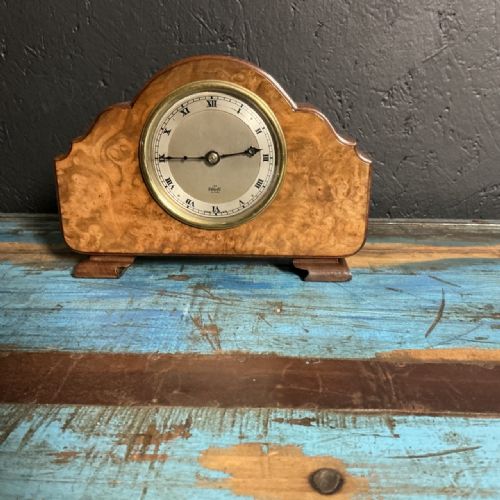
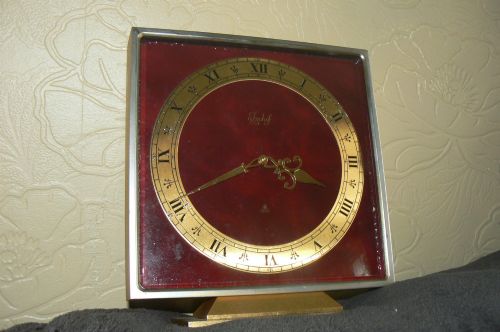
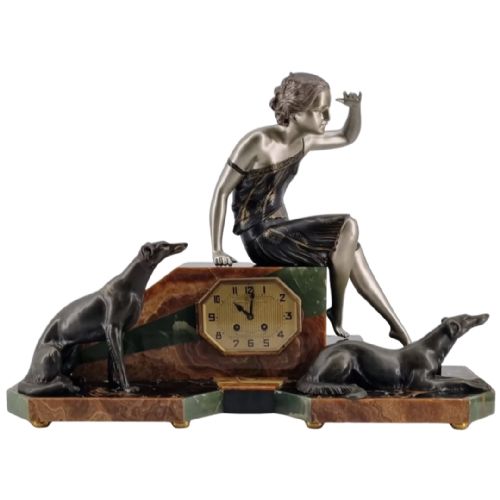
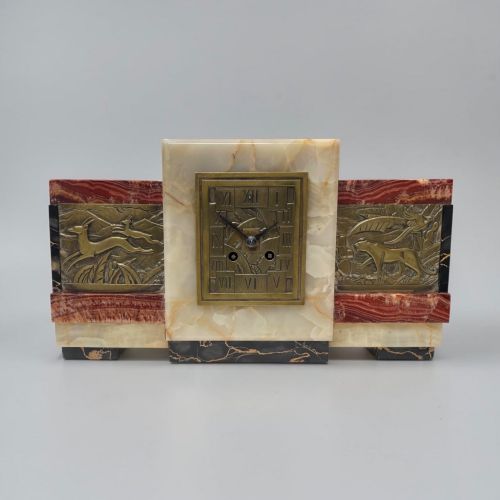
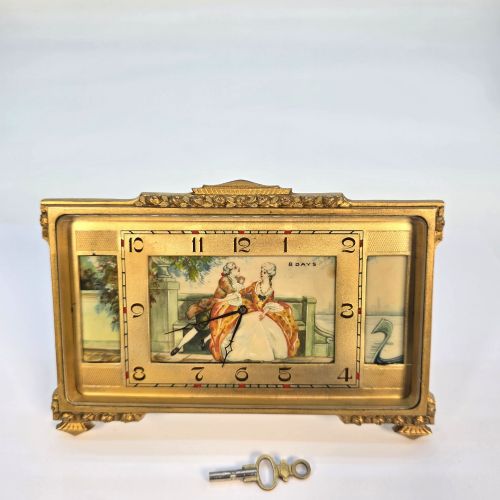
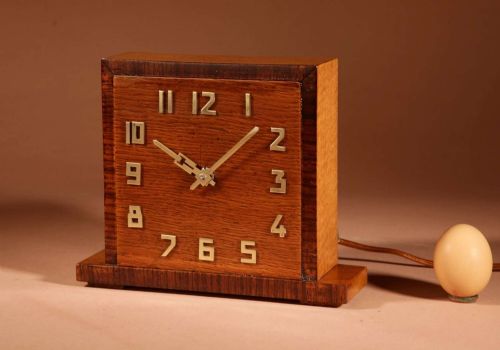
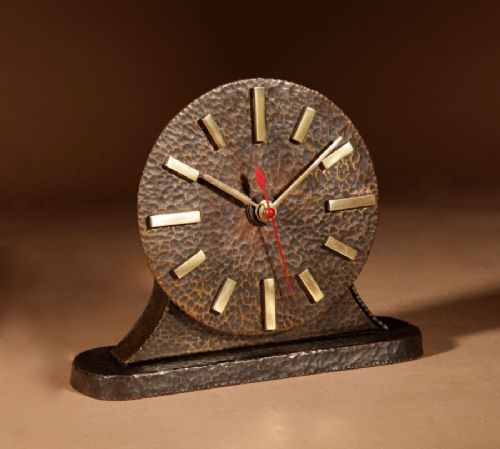
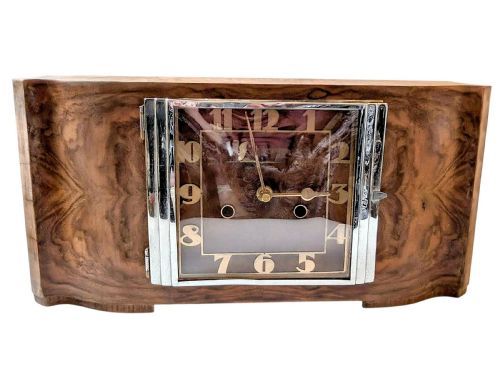
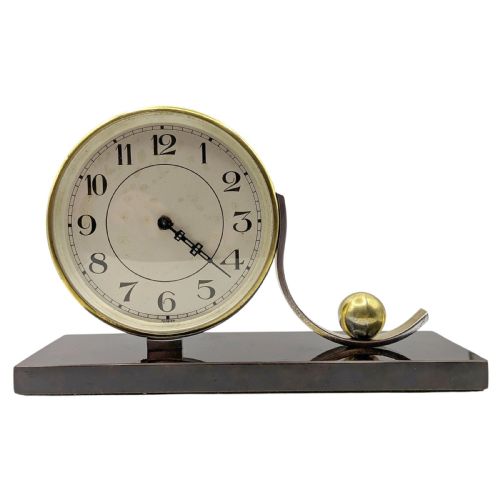
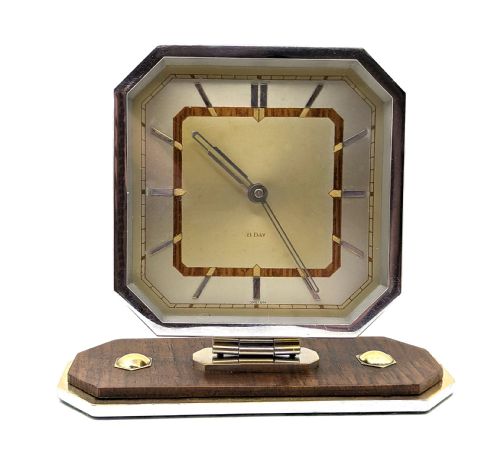
A deco desk clock is a compact timekeeper designed for a table, desk or mantel, originating largely from the 1920s, 1930s and 1940s. The selection includes French and English travel clocks, strut clocks with easel backs, and larger mantel or table variations.
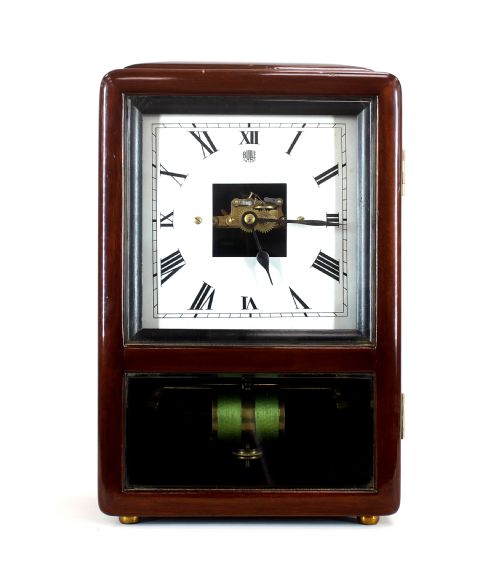
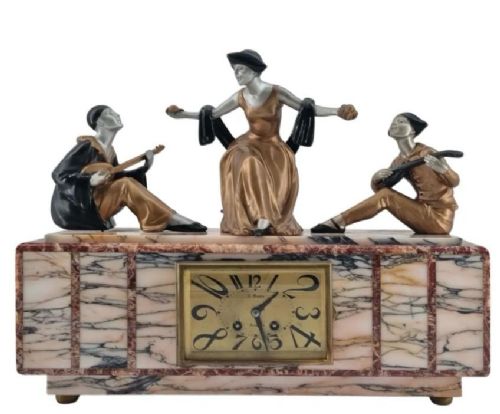
The dominant aesthetic across the inventory is Art Deco, alongside examples in the Amsterdam School style and Chinoiserie. Pieces range from simple mechanical wind-up models to early electrical movements and specialised alarm versions.
Makers and retailers represented on the page include Smiths, Mauthe, Jaz, Mappin & Webb, and Harrods of London. Alongside standard timepieces, buyers will find combination pieces that integrate barometers and thermometers into the housing.
How they were made
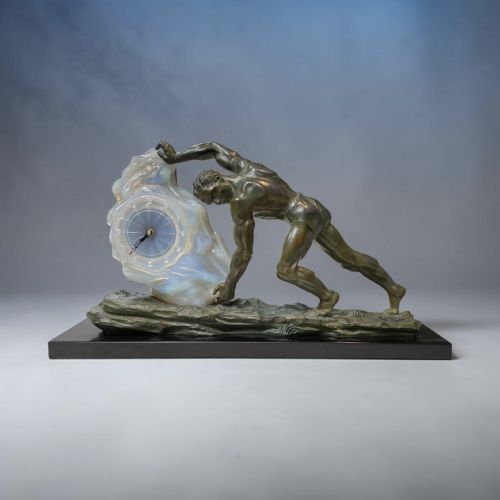
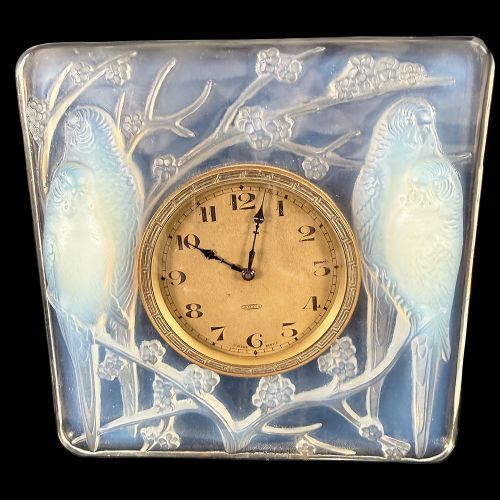
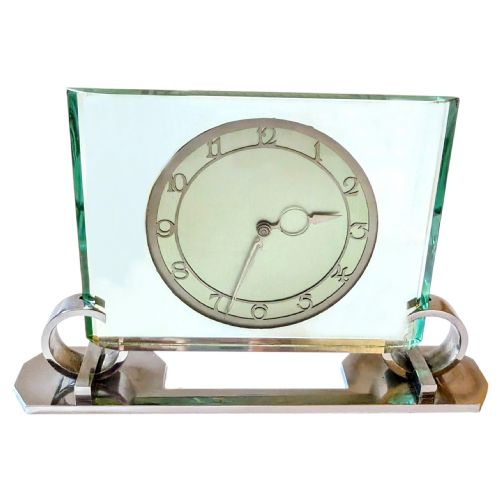
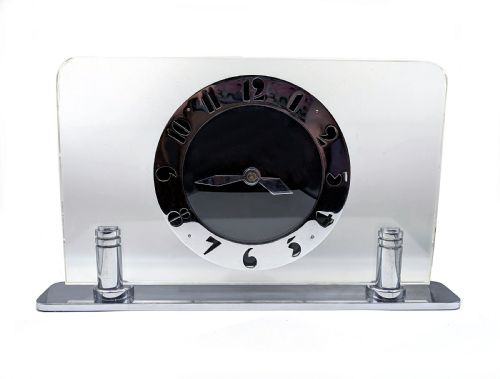
Makers utilised a mixture of heavy natural stones such as green onyx, marble and polished or patinated brass to build substantial architectural cases. Glass forms an important part of the construction, appearing as opalescent pressed glass, peach mirror glass, uranium glass and clear panels.
Modern industrial materials entered the craft during this era, leading to widespread use of chrome-plating, solid silver, spelter and early plastics like Bakelite. Movements varied from traditional 8-day mechanical and 30-hour wind-up mechanisms to early electrical systems.
Deco Desk Clock Retail Price Guide 2026
Typical asking prices for deco desk clock among the pieces listed under this phrase on Sellingantiques today, from the lower quarter to the upper quarter. They describe what is for sale here now, not the wider market.
An automated electric ship rocks gently back and forth inside one particularly adventurous Isle of Man model.
What varies in quality
Quality rests in the choice of materials, from standard plated metals up to solid silver cases, carved onyx and heavy opalescent figural glass sculptures. The reputation of the maker and the complexity of the movement, such as an 8-day Swiss mechanism or an early electrical setup, elevate the standing of a piece.
The integrity of the dial, the sharpness of metal hammering or chrome finishing, and the retention of original components dictate how well an item preserves its character. Fully serviced mechanical movements represent a higher standard of functional readiness for daily use.
Smiths Clockmakers·Mappin & Webb·Harrods of London·Rene Lalique
The Deco Desk Clock Glossary
- Strut clock
- A timekeeper supported by a hinged rear leg, allowing it to stand upright on a flat surface like an easel.
- Bakelite
- An early form of synthetic phenol formaldehyde resin used to mould dark, durable clock cases and bases.
- Opaline glass
- A semi-opaque glass with a milky appearance, frequently tinted in pastel shades for decorative clock faces and bodies.
- Guilloche
- A decorative technique where a precise, intricate pattern is mechanically engraved into a metal surface beneath translucent enamel.
- Spelter
- A zinc alloy commonly cast into figural sculptures and patinated to resemble bronze or other costly metals.
Deco Desk Clock: Frequently Asked Questions
How do I wind an 8-day clock?
Insert the winding key into the designated arbor on the dial or movement back and turn it clockwise until light resistance indicates it is fully tensioned. Care must be taken not to overwind the mainspring.
Eighty-day movements require attention roughly once a week to maintain continuous operation. Ensure the clock rests on a level surface to keep the escapement beating evenly.
Can these clocks run on modern power?
Mechanical wind-up and 8-day models operate entirely independently of mains electricity and require no electrical conversion. Early electrical and electric-movement clocks were wired for historical voltages and need careful professional inspection before plugging in.
Battery-converted mechanisms appear occasionally when original electrical components no longer function. Checking the listing details confirms whether a piece retains its original working movement.
Where should I place a glass clock?
Select a stable desk, mantel or table surface away from heavy foot traffic where the clock might be accidentally knocked. Mirrored, opalescent and uranium glass pieces benefit from placement near natural light to highlight their reflective qualities.
Avoid positioning glass and mirror clocks in direct, intense sunlight for prolonged periods. This protects painted dials and coloured glass treatments from fading.
How do I identify a 1930s movement?
Examine the rear casing and dial layout for characteristic geometric numbering, modern sans-serif fonts and exposed chrome bezels. Maker signatures stamped onto the movement backplate or face often point to specific interwar production eras.
Materials such as Bakelite, peach mirror glass and stepped skyscraper silhouettes strongly indicate a 1930s origin. Consulting the listed period provides further confirmation of manufacture date.