

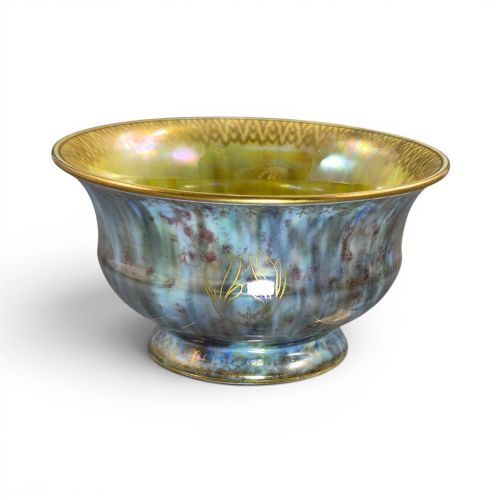


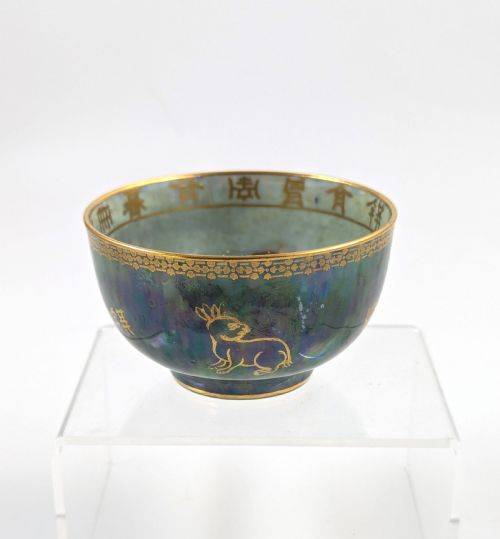


Deco Decorative Bowl
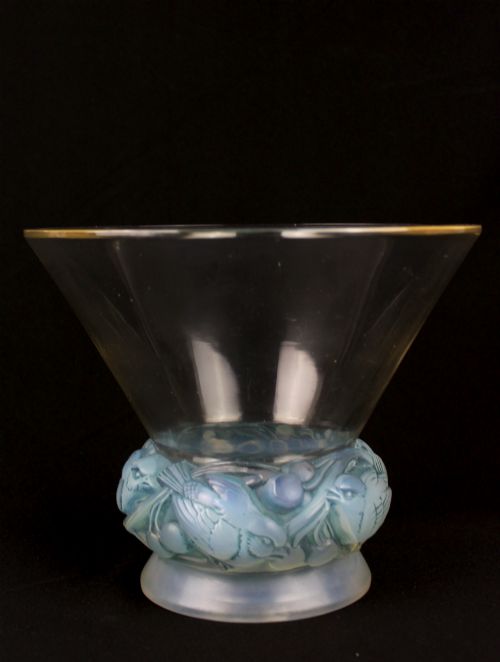
These deco decorative bowl pieces bring striking twentieth-century form and opalescent glass into a room with genuine presence.
Deco Decorative Bowl
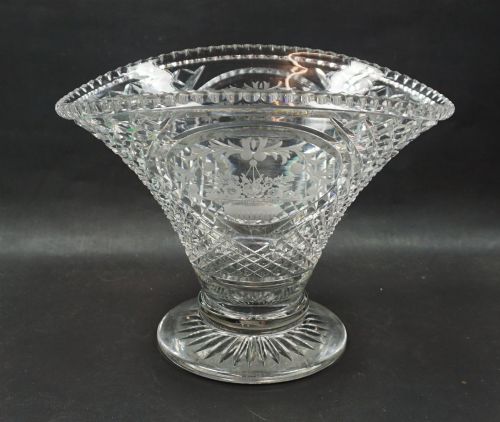
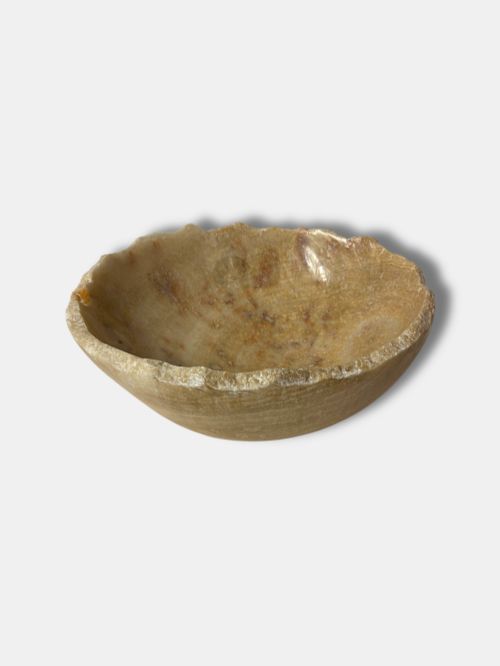
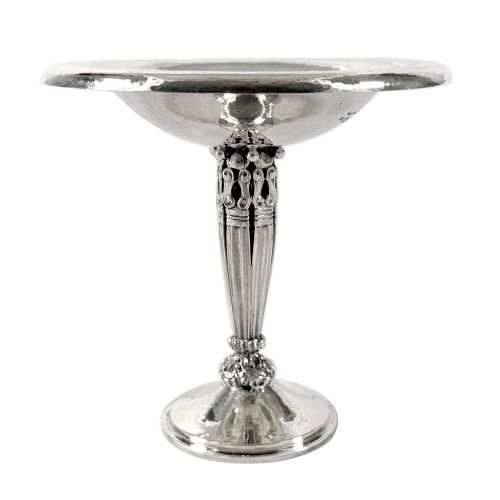
A deco decorative bowl brings the bold geometry and stylised motifs of the early twentieth century straight onto a table or sideboard. These vessels emerge primarily from the nineteen-twenties and nineteen-thirties, spanning Art Deco, Art Nouveau, and Scandinavian Modern styles.
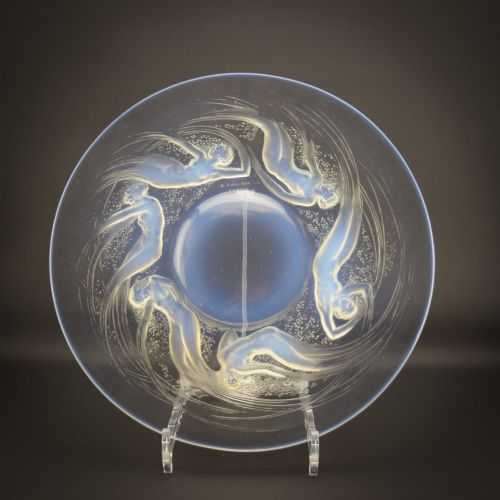
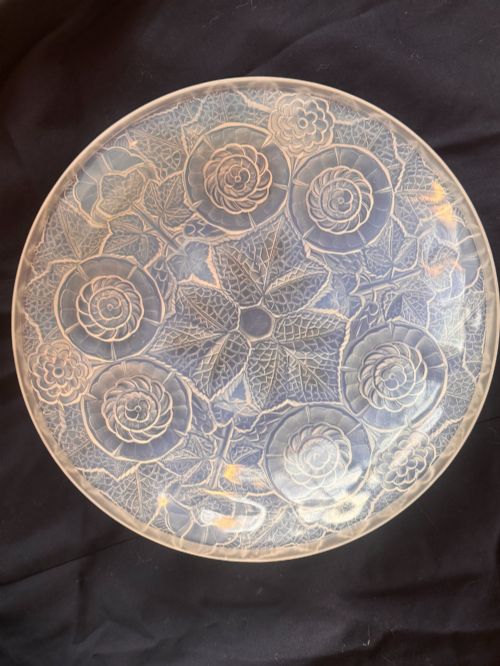
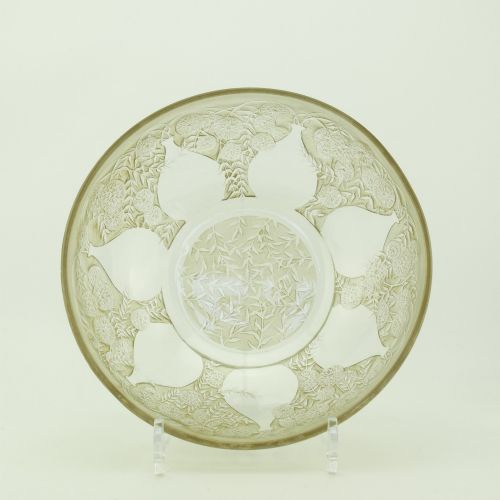
Most examples found here take the form of heavy glass bowls, footed tazzas, and porcelain serving vessels. Makers channel natural motifs like fish, flowers, and dragons into stylised relief patterns that define the aesthetic of the period.
Materials and technique
Makers utilised moulded opalescent glass and fine porcelain glazed with rich lustre finishes. Opalescent glass achieves its characteristic milky blue glow through specific chemical compounds added to the molten mix before press-moulding.
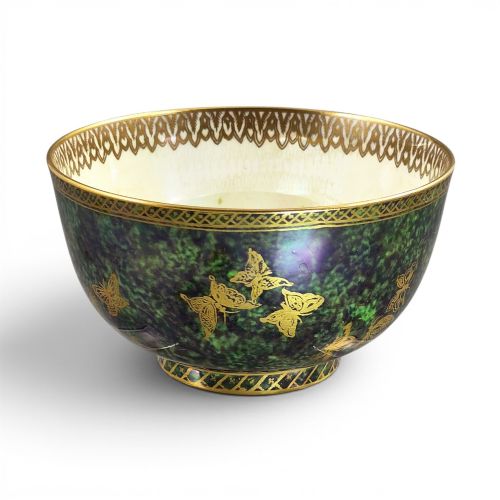
Porcelain and earthenware bodies received complex lustre glazes, often incorporating gold leaf or metallic oxides fired repeatedly to yield iridescent surfaces. Surface decoration relies heavily on deep relief moulding and hand-painted enamel details.
Deco Decorative Bowl Retail Price Guide 2026
Typical asking prices for deco decorative bowl among the pieces listed under this phrase on Sellingantiques today, from the lower quarter to the upper quarter. They describe what is for sale here now, not the wider market.
Judging quality
Quality rests in the crispness of the moulded relief and the depth of the opalescence within the glass. Superior glass pieces show sharp details in the design motifs and an even, milky translucency across the entire body.
In glazed ceramics, the brilliance of the lustre and the precision of the enamel transfer dictate the standing of the piece. Stronger works display rich iridescence without muddy patches in the glaze.
Rene Lalique·Daisy Makeig Jones·Val St Lambert·Charlotte Rhead·Charles Boyton
The Deco Decorative Bowl Glossary
- Opalescent Glass
- Glass that diffuses light to show milky or bluish highlights, commonly utilised in moulded decorative bowls from the interwar period. The effect shifts depending on the angle of the ambient light.
- Lustre Glaze
- A ceramic finish containing metallic elements that create an iridescent sheen upon firing. This technique produces shimmering colour shifts across the surface of plates and bowls.
- Tazza
- A shallow saucer-like vessel raised on a central foot or pedestal. These pieces function as decorative centrepieces on dining tables.
- Fairyland Lustre
- A specific range of highly decorated porcelain developed by Wedgwood featuring fantastical motifs. These items combine complex transfer printing with rich hand-painted enamels and gold leaf.
- Press-moulding
- A manufacturing method where hot glass or clay is pressed into a metal mould to create defined three-dimensional relief patterns. This process allowed makers to replicate intricate floral and animal designs consistently.
Deco Decorative Bowl: Frequently Asked Questions
What defines a deco decorative bowl?
These vessels combine early twentieth-century design sensibilities with robust materials like moulded glass and glazed ceramic. They frequently feature geometric symmetry or stylised depictions of flora and fauna.
Created during the height of the Art Deco and Art Nouveau movements, they serve primarily as ornamental centrepieces rather than utilitarian kitchenware.
How were opalescent glass bowls made?
Glassmakers pressed molten metal into intricate iron moulds to impart deep relief patterns depicting fish, flowers, or abstract motifs. Chemical additives in the batch created the characteristic milky blue translucency.
After removal from the mould, the pieces underwent careful cooling and often manual polishing of the high points to accentuate the design.
How do I distinguish glass periods?
Examine the weight, colour saturation, and any factory marks stamped or etched into the underside of the vessel. Interwar pieces often display distinct opalescence or signature stampings characteristic of the manufacturer.
Stylistic cues also help, as nineteen-twenties works lean toward organic Art Nouveau curves before shifting into sharper Art Deco geometry.