



Dark Wood Vanity Stool
A dark wood vanity stool offers a low seat for the dressing table, combining rich timber and upholstered comfort in compact nineteenth-century and revival forms.
Dark Wood Vanity Stool
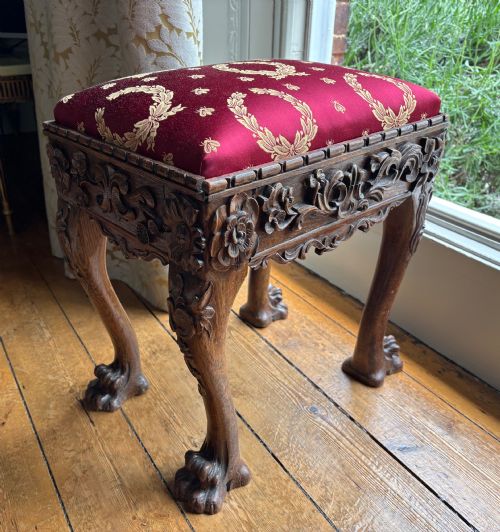
A dark wood vanity stool provides a practical seat for a dressing table, though nineteenth-century makers often designed the same compact forms as piano stools, music stools, or window seats. You will frequently find Victorian and Edwardian examples alongside earlier Georgian and Regency pieces, with mahogany and rosewood dominating the selection.
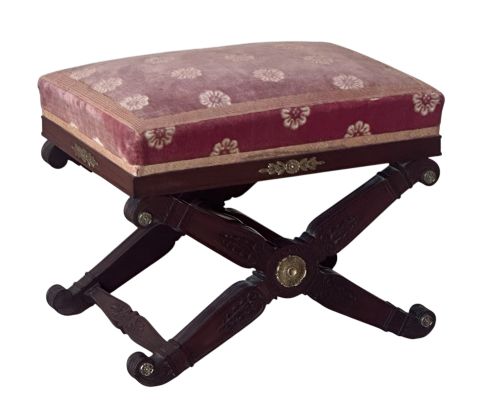
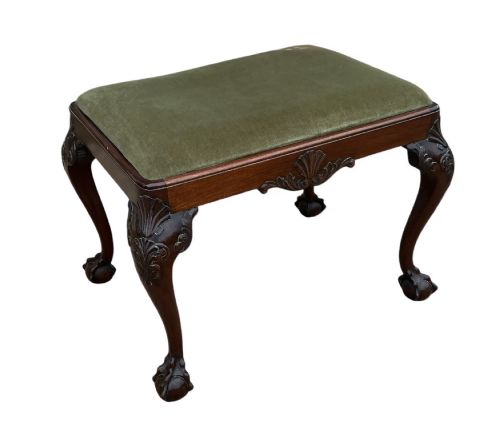
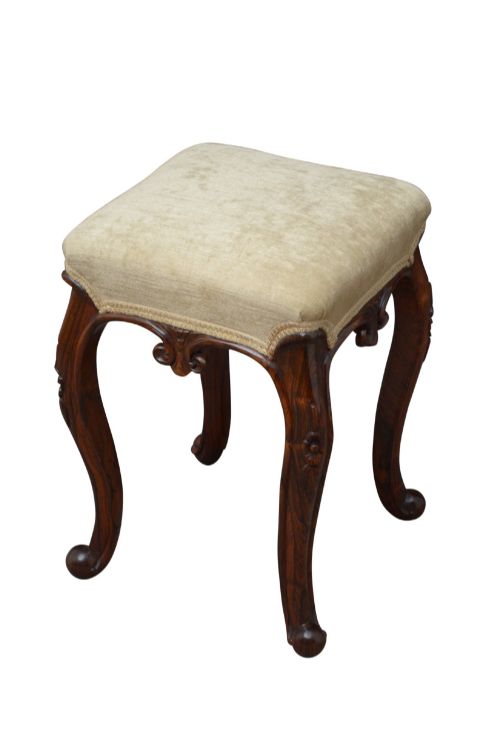
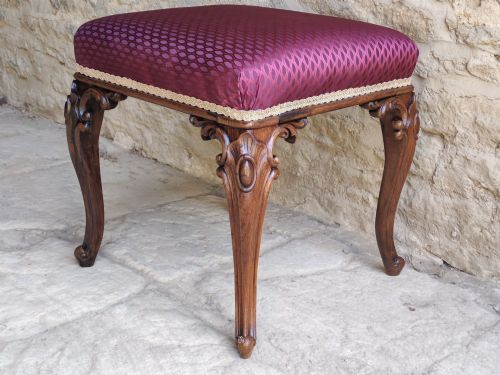
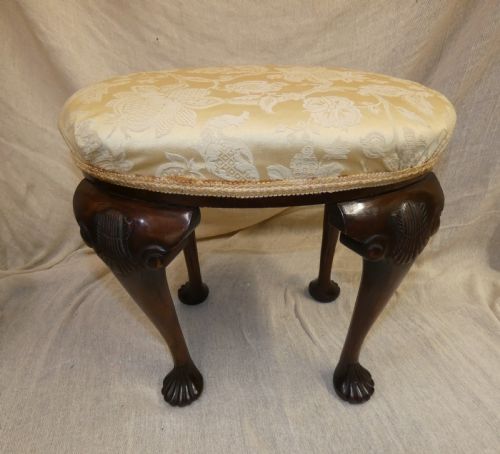
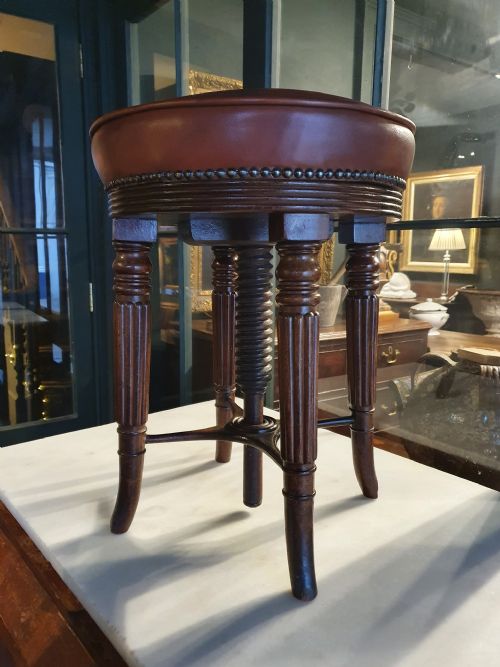
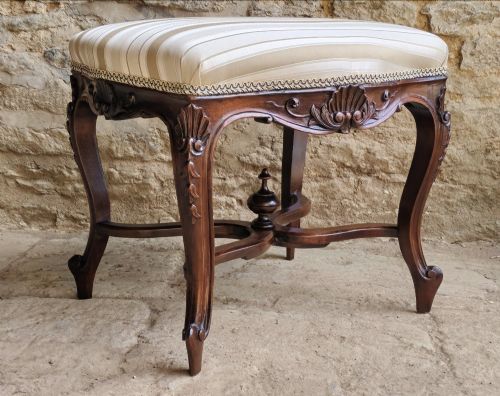
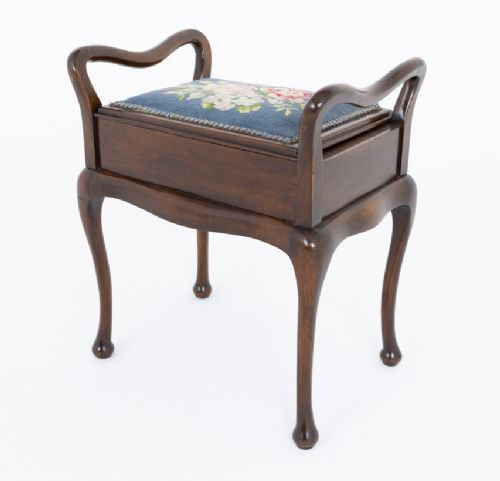
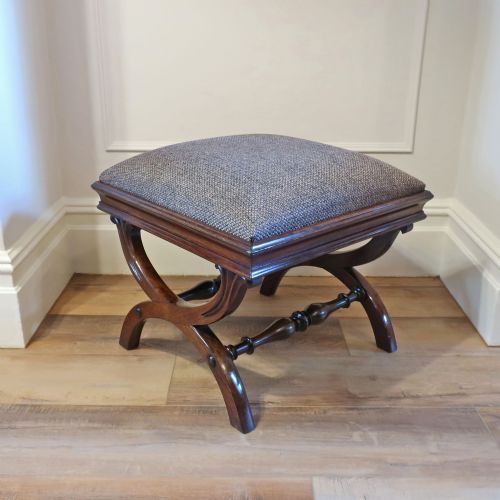
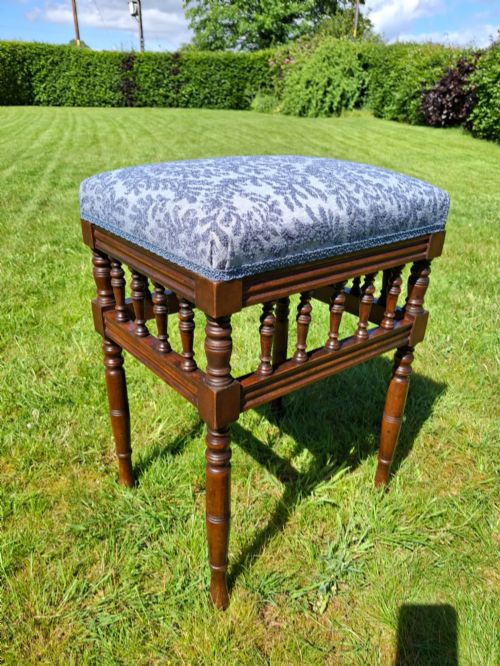
The objects take various structural shapes, ranging from cabriole leg dressing stools and revolving piano stools to X-frame designs and square stools with turned legs. While some pieces are built specifically for the dressing table, others cross over from music rooms and parlours to serve the same low seating function today.
What varies in quality
The distinction between ordinary and superior pieces rests on the crispness of the timber carving and the architectural balance of the frame, particularly where legs meet the seat rail. High-quality examples show thoughtful selection of grain in woods like rosewood and mahogany, paired with sturdy joinery that withstands regular movement.
Refining details such as hand-carved cabriole legs, well-turned stretchers, and original brass swivel mechanisms distinguish workshop pieces from simpler domestic furniture of the period.
Materials range from traditional mahogany and rosewood to exotic Goncalo Alves wood and Chinese Qing Dynasty huali hardwood.
Jas Shoolbred·James Shoolbred
The Dark Wood Vanity Stool Glossary
- Cabriole leg
- A furniture leg that curves outward at the knee and tapers inward toward the ankle, ending in a pad or foot. This form draws inspiration from animal limbs and frequently appears on mid-Victorian mahogany and rosewood stools.
- X-frame
- A structural base formed by intersecting diagonal timbers that cross beneath the seat. French Empire and nineteenth-century makers utilised this configuration to provide stability and visual lightness.
- Revolving
- A seating mechanism that allows the top to spin on a threaded screw spindle, adjusting the height. This feature is common on piano and dressing stools from the Victorian and Regency periods.
- Sabre leg
- A gently curved, outward-sweeping leg with a uniform or tapering section that is concave on its inner edge. Regency pieces frequently employ this profile on square stools and footstools.
Dark Wood Vanity Stool: Frequently Asked Questions
Can I use a piano stool at a dressing table?
Many nineteenth-century piano stools share the exact height, proportions, and revolving mechanisms of dedicated dressing stools. Their compact size makes them interchangeable for modern seating.
Revolving piano stools even allow users to adjust the height to match lower or higher dressing tables.
How do I distinguish a Victorian stool from an earlier piece?
Victorian stools often feature heavier mahogany or rosewood frames with rich carving, cabriole legs, and dense upholstery styles typical of the mid to late nineteenth century. Earlier Georgian and Regency examples tend to show cleaner lines with turned and tapered or sabre legs.
Examining the timber grain and the joinery beneath the upholstery helps confirm the manufacturing period.
What woods were used for these stools?
Mahogany and rosewood appear most frequently across the available nineteenth-century pieces, offering deep colour and dense grain. Cabinetmakers also utilised walnut, oak, Goncalo Alves wood, and huali hardwood for specific regional or revival styles.
These dark timbers were chosen for their strength and ability to take a fine polish.
Are these stools comfortable for daily use?
Most pieces feature padded tops covered in fabric, velvet, tapestry, or textile to provide a comfortable seat. While older padding may feel firmer than modern upholstery, the compact dimensions suit short periods of sitting at a vanity.
Adjustable height models also allow you to find a comfortable seating position.