




Dark Wood Tufted Armchair
A dark wood tufted armchair brings rich tone and deep comfort to a room, offering sturdy timber frames paired with tactile upholstery.
Dark Wood Tufted Armchair
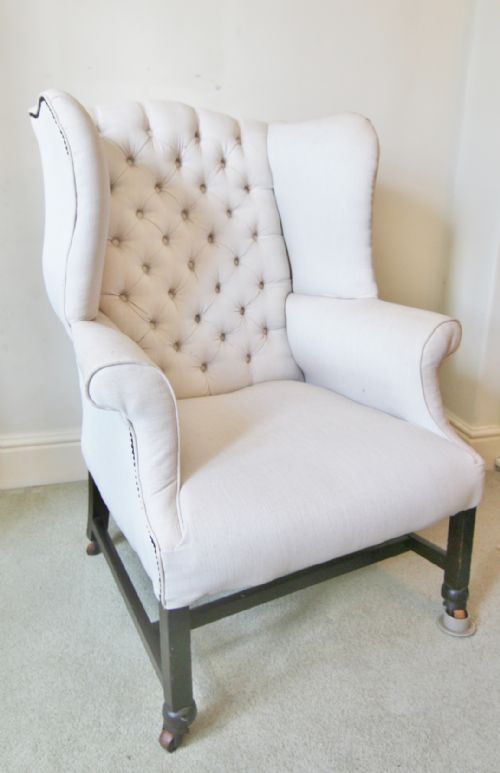
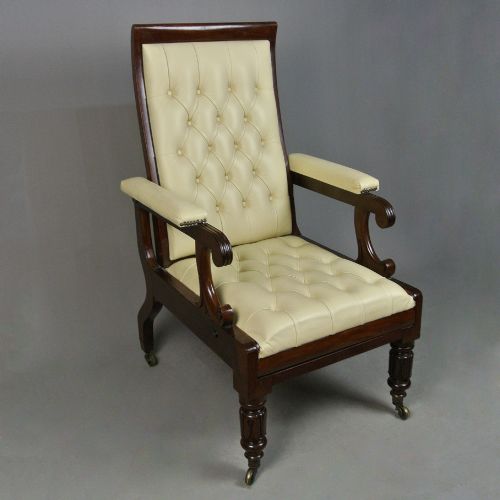
A dark wood tufted armchair is a substantial seat defined by its deep buttoning and wooden frame, drawing from Victorian, Georgian, Edwardian, and Regency traditions. These pieces combine robust timber construction with soft textile coverings to create a commanding presence in a room.
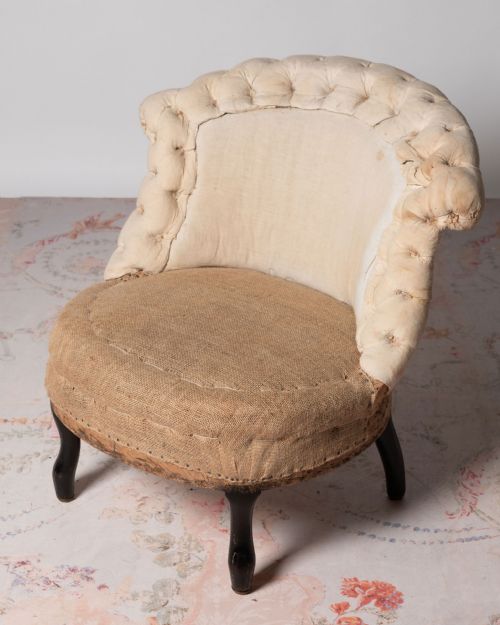
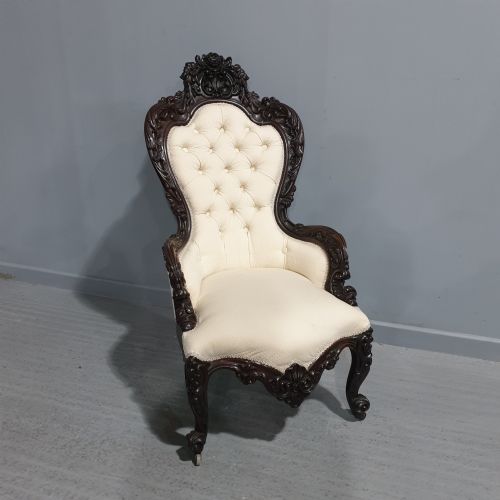
The versions most commonly met on this page span the nineteenth century, including Victorian ladies chairs, spoon back designs, and wingbacks alongside French models and low rocking chairs. Makers shaped these dark woods into barrel backs, library chairs, and carved armchairs.
Meticulous joinery and prominent timber grain characterise the examples found here, with materials ranging from mahogany and walnut to rosewood and ebonised wood. Buyers encounter both single statement chairs and matched pairs suitable for formal or relaxed spaces.
Materials and construction methods
The frames rely on dense hardwoods such as mahogany, walnut, and rosewood, chosen for their strength and deep natural colour. Craftsmen shaped these timbers using traditional joinery, occasionally incorporating carved details and turned elements like barley twist supports.
Upholstery involves textiles, leather, and fabric secured over supportive padding, often finished with button tufting that holds the interior stuffing in place. Brass details and hessian webbing frequently appear in the internal structure and finishing touches.
Dark Wood Tufted Armchair Retail Price Guide 2026
Typical asking prices for dark wood tufted armchair among the pieces listed under this phrase on Sellingantiques today, from the lower quarter to the upper quarter. They describe what is for sale here now, not the wider market.
Several chairs include low rocking formats specifically designed for nineteenth-century nursing.
Judging the quality of the work
Quality rests in the crispness of the timber carving and the architectural proportion of the frame, where superior examples display fluid lines and balanced proportions. The depth and precision of the button tufting show the maker's hand.
The choice of timber underpins the piece, with richly figured mahogany or rosewood marking out finer commissions compared to simpler domestic timbers. Original upholstery methods and well-preserved wood surfaces elevate an individual chair.
Gillows
The Dark Wood Tufted Armchair Glossary
- Tufted
- A method of upholstery where buttons are pulled deep into the padding to secure the filling and create a geometric pattern of folds. This technique provides both structural firmness and decorative depth.
- Barley twist
- A carved wooden column resembling a spiralling rope, frequently utilised on the legs or stretchers of nineteenth-century seating. This turning style adds kinetic movement to heavy timber frames.
- Spoon back
- An upholstered chair back shaped like the bowl of a spoon, curving gently to fit the human form. This silhouette emerged strongly during the Victorian period.
- Ebonised
- Timber treated to imitate the dark, dense appearance of ebony wood. This finish creates a sleek, formal dark surface.
Dark Wood Tufted Armchair: Frequently Asked Questions
What is a dark wood tufted armchair?
A dark wood tufted armchair is a historic seat constructed from timbers like mahogany or walnut featuring buttoned fabric upholstery. These pieces date across the Georgian, Victorian, and Edwardian periods.
They serve as both comfortable seats and decorative focal points, utilising traditional woodworking and upholstery techniques to ensure durability.
How do I identify a Victorian armchair?
Victorian armchairs often feature rich mahogany or walnut frames, prominent tufted buttoning, and distinctive shapes like spoon backs or wingbacks. Details such as barley twist turnings frequently point to this era.
Comparing the specific wood grain and frame silhouette helps distinguish Victorian pieces from earlier Georgian or later Edwardian examples.
Where should I place an antique armchair?
These armchairs suit studies, libraries, and living rooms where their dark timber frames and textured upholstery can anchor the room's design. Pairing them with a reading lamp creates a functional corner.
Their robust construction allows for regular use in domestic spaces, provided they are placed away from direct heat sources that might dry the timber.
What woods were used for these chairs?
Makers utilised dense hardwoods including mahogany, walnut, and rosewood, alongside ebonised timber finishes. These materials provided the structural strength required for substantial seating.
The choice of timber heavily influences the chair's weight, colour, and overall aesthetic character.