

Dark Wood Mirrored Sideboard
A dark wood mirrored sideboard brings architectural depth and reflective light to a room, uniting functional storage with polished display.
Dark Wood Mirrored Sideboard
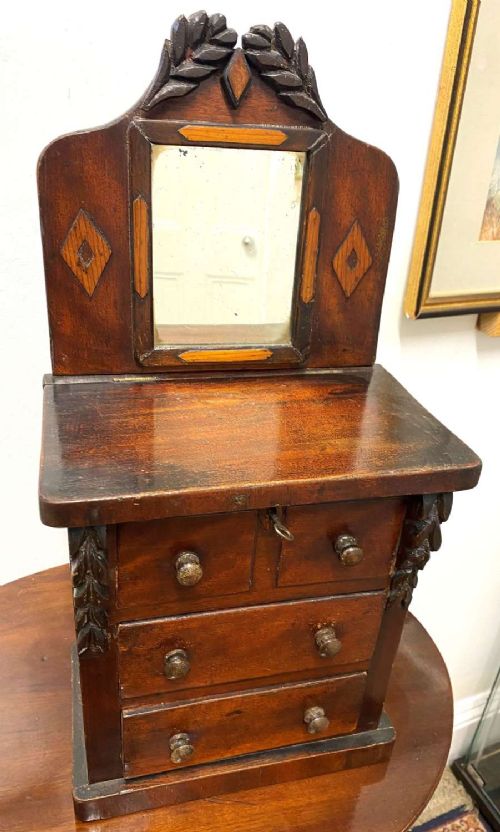
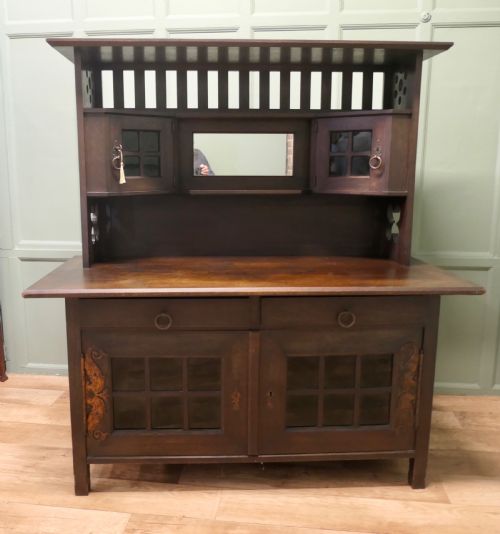
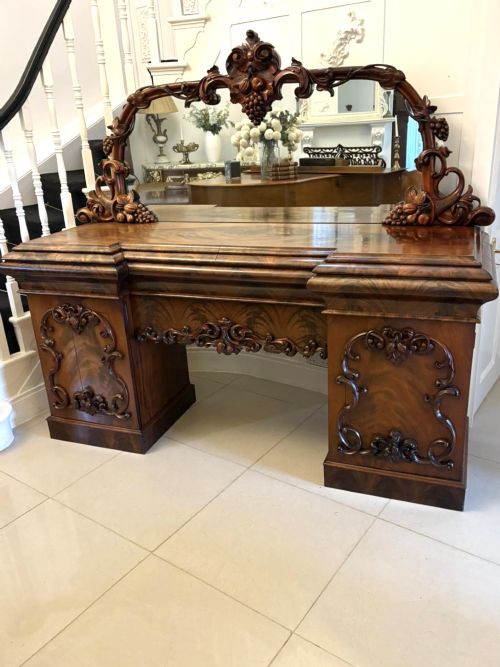
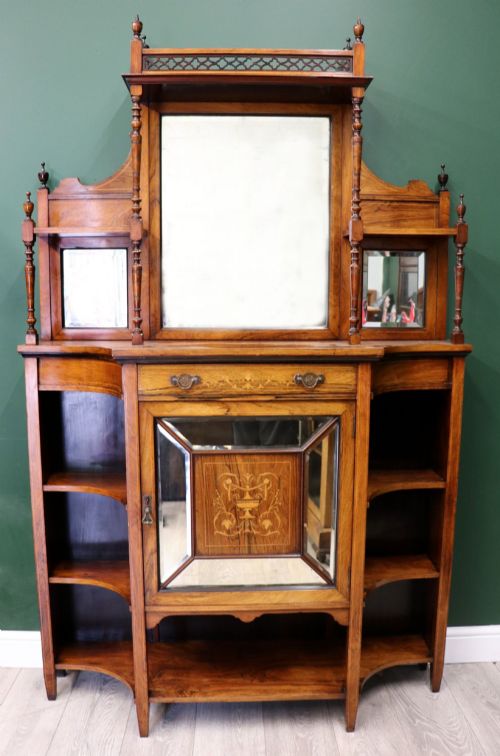
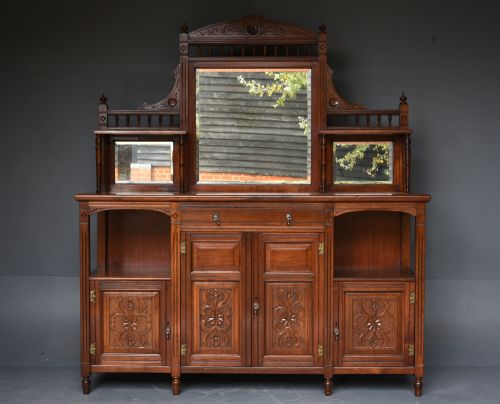
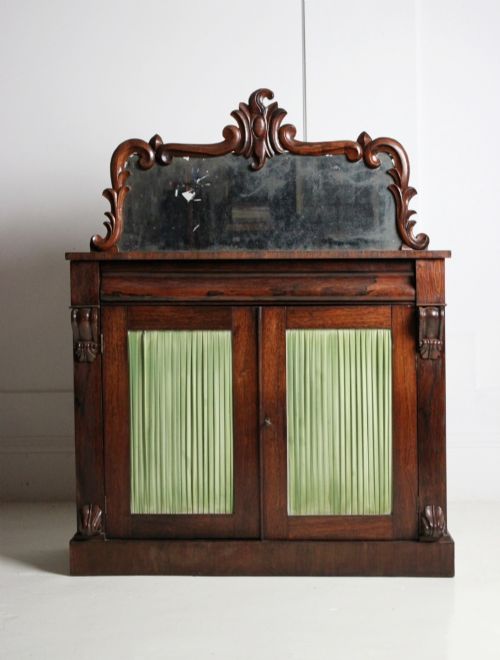
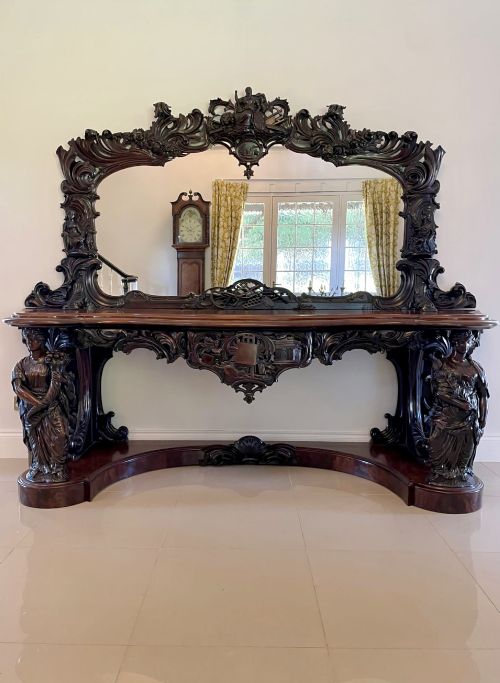
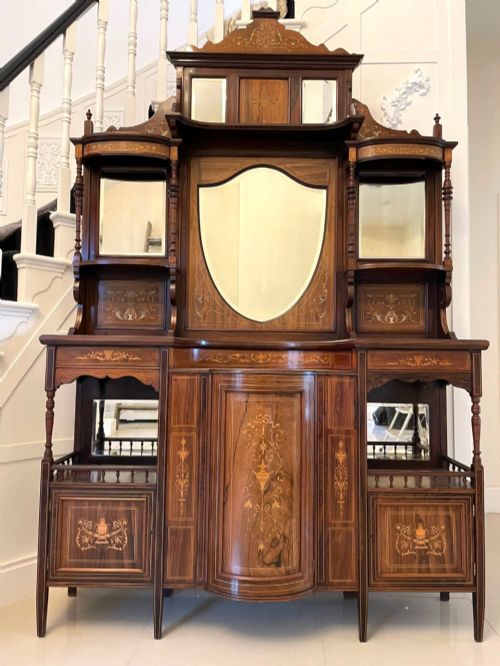
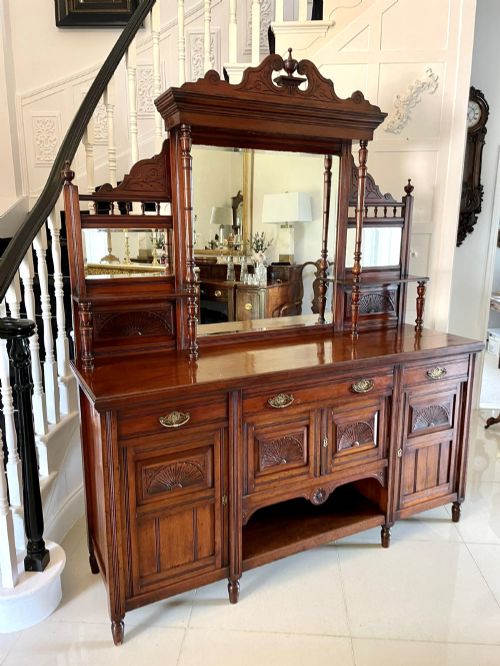
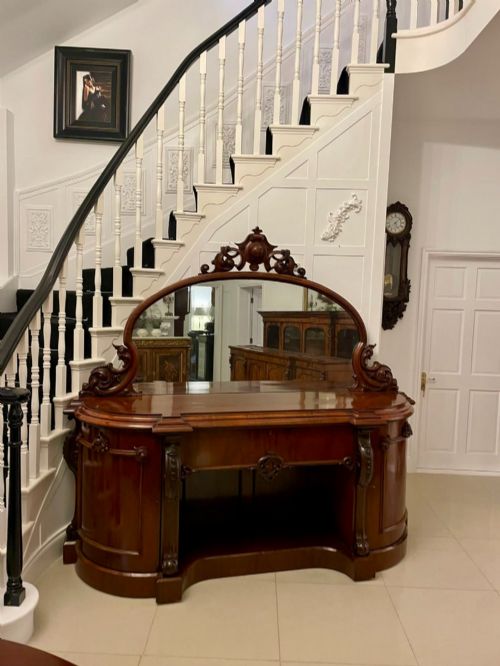
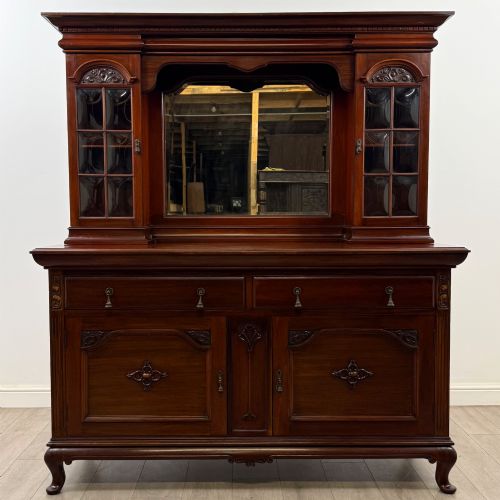
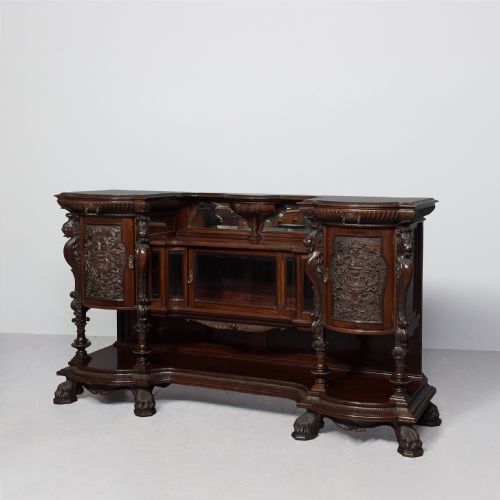
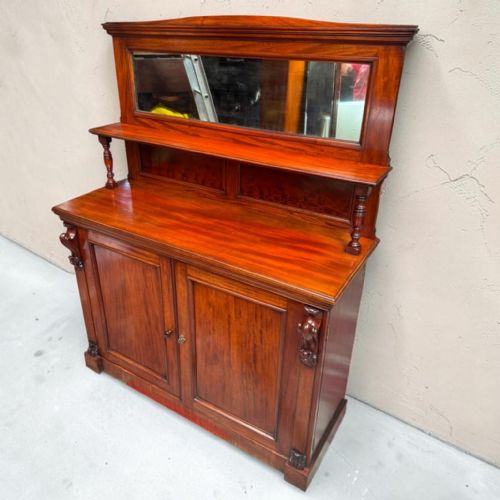
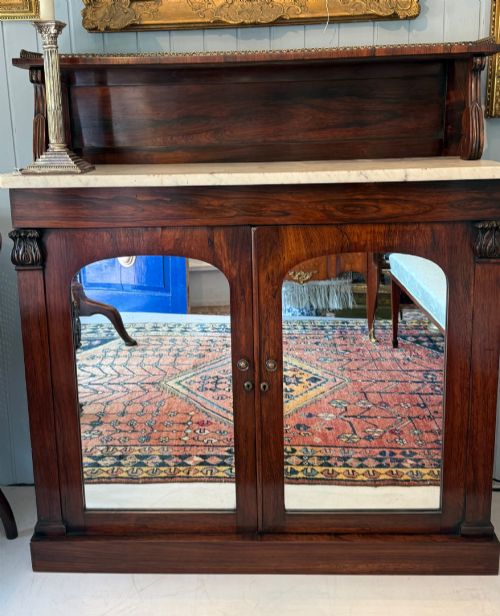
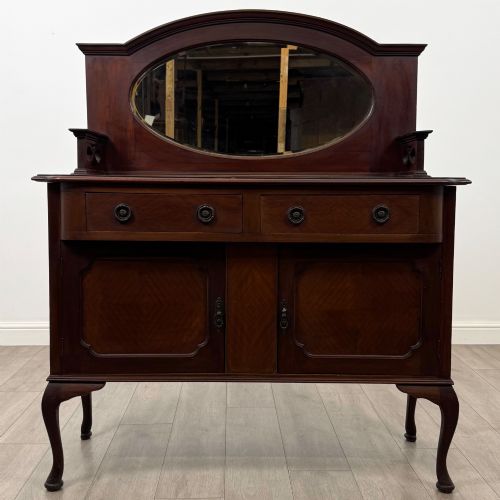
A dark wood mirrored sideboard combines heavy timber cabinetry with integrated glass plates, taking the form of mirror-back sideboards, chiffoniers, and display cabinets across this selection.
The pieces span the nineteenth century into the twentieth, drawing heavily on Victorian and Edwardian craftsmanship alongside Regency and Arts and Crafts influences.
Mahogany and rosewood dominate the darker timber palette, frequently paired with walnut, oak, and palisander to create substantial dining and parlour furniture.
Materials and technique
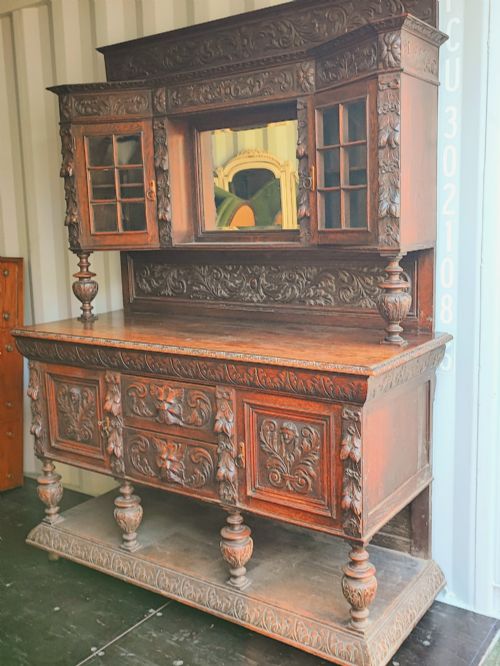
Cabinetmakers utilised dense hardwoods such as mahogany and rosewood, applying precise carving, marquetry, and wood-inlay techniques to decorate the timber surfaces.
Reflective glass plates were set into carved wooden backboards or cabinet doors, often framed by brass hardware and fabric backing elements.
Construction relied on traditional joinery techniques to support large marble tops, extensive shelving, and heavy mirrored superstructures.
Dark Wood Mirrored Sideboard Retail Price Guide 2026
Typical asking prices for dark wood mirrored sideboard among the pieces listed under this phrase on Sellingantiques today, from the lower quarter to the upper quarter. They describe what is for sale here now, not the wider market.
Several heavy oak sideboards incorporate carved Green Man motifs, watching over the dining room with leafy expressions.
Judging execution
Depth of carving and sharpness of detail separate standard production furniture from exhibition pieces, particularly in deeply figured mahogany and walnut.
The integration of the mirror glass within the wooden framework reveals the cabinetmaker's precision, alongside the complexity of marquetry and inlay work.
Collinson & Lock·Holland & Sons·Gillows·Howard and Sons
The Dark Wood Mirrored Sideboard Glossary
- Chiffonier
- A compact low sideboard or side cabinet, often featuring a raised shelf or mirrored back above enclosed cupboards. This form developed during the Regency and Victorian periods.
- Marquetry
- Decorative veneer work arranged in pictorial or geometric patterns using various coloured woods. Craftsmen cut contrasting timbers to fit precisely into prepared recesses.
- Mirror-back
- A sideboard or cabinet featuring an integrated vertical glass plate framed by carved wood and shelving. It serves to bounce light around a Victorian dining room or parlour.
- Palisander
- A heavy, dark tropical timber akin to rosewood, prized for its rich grain patterns and polished finish. It appears on mid-nineteenth-century sideboards and chiffoniers.
Dark Wood Mirrored Sideboard: Frequently Asked Questions
Where did these sideboards stand?
These sideboards sat primarily in formal dining rooms and parlours, serving both practical storage and display functions.
The reflective glass and large timber proportions helped balance the heavy architectural schemes of nineteenth-century interiors.
How do I date a sideboard?
Dating relies on combining timber choice, hardware style, and decorative motifs such as Gothic Revival carving or Edwardian inlay.
Cabinet construction methods and the thickness of the mirror glass provide further clues to the manufacturing decade.
How do I clean dark wood?
Maintenance requires gentle dusting with a soft, dry cloth to protect the polished mahogany, rosewood, or oak surfaces.
Harsh chemical cleaners should be avoided in favour of traditional beeswax applied sparingly to nourish the timber grain.
What is a chiffonier?
A chiffonier is a smaller relative of the sideboard, typically designed with enclosed lower cupboards and a useful upper tier.
Victorian homes utilised these versatile cabinets for storing table linen, china, and glassware in more compact spaces.