

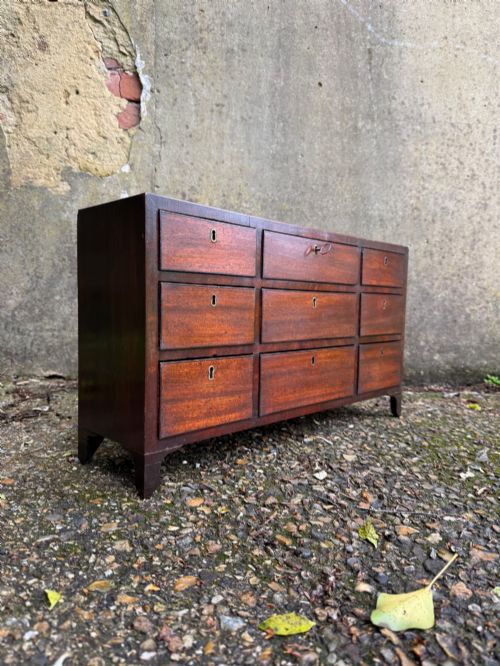


Dark Wood Miniature Desk
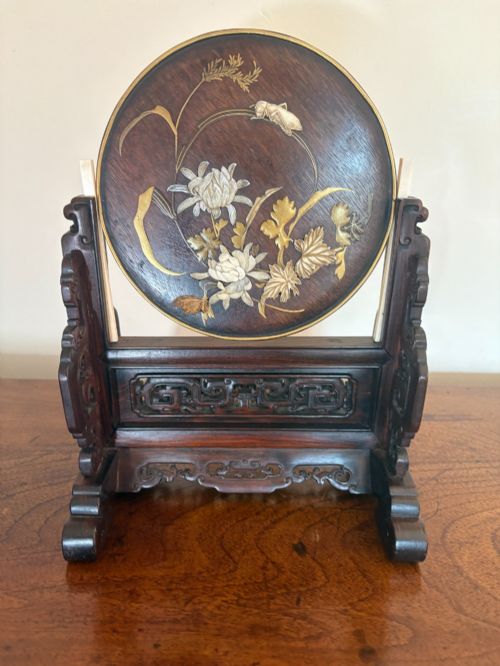
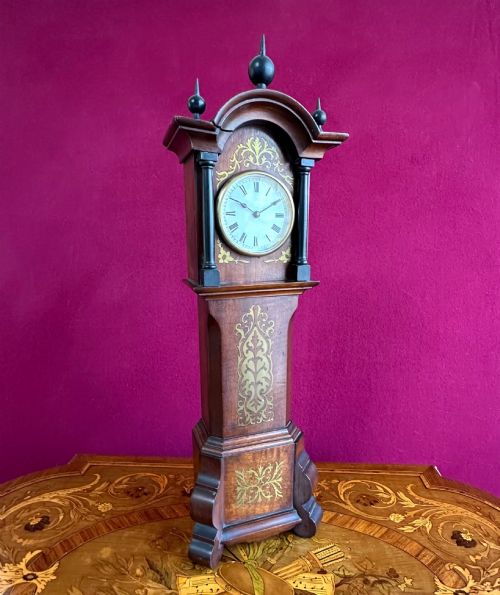
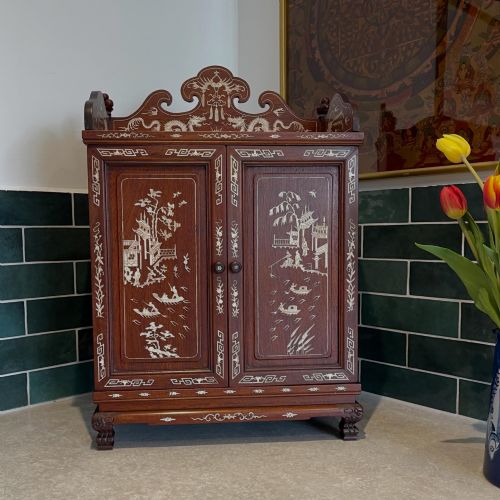
These small pieces of dark wood miniature desk furniture and related miniature forms offer scale models of full-size furniture crafted centuries ago.
Dark Wood Miniature Desk
A dark wood miniature desk encompasses small-scale writing furniture and bureau forms created in dense timbers like mahogany and rosewood during periods such as the Georgian and Victorian eras. These items served various historical purposes, ranging from apprentice demonstration pieces to specialised cabinetmaker samples and items for domestic writing use.
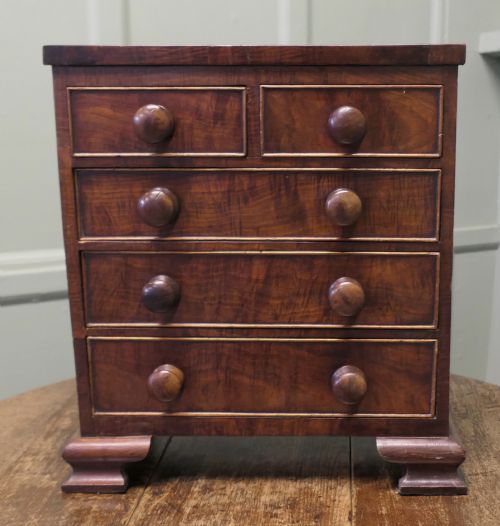
The selections available on this page include miniature chests of drawers, secretaire cabinets, and small fall-front desks alongside related tabletop items like miniature bookcases and table cabinets. Mahogany and rosewood dominate the material record, reflecting the preferred woods utilised by makers across the eighteenth and nineteenth centuries.
Buyers encountering these objects will find pieces displaying distinct stylistic revivals, including William and Mary designs alongside traditional Victorian and Georgian proportions. Each dark wood miniature desk demonstrates the meticulous scaling down of architectural furniture details for tabletop placement.
Distinguishing quality in miniature furniture
Quality in a dark wood miniature desk rests upon the fidelity of the proportions and the precision of the scaling relative to full-size historical examples. Superior pieces display uncompromised joinery, such as hand-cut dovetails on tiny drawer boxes, rather than simplified modern fastenings.
The choice of timber and the restraint shown in decorative additions like brass mounts or inlay dictate the upper tier of the range. Master craftsmen applied the same rigorous cabinet-making standards to miniature pieces as they did to substantial domestic furniture.
Tiny working keyholes on miniature desks suggest that apprentices practised fitting functional locks no larger than a postage stamp.
The Dark Wood Miniature Desk Glossary
- Apprentice piece
- An item created by a trainee craftsman to demonstrate mastery of specific woodworking skills before admission to a guild. These objects frequently take the form of miniature chests of drawers or small desks.
- Fall front
- A hinged writing flap that drops down to create a horizontal surface for correspondence. This mechanism appears frequently on miniature desks and secretaire cabinets.
- Secretaire cabinet
- A compact piece of furniture incorporating a writing drawer or fitted fall front above general storage drawers. In miniature form, these pieces replicate complex full-size interior pigeonholes and tiny compartments.
- Treen
- Small handmade wooden domestic objects produced prior to the twentieth century. This category encompasses small turned items and miniature wooden accessories found alongside desk furniture.
- Ormolu
- Gilded bronze ornamentation applied to furniture surfaces during the eighteenth and nineteenth centuries. It provides metallic contrast against dark rosewood and mahogany structures.
Dark Wood Miniature Desk: Frequently Asked Questions
What is a dark wood miniature desk?
A dark wood miniature desk is a small-scale model of a historical writing desk, bureau, or secretaire cabinet constructed from dense timbers like mahogany or rosewood.
These pieces were historically produced as apprentice demonstrations, cabinetmaker pattern samples, or refined accessories for period interiors.
How were these miniature desks used?
Historical uses varied from practical tabletop writing surfaces for children or travellers to decorative display items in period parlours and studies.
Apprentice pieces also served as portable portfolios for journeymen seeking employment with established cabinet-making workshops.
How do I care for a dark wood miniature desk?
Maintenance requires stable environmental conditions away from direct sunlight and central heating sources to prevent timber shrinkage and veneer lifting.
Regular dusting with a dry, soft cloth is sufficient, avoiding silicone-based polishes that can degrade historical wood finishes over time.
How can I tell the period of a miniature desk?
Dating relies upon examining the secondary woods inside drawer boxes, the style of the brass hardware, and the construction methods used for joinery.
Stylistic cues such as Georgian bracket feet or Victorian moulding profiles also help align the piece with documented historical periods.