




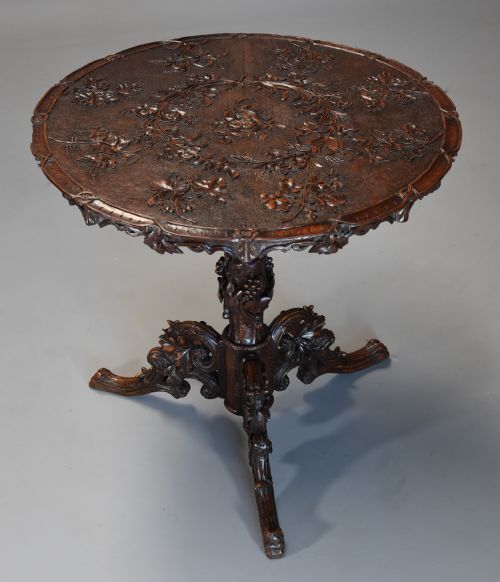
Dark Wood Gothic Table
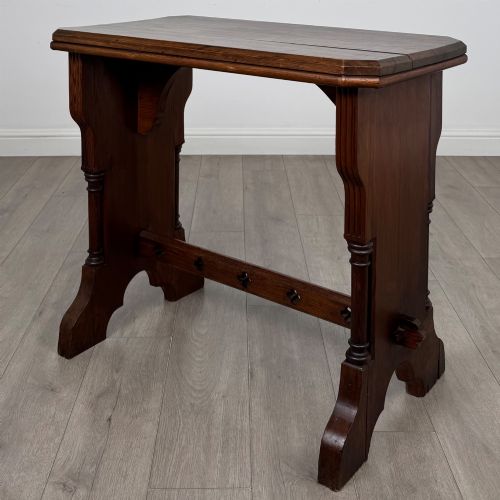
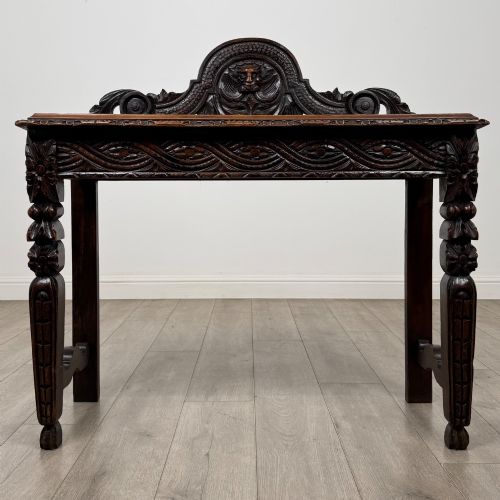
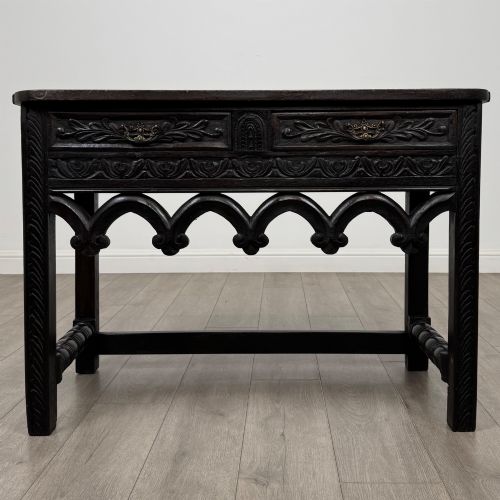
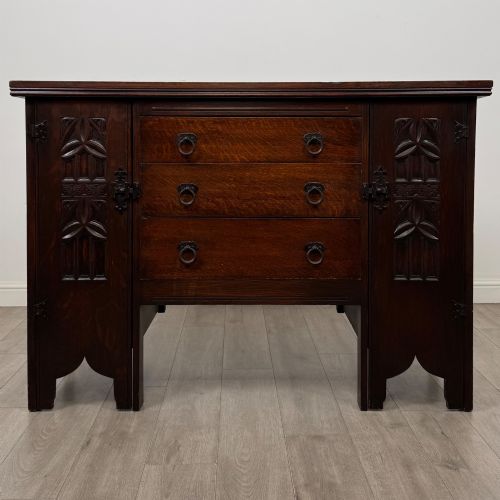
A dark wood gothic table brings heavy timber, pointed arches and rich carving into a room, offering both practical surface space and distinct architectural character.
Dark Wood Gothic Table
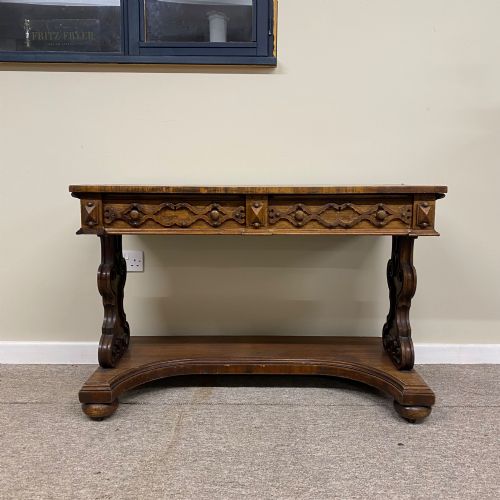
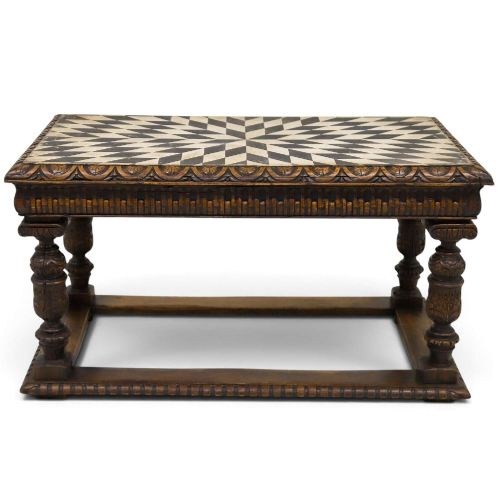
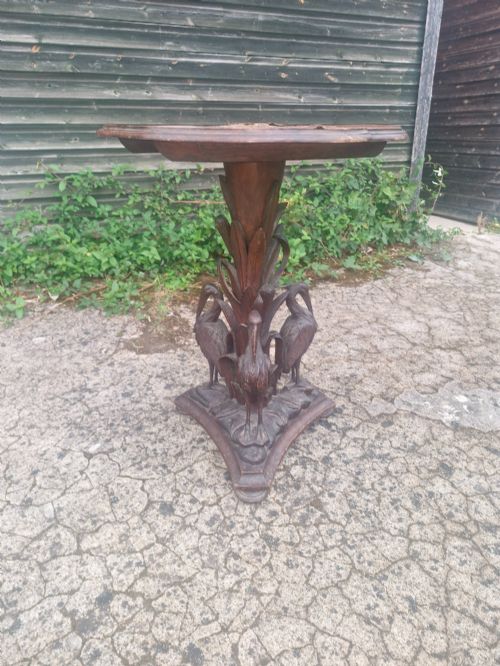
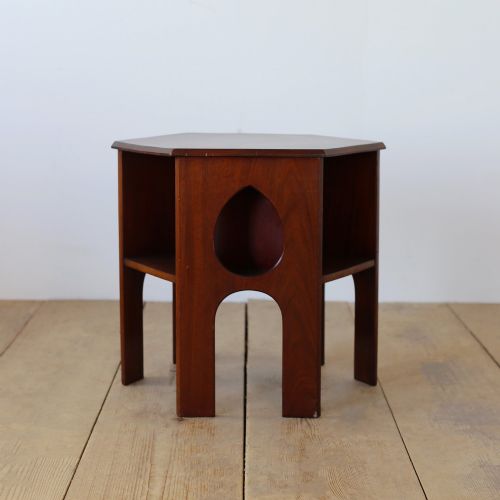
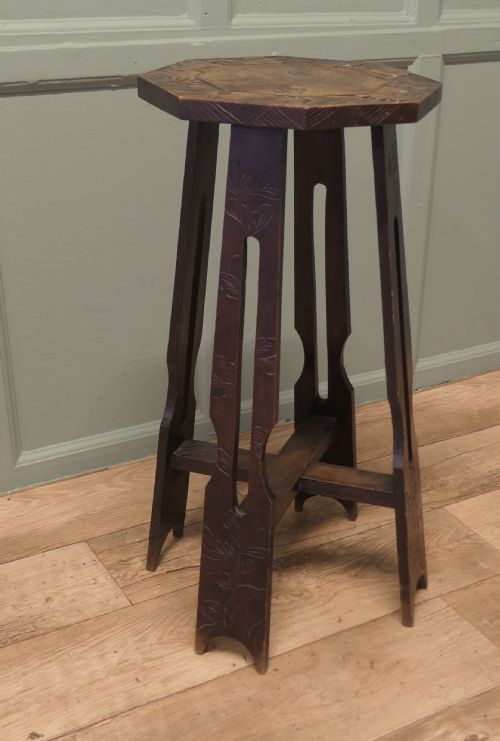
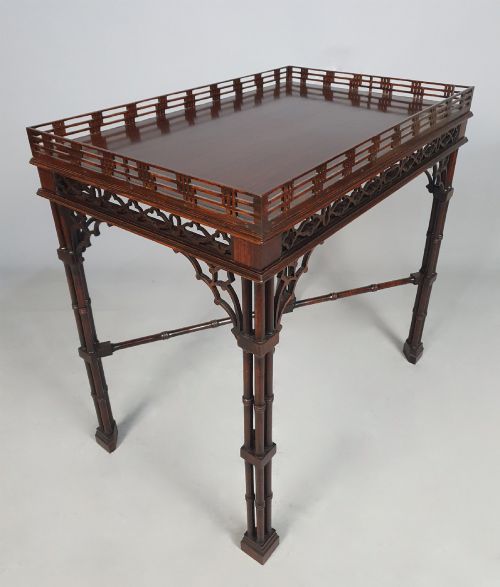
When you search for a dark wood gothic table, you meet heavy timber furniture carrying medieval architectural motifs. These pieces span side tables, occasional tables, centre tables, and writing desks produced during the nineteenth century and the Victorian Gothic Revival.
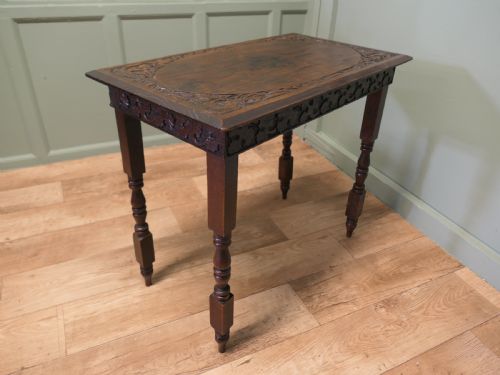
Makers drew heavily on oak, mahogany, and pitch pine, shaping them with pointed arches, tracery, and deep relief carving. The forms range from compact lamp tables to substantial dining tables and monks benches intended for principal rooms.
How they were made
Cabinetmakers worked predominantly in solid oak and mahogany, selecting dense timber that could withstand deep sculptural incision. Joinery relied on traditional mortise and tenon construction to support the heavy weights associated with architectural revival furniture.
Carvers utilised hand chisels to create intricate details such as Green Man faces, Celtic patterns, and tracery panels directly into the wood. Surfaces received wax or polish finishes that darkened the grain over decades of use.
Dark Wood Gothic Table Retail Price Guide 2026
Typical asking prices for dark wood gothic table among the pieces listed under this phrase on Sellingantiques today, from the lower quarter to the upper quarter. They describe what is for sale here now, not the wider market.
Listings feature nineteenth-century and Victorian pieces constructed primarily from oak, mahogany, and pitch pine.
What varies in quality
Depth and crispness of the carving dictate the upper tier of quality, separating sharp hand-tooled relief from shallow, mechanically produced decoration. Timbers selected with rich figuring and substantial thickness indicate superior workshops.
Proportion and structural integrity define the distinction between standard utilitarian items and exceptional cabinetwork. Pieces retaining original hardware and unified timber patination command greater presence.
The Dark Wood Gothic Table Glossary
- Gothic Revival
- An architectural and design movement drawing on medieval forms, pointed arches, and ecclesiastical motifs.
- Green Man
- A sculptural face carved from foliage or branches, frequently found on nineteenth-century oak furniture.
- Centre table
- A freestanding table finished on all sides to sit in the middle of a room rather than against a wall.
- Monks bench
- A multifunctional piece combining a table top that tilts vertically to form the back of a bench with a seat containing storage below.
- Tracery
- Openwork stonework patterns translated into wooden furniture panels, echoing cathedral window designs.
Dark Wood Gothic Table: Frequently Asked Questions
How do I identify a Victorian gothic table?
Look for heavy oak or mahogany construction combined with distinct architectural elements such as pointed arches, quatrefoils, and deep relief carving. These characteristics reflect the nineteenth-century revival of medieval design.
Examine the construction joints and timber patination to confirm nineteenth-century production methods and materials.
Where should I place a centre table?
A centre table is finished on all four sides, making it suitable to stand away from walls in the middle of a room or hallway. It functions effectively as a focal point for lamps or decorative objects.
Ensure sufficient clearance around the piece for movement and seating access within the room.
What is a monks bench used for?
A monks bench serves as both a seating bench with internal storage and a table when the back panel is tilted upward and locked into position. This dual function provided practical utility in smaller historical spaces.
Today, it operates as a hallway seat or a statement piece against an entryway wall.
How do I care for antique oak furniture?
Maintain antique oak surfaces by dusting with a dry, soft cloth and applying a traditional beeswax polish occasionally to nourish the timber. Avoid placing solid wood tables near direct heat sources or strong sunlight.
Consistent indoor humidity prevents the timber from splitting or warping over time.