



Dark Wood Double Bed
A dark wood double bed anchors a bedroom with deep tone and historic character, spanning seventeenth-century oak to twentieth-century walnut.
Dark Wood Double Bed
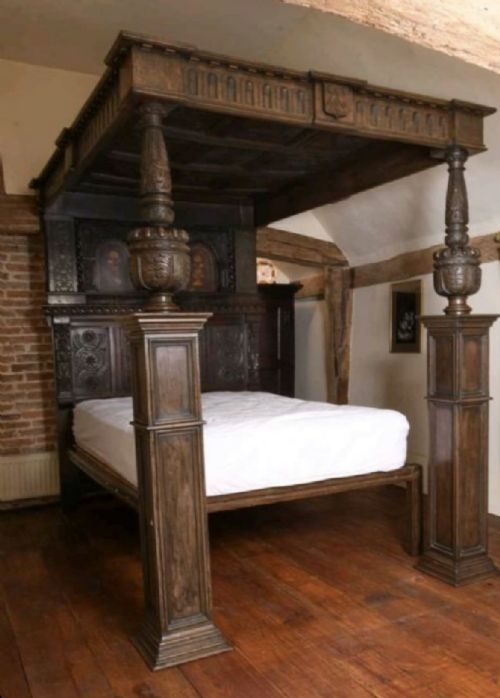
When you search for a dark wood double bed, you are looking at substantial timber frames designed for sleeping, encompassing several centuries of cabinet-making traditions. These pieces range from seventeenth-century oak constructions to Edwardian inlaid mahogany and Art Deco burr walnut frameworks.
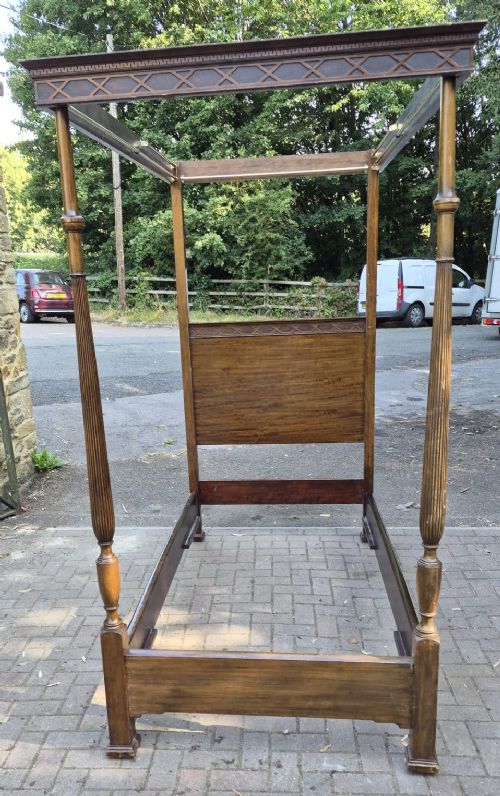
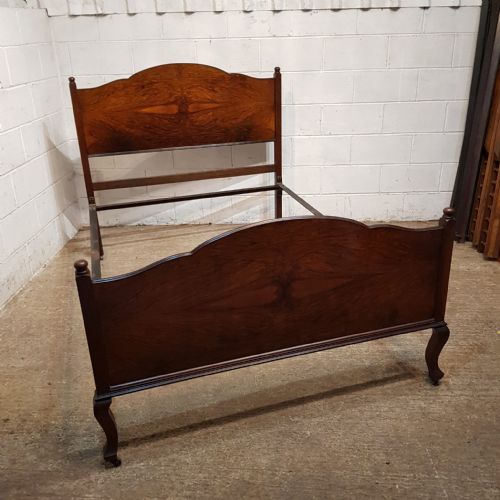
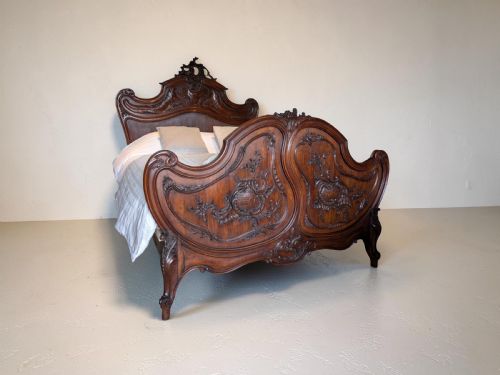
The versions you are most likely to meet on this page include nineteenth-century French carved walnut beds in the Louis XV style alongside Edwardian four-poster and slatted bedsteads. Oak, mahogany, walnut, and rosewood dominate the forms, occasionally complemented by fabric or velvet panels.
Makers approached these sleeping quarters with varying regional tastes, seen in Portuguese Baroque revival models and Georgian revival proportions. The category also captures related items that share the timber vocabulary of the primary furniture.
How they were made
Cabinet-makers constructed these beds using dense hardwoods such as oak, mahogany, walnut, and rosewood, often selecting burr walnut veneers for rich surface grain. Timber selection dictated the structural integrity and the decorative potential of each headboard and footboard.
Joinery techniques ranged from early seventeenth-century pegged framing to later nineteenth-century turned posts and Edwardian inlaid detailing. Carved ornamentation, seen in French Rococo revival pieces, relied on hand-chiselled relief work across solid walnut.
Dark Wood Double Bed Retail Price Guide 2026
Typical asking prices for dark wood double bed among the pieces listed under this phrase on Sellingantiques today, from the lower quarter to the upper quarter. They describe what is for sale here now, not the wider market.
What varies in quality
The distinction between standard production and superior work lies in the depth of timber figure and the crispness of hand-carved motifs. Pieces utilising burr walnut veneers or dense seventeenth-century oak display a greater textural richness than plain secondary woods.
Proportion and architectural balance set finer revival and period pieces apart from utilitarian joinery. The integration of period-appropriate inlays and well-executed stylistic revivals elevates the overall presence of the bedstead.
The Dark Wood Double Bed Glossary
- Bedstead
- The framework of a bed consisting of headboard, footboard, and rails. This structure supports the mattress base without including the bedding itself.
- Burr Walnut
- Timber taken from the growth excrescence on a walnut tree, yielding highly figured grain patterns. Cabinet-makers used these prized veneers on prominent surfaces.
- Four Poster
- A bed with four vertical columns supporting an upper canopy frame. Early examples utilised heavy oak with turned posts.
- Inlaid
- Decoration formed by fitting contrasting strips of wood into recessed portions of the primary surface. Edwardian makers frequently applied this technique to mahogany frames.
- Louis XV Style
- A revival style characterised by asymmetrical curves, scrollwork, and naturalistic carvings. French walnut beds often display these flowing contours.
Dark Wood Double Bed: Frequently Asked Questions
What mattress size fits these antique beds?
Many older bedframes do not conform to modern standardised metric dimensions. Buyers should carefully measure the internal rails to ensure standard or custom mattress sizes fit securely.
Some seventeenth-century and nineteenth-century examples require bespoke mattress manufacture to accommodate historical proportions and hand-built dimensions.
How do I identify the wood type?
Examine the grain pattern, colour variation, and weight of the timber components. Oak displays prominent medullary rays, while mahogany and walnut offer darker, smoother tones with distinct figuring.
Burr walnut is immediately recognisable by its swirling, circular grain clusters caused by tree growths.
Are these beds easy to assemble?
Historical bedsteads often utilise traditional bolts, iron bed hooks, or pegged joints rather than modern cam-lock systems. Professional assembly is frequently recommended to protect aged timbers.
Careful handling ensures that original side rails and structural joints remain undamaged during setup in a modern bedroom.
How do I care for dark wood finishes?
Maintain timber surfaces by dusting with a dry lint-free cloth and avoiding direct sunlight or excessive radiator heat. Excessive warmth causes historic hardwoods to dry out and split.
Occasional application of appropriate wax polish preserves the natural sheen of walnut, mahogany, and oak without building up heavy residues.