
Dark Wood Dining Buffet
A dark wood dining buffet brings gravity and generous surface area to a room, uniting functional storage with the deep grain of mahogany, oak, and walnut.
Dark Wood Dining Buffet
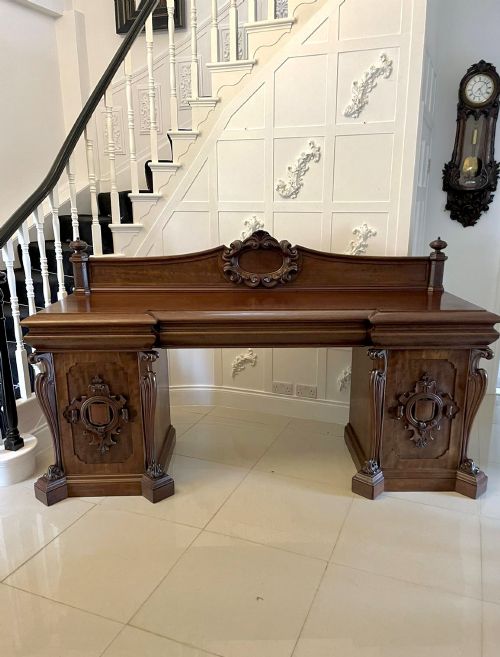
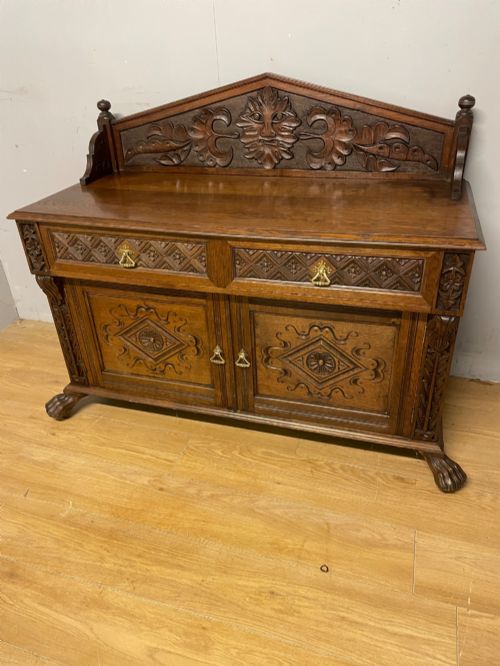
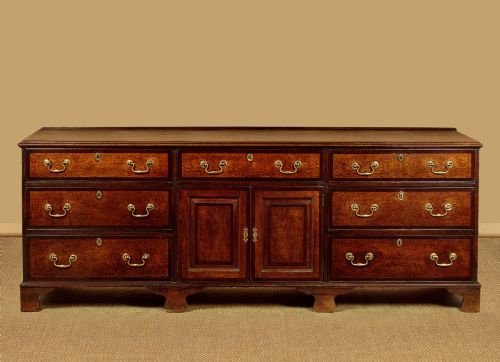
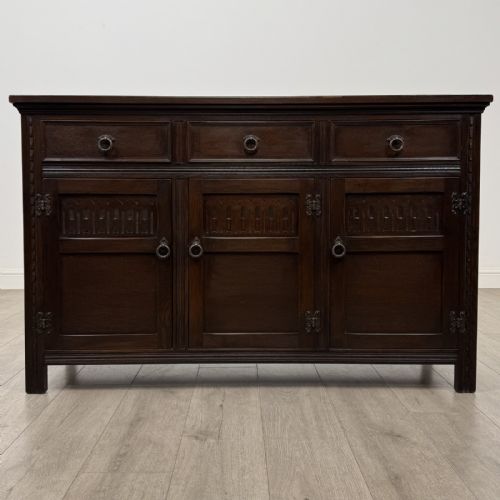
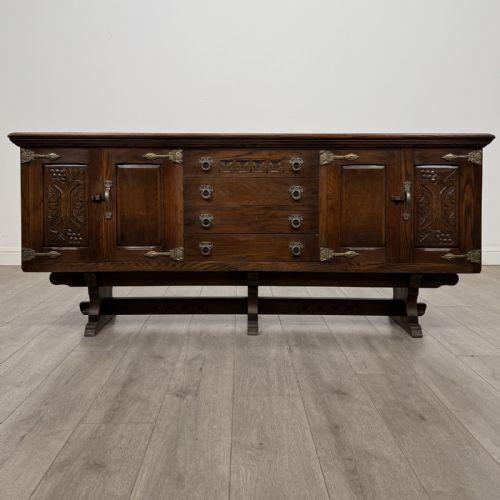
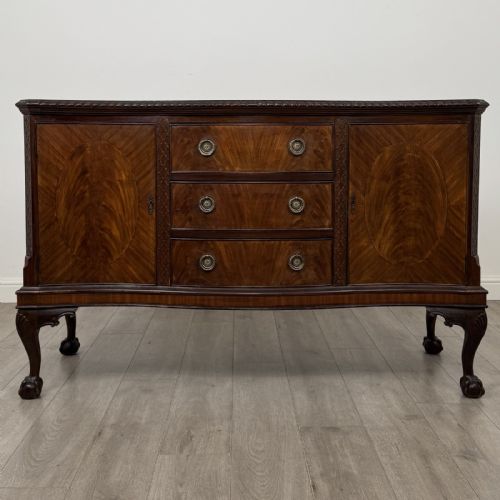
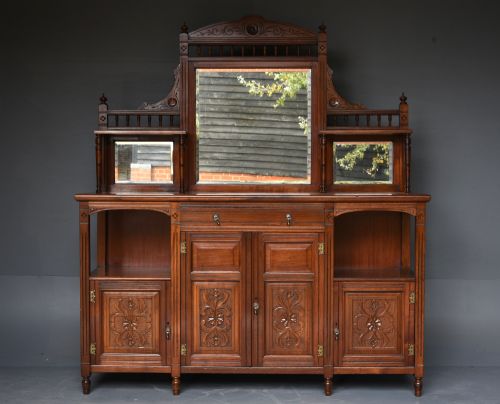
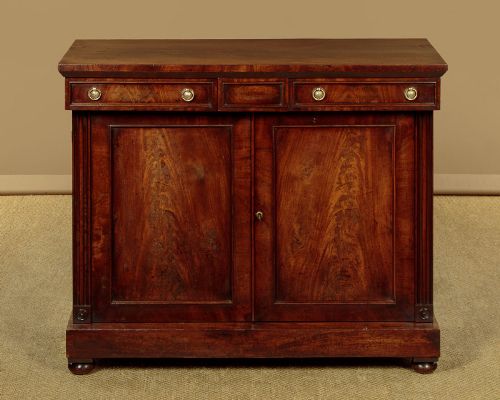
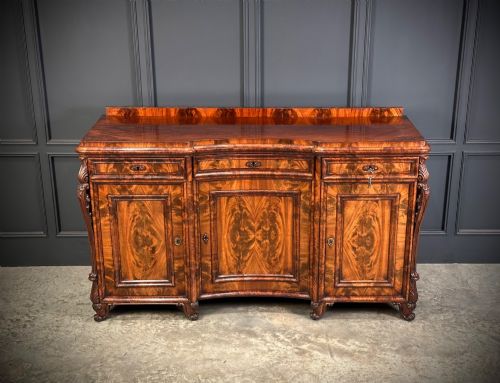
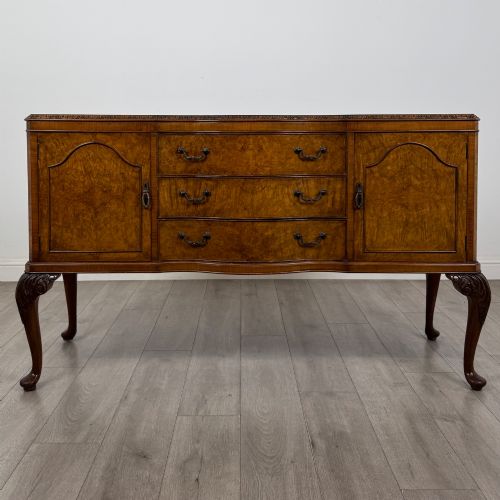
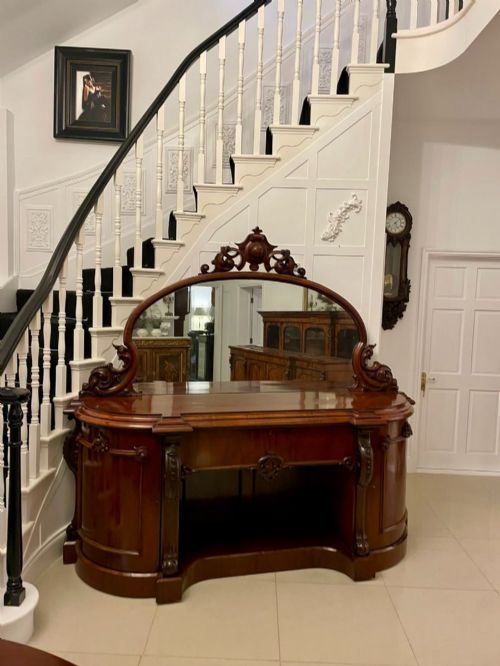
A dark wood dining buffet encompasses substantial serving tables, sideboards, and servers designed for the dining room. These pieces anchor a space through their scale and timber, offering deep cupboards, drawers, and surface space for hosting.
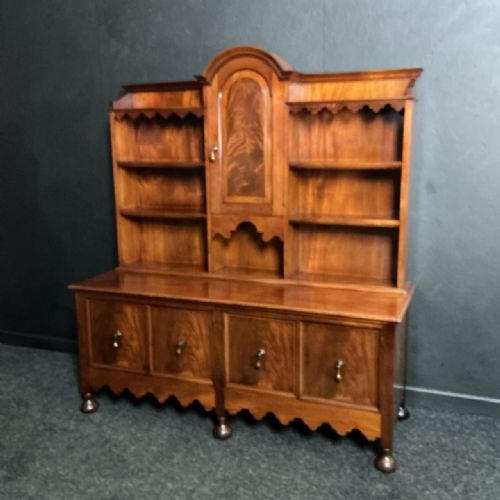
The versions most commonly met on this page span the Georgian, Victorian, and Edwardian periods. They appear in rich mahogany, figured walnut, and solid oak, ranging from austere early forms to elaborately carved mirror backs and revival styles.
What determines the standard of a piece
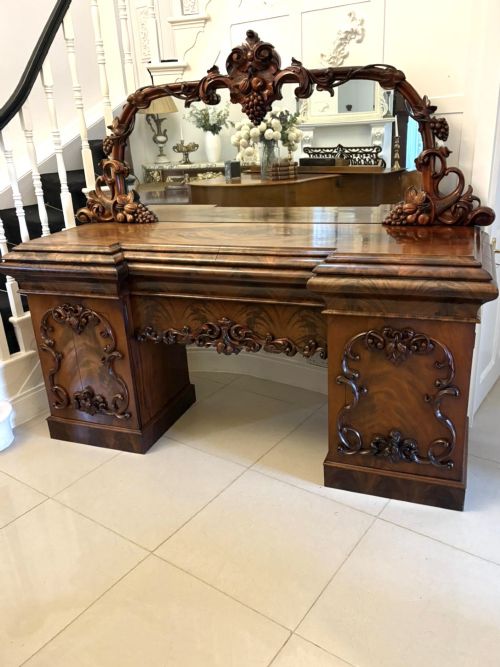
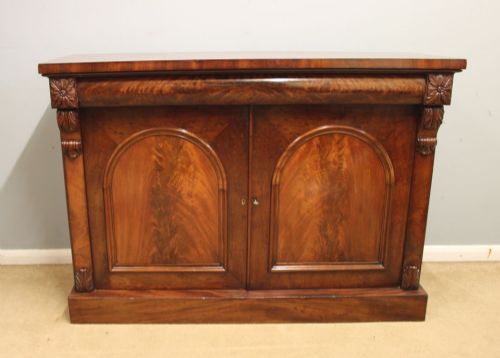
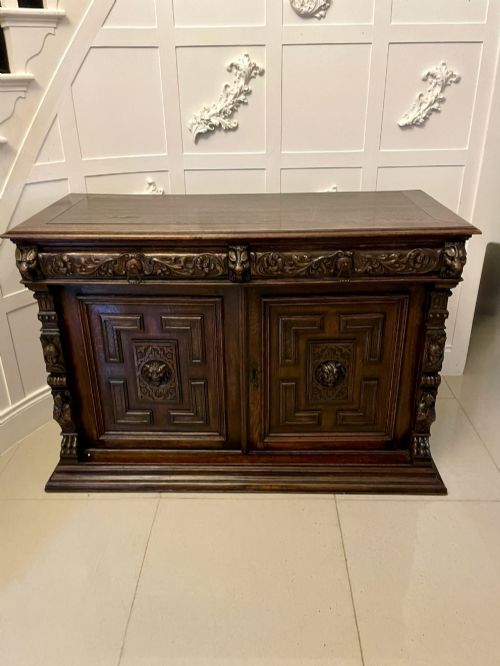
The standard of a piece rests heavily on the selection of the timber and the ambition of the carving. Exemplary examples display continuous, matched veneer grains across multiple drawers and deep, crisp hand-carved ornamentation rather than shallow machine work.
Structural integrity also separates the upper tiers from simpler utilitarian items. Well-made buffets retain smooth drawer runners, tightly joined carcase corners, and original hardware that integrates harmoniously with the period style.
Primary materials recorded across the inventory include mahogany, flame mahogany veneer, oak, walnut, rosewood, brass, glass, and boxwood.
Gillows
The Dark Wood Dining Buffet Glossary
- Chiffonier
- A low sideboard or cabinet, typically featuring shelves or a mirror superstructure. It evolved during the nineteenth century as a compact dining or drawing room serving piece.
- Breakfront
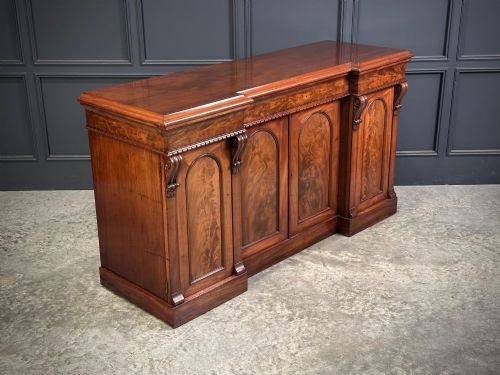
- A piece of furniture whose central section projects forward from the flanking cupboards or drawers. This architectural arrangement creates a dynamic rhythm across the front elevation.
- Flame mahogany
- A veneer cut from the branch junction of the mahogany tree, displaying a distinctive flickering, flame-like grain pattern. Cabinet makers reserved this highly decorative timber for prominent display surfaces.
- Serpentine
- A curved front edge that undulates with a convex centre flanked by concave curves. This sophisticated shaping requires precise carpentry and accentuates the quality of the timber.
- Dumb waiter
- A tiered serving table fitted with revolving or stationary shelves, used to hold dishes and silverware near the dining table without requiring servants close at hand.
Dark Wood Dining Buffet: Frequently Asked Questions
What is the difference between a buffet and a sideboard?
A buffet traditionally refers to a lower serving piece dedicated to food presentation, while a sideboard often incorporates greater storage capacity through multiple cupboards and drawers.
In practice, makers and buyers used the terms interchangeably across the Georgian and Victorian eras, meaning both fulfilled similar dining room functions.
How do I care for antique dark wood furniture?
Maintain timber surfaces by dusting regularly with a soft, dry cloth and avoiding silicone-based polishes that build up over time. Apply a traditional beeswax sparingly to nourish the grain and preserve the sheen.
Keep these heavy timber items away from direct heat sources and strong sunlight to prevent the wood from drying out and the veneers from lifting.
Where should I place a buffet in my dining room?
Position the piece against a principal dining room wall where it can serve as both a visual anchor and a practical surface during meals. Ensure there is adequate clearance in front of the piece for doors and drawers to open fully.
Allow enough space around the furniture so that the rich wood tones and carved details can be appreciated without feeling crowded by surrounding seating.
How can I tell a Victorian sideboard from a Georgian one?
Georgian pieces generally favour restrained architectural lines, subtle string-line inlays, and balanced proportions. They reflect an understated elegance rooted in classical design principles.
Victorian examples tend to be larger and heavier, frequently featuring bold carved motifs, mirror backs, and darker, highly figured mahogany or walnut veneers that project an air of industrial-age confidence.