


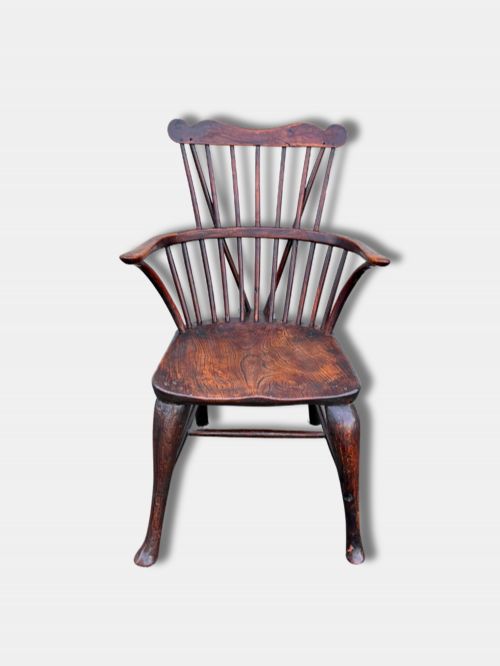


Dark Wood Country Stick
A dark wood country stick represents the functional vernacular seating and walking aids shaped from local timber by rural hands.
Dark Wood Country Stick
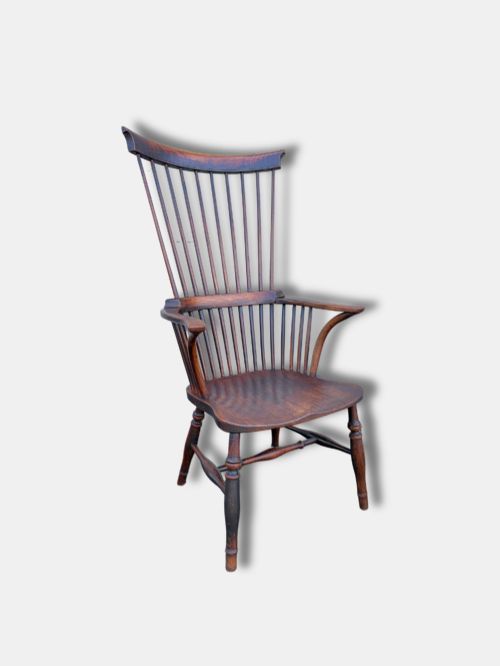
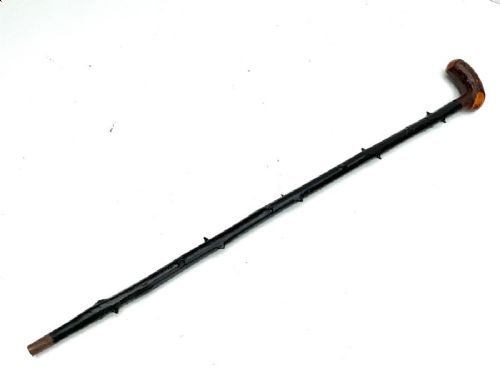
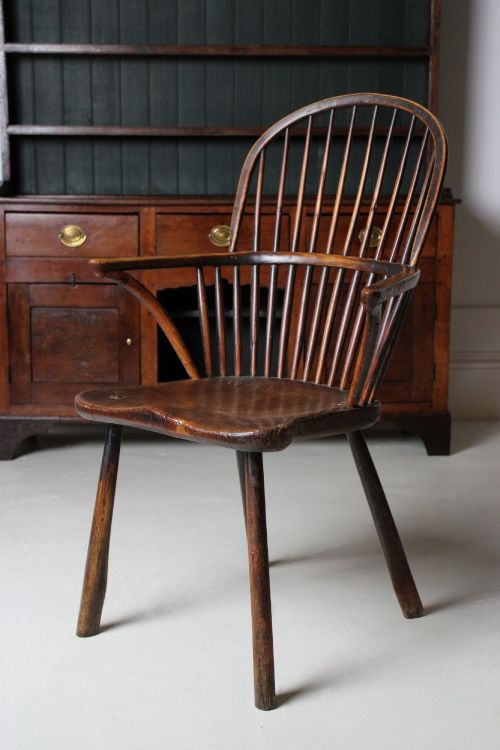
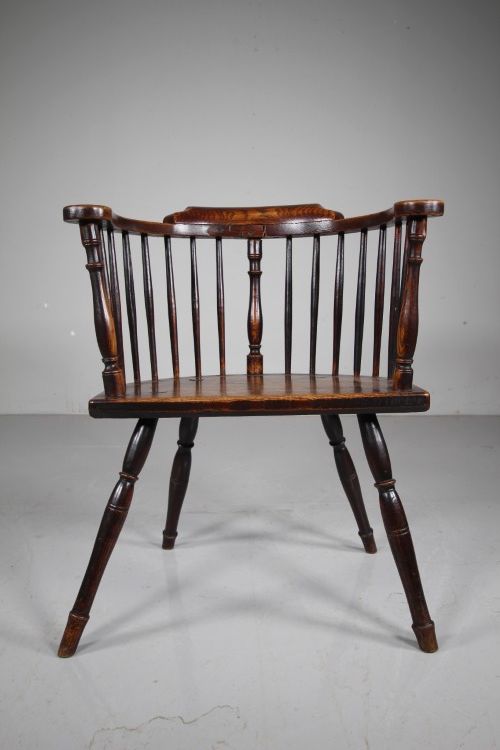
A dark wood country stick search brings together utilitarian seating and functional accessories made across the eighteenth and nineteenth centuries. Buyers encounter stick back chairs, Windsor forms, and walking sticks shaped in regional workshops.
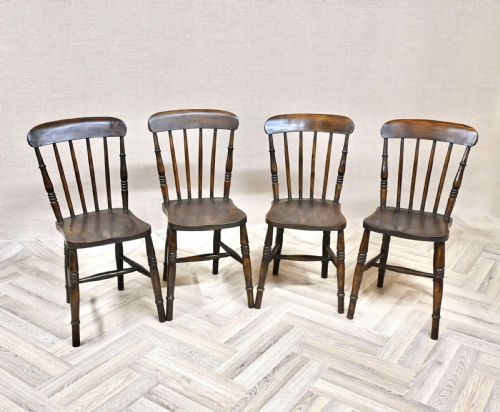
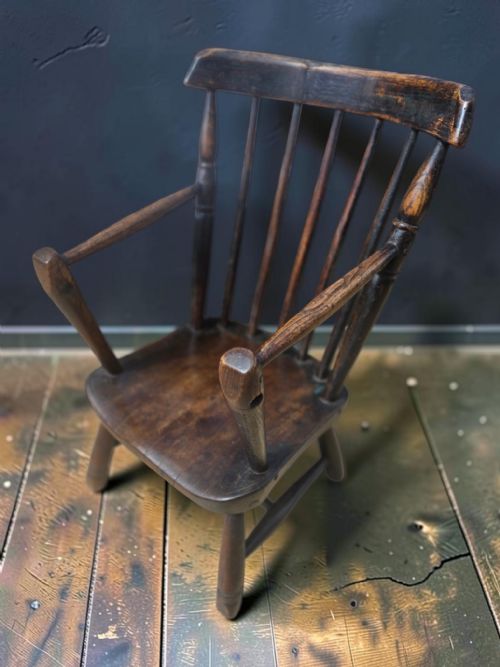
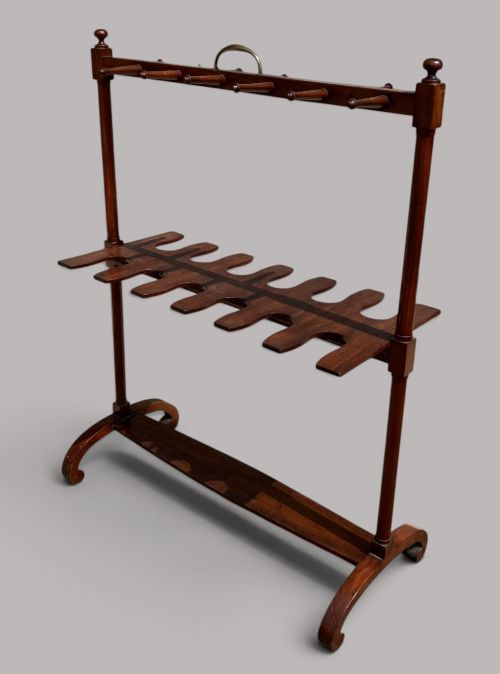
The material record on this page leans toward Windsor armchairs, dining chairs, and occasional children's chairs alongside hall stick stands and walking canes. These objects originate from English, Welsh, and Irish domestic contexts, spanning Georgian, Regency, and Victorian periods.
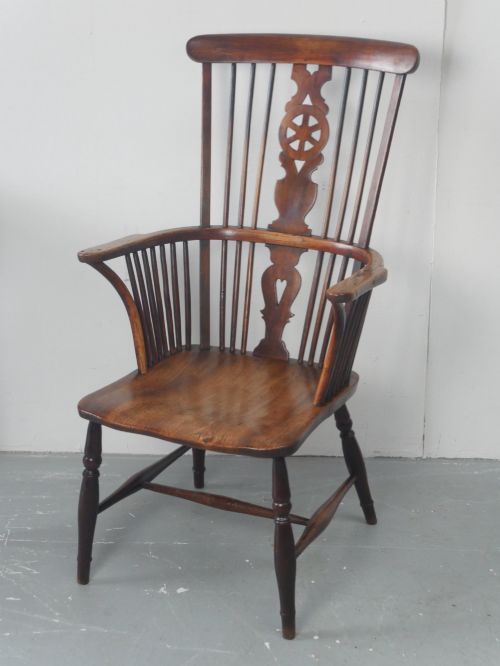
The most common survival from this tradition is the Windsor chair, constructed with a solid elm seat, ash spindles, and often a yew or fruitwood bow. Alongside these sit utilitarian stick stands and blackthorn walking sticks designed for heavy rural use.
How they were made
Maker-craftsmen utilised local hardwoods, pairing dense elm for carved saddle seats with flexible ash for steam-bent bows and spindles. Yew and fruitwood appear where superior figure or bending strength was required for comb backs and arms.
Construction relied on traditional green woodworking methods, turning legs on pole lathes and wedging tenons directly into bored seats. Surface treatment often consists of historic paint, dark wax, or simple polish built up through generations of handling.
Dark Wood Country Stick Retail Price Guide 2026
Typical asking prices for dark wood country stick among the pieces listed under this phrase on Sellingantiques today, from the lower quarter to the upper quarter. They describe what is for sale here now, not the wider market.
Some walking sticks double as concealed sword blades, proving that a country stroll occasionally required unexpected backup.
What varies in quality
Quality rests in the balance of proportions, the comfort of the saddle shaping, and the retention of original timber surfaces. A piece with untouched patination and tight structural joints commands greater regard than one stripped or heavily replaced.
Regional distinctiveness separates standard utilitarian furniture from exceptional vernacular pieces, such as Welsh comb backs or Thames Valley Windsors with complex turning. The integrity of the wood and the boldness of the stick construction dictate the standing of each item.
John Brand of Sleaford
The Dark Wood Country Stick Glossary
- Windsor chair
- A chair built with a solid wooden seat into which the legs and back spindles are driven directly. This form relies on a heavy saddle-shaped base for stability.
- Comb back
- A Windsor chair variation where the top rail resembles the spine of a traditional hair comb. Vertical spindles rise through a horizontal arm bow to meet the crest.
- Vernacular
- Objects built by local tradesmen following regional traditions rather than metropolitan pattern books. These pieces prioritise utility and local timber availability.
- Patina
- The surface sheen and colour acquired by wood through age, light exposure, and frequent handling. A desirable patination shows depth without artificial chemical intervention.
- Blackthorn
- A dense, tough wood traditionally used for walking sticks and shillelaghs. The natural thorns leave characteristic knots along the shaft.
Dark Wood Country Stick: Frequently Asked Questions
What is a country stick chair?
A country stick chair is a vernacular wooden seat constructed with turned spindles inserted into a solid plank base. These chairs served everyday rural functions in farmhouses and cottages.
They rely on simple joinery techniques, using wedged tenons to hold the structural uprights firmly in place.
How do I date a Windsor chair?
Dating relies on observing the shaping of the seat, the thickness of the arm bow, and the turning style of the legs. Earlier eighteenth-century examples often feature elaborate comb backs and broader proportions.
Nineteenth-century versions tend toward standardised commercial production with simpler spindle turnings and thinner seats.
Why are elm and ash used together?
Elm provides a stable, interlocking grain that resists splitting when shaped into a thick saddle seat. Ash offers high tensile strength and flexibility for steam-bending slender back spindles.
Using these native timbers in combination maximised the structural performance of each piece without relying on imported materials.
How do I care for antique dark wood?
Keep wooden furniture away from direct heat sources and sudden humidity shifts to prevent timber shrinkage and cracking. Apply traditional beeswax sparingly to nourish the dry surface.
Avoid modern liquid polishes that build up artificial layers and dull the historic patination of the wood.