



Dark Wood Book Rack
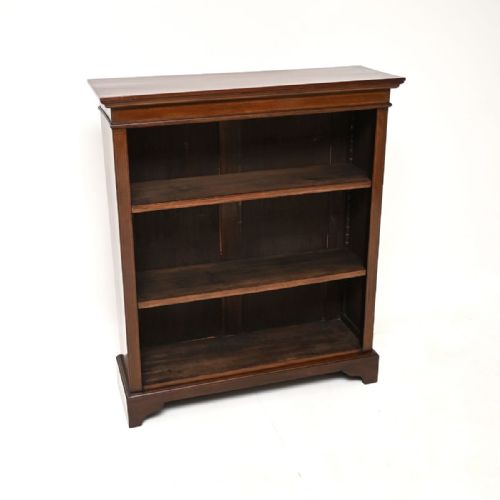
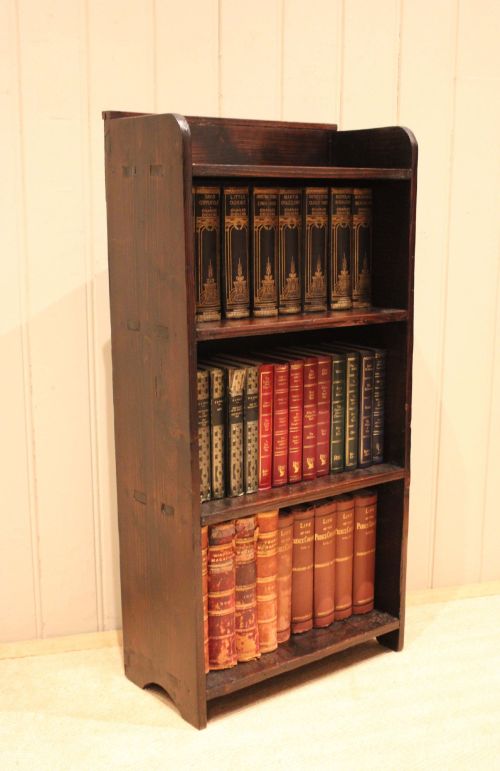
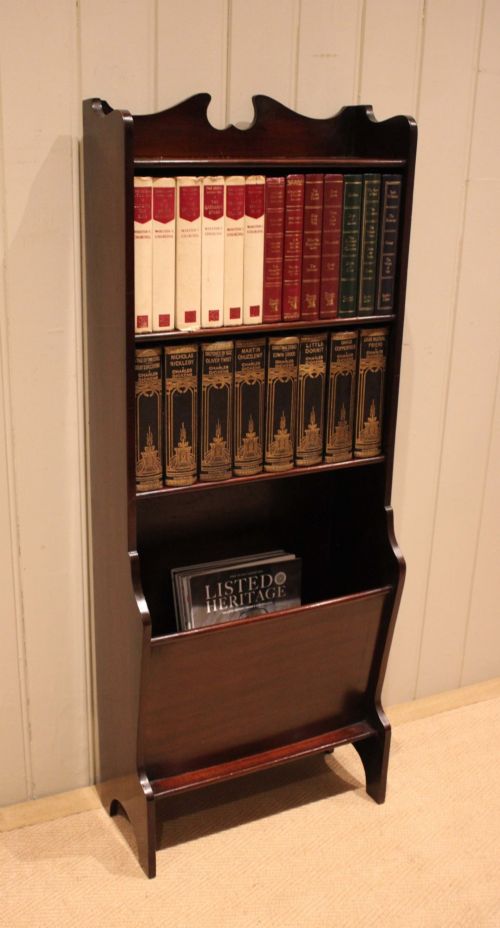
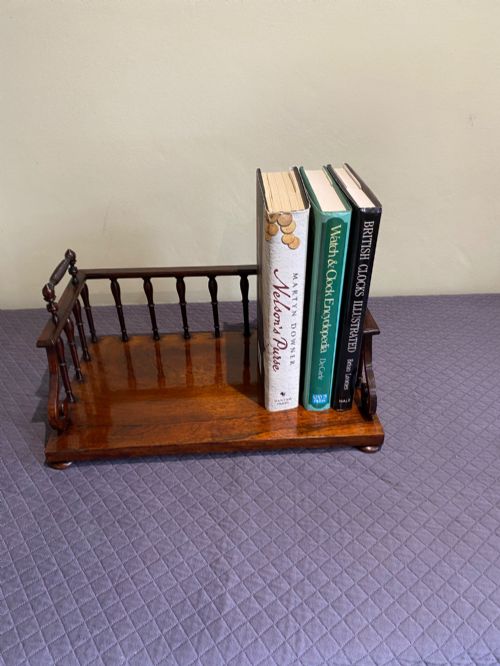
A dark wood book rack organises volumes upon a desk or shelf, bringing rich timber and practical structure into a room.
Dark Wood Book Rack
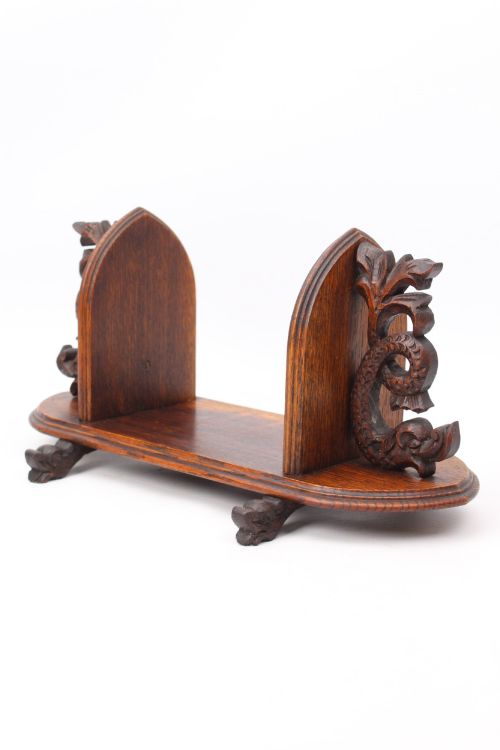
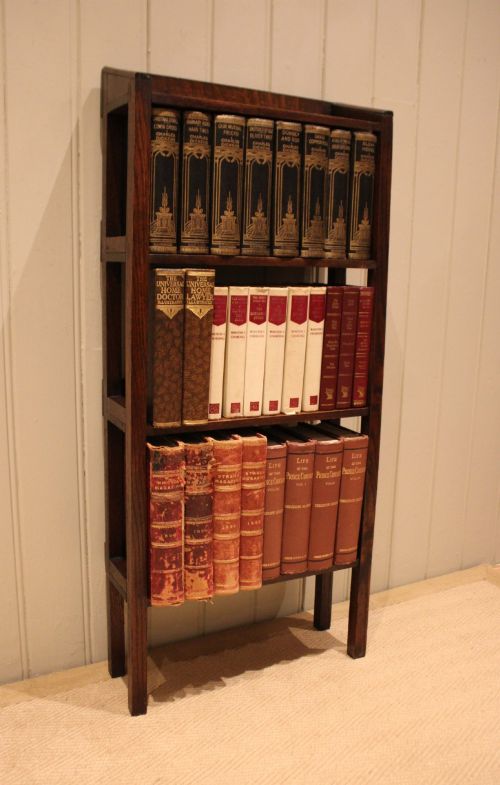
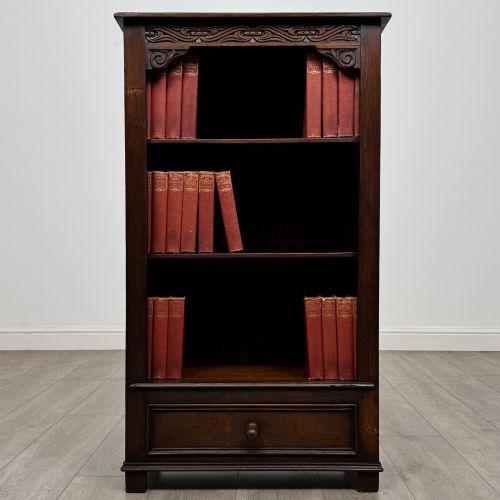
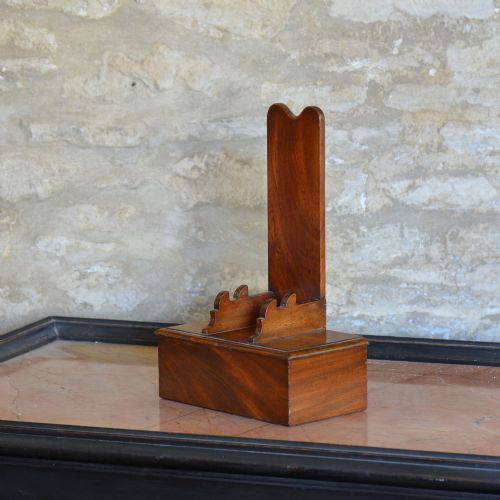
A dark wood book rack encompasses desk accessories, book stands, and portable shelves designed to keep volumes upright and accessible. These pieces emerge in various periods, including the Regency, Victorian, and Edwardian eras.
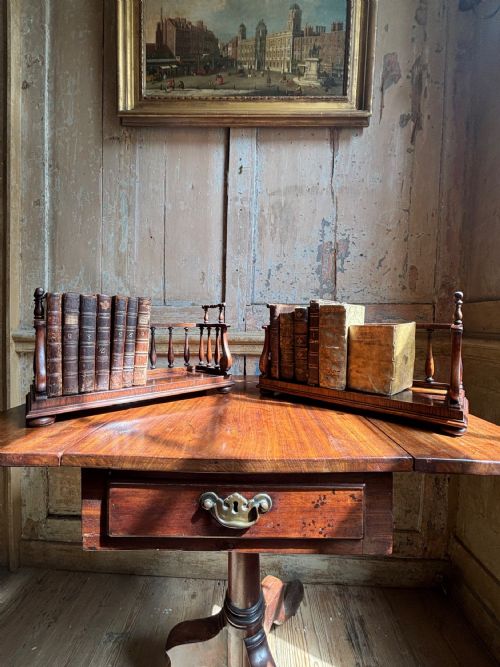
The version most commonly met on this page is the compact table or desk companion, often taking the form of an extending book slide or a small open bookcase. Makers utilised sturdy timbers to construct items that served libraries, studies, and drawing rooms alike.
Forms range from simple trough designs to revolving bookstands and folio stands for newspapers. Their origins span standard English cabinet-making as well as more distant workshops producing carved teak pieces.
How they were made
Makers relied on dense hardwoods such as mahogany, oak, and rosewood to construct these racks, ensuring stability for heavy volumes. Timbers were frequently selected for rich grain patterns, including flame mahogany and figured walnut.
Construction techniques involved precise joinery for open shelving alongside mechanical actions for extending slides and rotary stands. Brass fittings, such as hinges and brackets, often reinforced corners and supported sliding ends.
Decoration was integrated through carved motifs, inlay work utilising materials like mother of pearl, and occasional painted finishes. These methods combined structural integrity with refined decorative surface work.
Object types span portable bookshelves, revolving stands, music tables, and wall shelves.
What varies in quality
The distinction between standard items and superior examples lies in the selection of timber and the precision of the cabinet work. Dense, richly figured woods and crisp, deep carving indicate a higher standard of manufacture.
Mechanism fluidity defines quality in extending slides and revolving stands, where smooth operation reflects careful initial engineering. The integration of secondary materials, such as heavy brass mounts or fine inlay, elevates the standing of an individual piece.
Gillows·Waring and Gillows
The Dark Wood Book Rack Glossary
- Book slide
- An adjustable desktop rack with ends that pull outward to accommodate varying quantities of volumes. These pieces often incorporate brass ratchets or folding mechanisms.
- Book trough
- A V-shaped open receptacle designed to hold books upright on a table or desk. This form prevents volumes from leaning and keeps titles visible from above.
- Folio stand
- A hinged rack intended for large newspapers, maps, or art folios. These stands adjust to support oversized paper formats safely.
- Whatnot
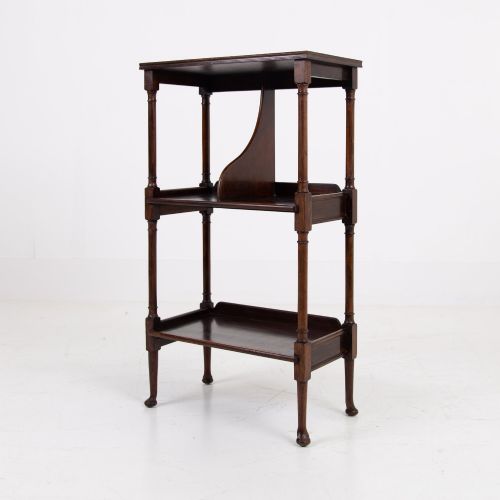
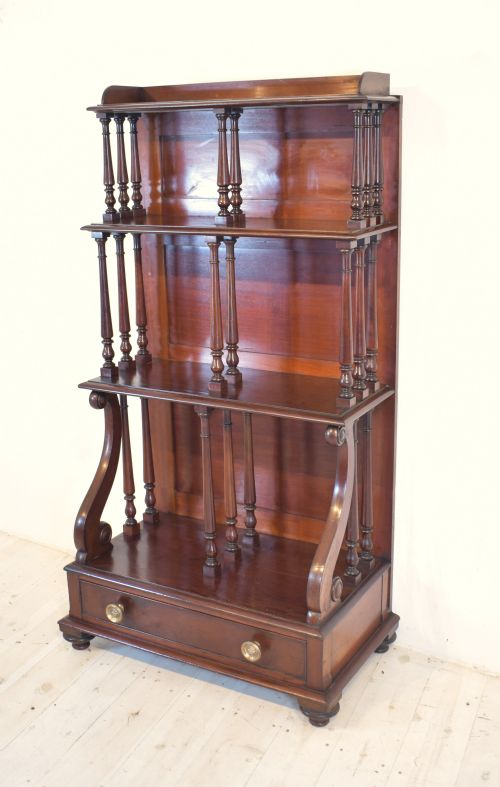
- A multi-tiered open shelving unit used for displaying books and small ornamental objects. They appear in corner and freestanding formats across the 19th century.
- Rotary bookstand
- A desktop revolving unit allowing access to multiple volumes from a seated position. The mechanism typically relies on a central pivot and concealed bearings.
Dark Wood Book Rack: Frequently Asked Questions
How do I use a book slide?
Place the slide on a desk or table and expand the ends outward to fit the desired number of volumes. The adjustable sides press inward to keep the books upright without falling.
This mechanism allows the rack to adapt as your collection of volumes changes in size and number over time.
Where were book troughs placed?
These open troughs typically sat on top of library tables, partner desks, or sideboards where working volumes needed to stay close at hand. Their open V-shape made selecting a text straightforward during daily study.
They provided an accessible holding space for current reading material rather than long-term archival storage.
What is a folio stand?
A folio stand is a larger hinged rack designed to support oversized newspapers, plates, and unbound manuscripts. They allowed gentlemen to examine large periodicals without damaging the paper edges.
Many examples fold flat when not in use, making them adaptable pieces for studies and drawing rooms.
How do I identify a Victorian piece?
Victorian pieces frequently display heavier proportions, darker timbers like rosewood and oak, and decorative elements such as Gothic revival carving or mother of pearl inlay. Examining the construction of the joints and the style of any brass hardware helps confirm the era.
Makers of this period often experimented with diverse global influences, producing Anglo-Indian carved teak alongside traditional English designs.