



Dark Wood Firearm
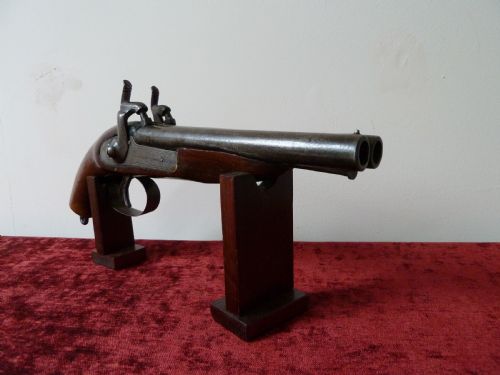
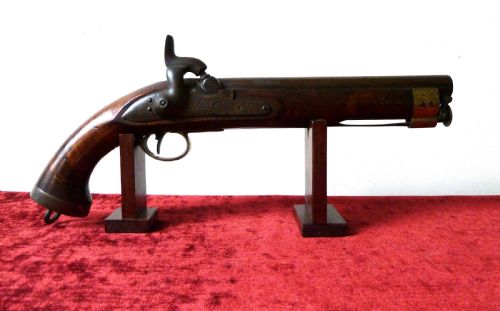
These pieces of dark wood antique firearm encompass pistols, muskets and rifles spanning the Georgian and Victorian eras.
Dark Wood Firearm
When you search for a dark wood antique firearm, you encounter a diverse range of military, sporting and tribal arms spanning the eighteenth and nineteenth centuries. These items include flintlock, percussion, matchlock and snaphaunce mechanisms originating from British, European and Asian workshops.
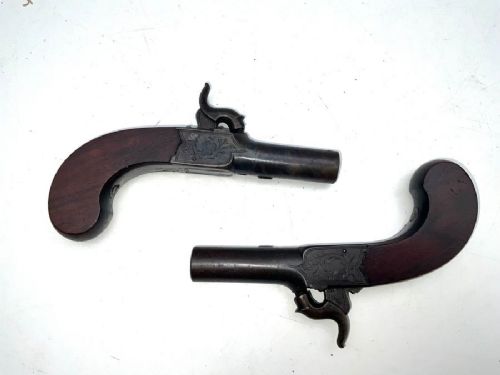
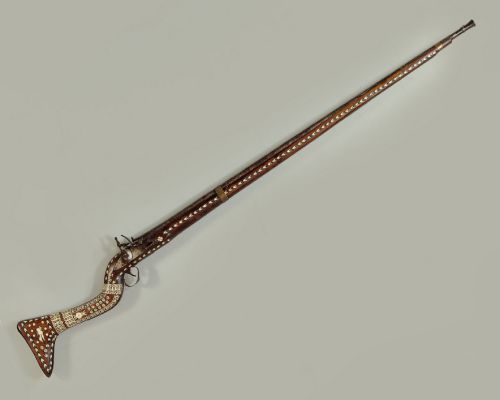
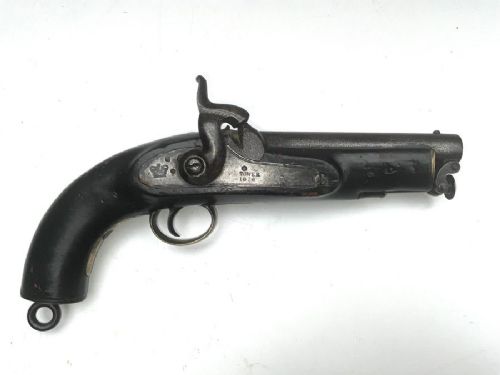
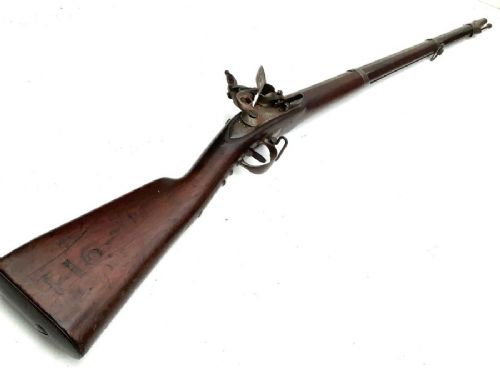
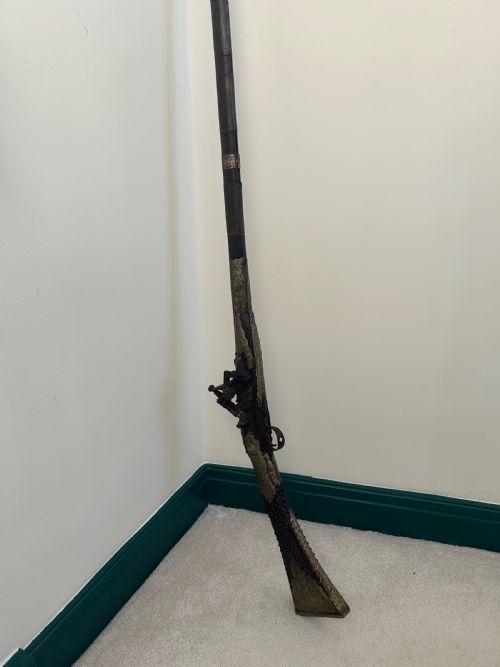
The selection on this page relies heavily on pocket pistols, cavalry holster pistols, blunderbusses and long muskets such as the Jezail and Toradar. Many pieces display distinct regional characteristics, from Napoleonic period muskets to North Indian matchlock guns.
Militaria and wall art categories also appear among the offerings, reflecting both functional weaponry and decorative arms. The overarching common thread is the combination of dark hardwood stocks with steel, iron and brass components.
Materials and construction
Gunmakers constructed the stocks of these arms primarily from walnut and general hardwood, providing a dense and durable foundation for the firing mechanisms. Metalwork in steel and iron forms the barrels and locks, while brass furniture and mounts frequently reinforce the structure.
Craftsmen often embellished these pieces using intricate techniques such as bone inlay, silver inlay and engraved brass bands. Mechanisms progressed from early matchlock and flintlock systems to later percussion and pinfire ignition methods.
Some nineteenth century pocket pistols managed to incorporate foldaway bayonets for unexpected close encounters.
Judging the quality
The refinement of the metal engraving and the complexity of the stock ornamentation separate standard military issue pieces from high-grade decorative arms. Examples featuring extensive silver or bone inlay display superior artisan skill compared to plain service models.
Originality of components and clarity of maker stamps, such as London proofs or specific maker signatures, elevate the standing of an item. The preservation of the woodwork grain alongside unpolished metal surfaces marks the distinction between ordinary and exceptional specimens.
T. Potts, London·Sargant & Son, Birmingham·Manton
The Dark Wood Firearm Glossary
- Flintlock
- An ignition mechanism that uses a piece of flint striking a steel frizzen to create sparks that ignite the black powder charge. This system dominated military and civilian arms throughout the eighteenth and early nineteenth centuries.
- Percussion
- A later firing system relying on a percussion cap struck by the hammer to detonate the powder inside the barrel. It replaced the flintlock method due to its reliability in damp weather.
- Matchlock
- An early firearm mechanism where a slow-burning match is lowered into a flash pan to ignite the powder. It is frequently seen on traditional South Indian and Afghan pieces.
- Jezail
- A type of long gun utilised across the Afghan and North Indian frontier, recognisable by its distinct curved wooden stock. These pieces often feature detailed bone or metal inlay.
- Blunderbuss
- A muzzle-loading firearm with a flared barrel designed to scatter lead shot at close range. They were widely used for coach defence and naval service during the Georgian period.
Dark Wood Firearm: Frequently Asked Questions
What is a dark wood antique firearm?
These items are historical firearms featuring wooden stocks made from walnut and other hardwoods, combined with metal locking mechanisms. They cover a chronological spread from the eighteenth century through the Victorian era.
Such arms range from British military service pistols to ornate matchlock muskets from the Mughal Empire and Afghan tribes.
How do flintlock and percussion systems differ?
A flintlock relies on a flint striking a steel frizzen to generate a spark for ignition. This technology represents the standard of the eighteenth and early nineteenth centuries.
In contrast, the percussion system uses a small priming cap struck directly by the hammer. This innovation provided greater reliability in wet conditions from the mid nineteenth century onward.
What is a Jezail rifle?
A Jezail is a traditional long gun associated with the nineteenth century Afghan frontier and North Indian regions. They are typically characterised by long barrels and heavily curved wooden stocks.
Many examples feature elaborate bone or metal inlay work along the hardwood body, reflecting regional decorative traditions.
How should I display a wall piece?
Wall pieces and arms designated as display items are generally mounted securely using specialised brackets that support the weight of the barrel and stock. Proper placement avoids direct sunlight and extreme temperature fluctuations to protect the antique wood.
Ensuring stable atmospheric conditions preserves the integrity of both the hardwood and any delicate bone or metal inlay.