



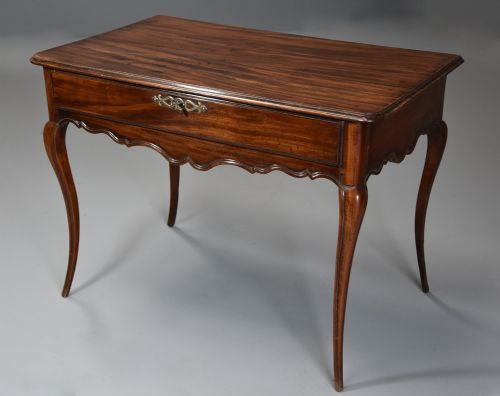
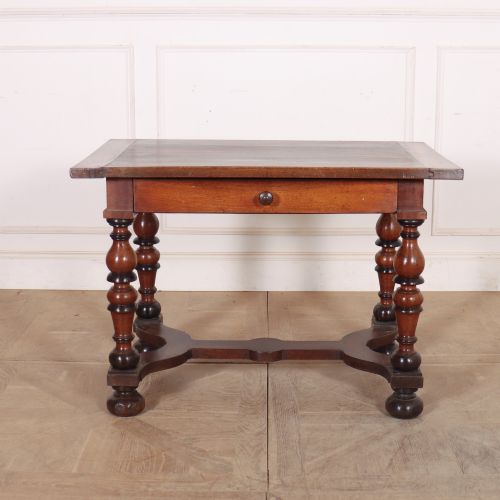
Dark Walnut Writing Table
A dark walnut writing table brings deep timber tones and a solid workspace into a room, spanning periods from the seventeenth century to the twentieth.
Dark Walnut Writing Table
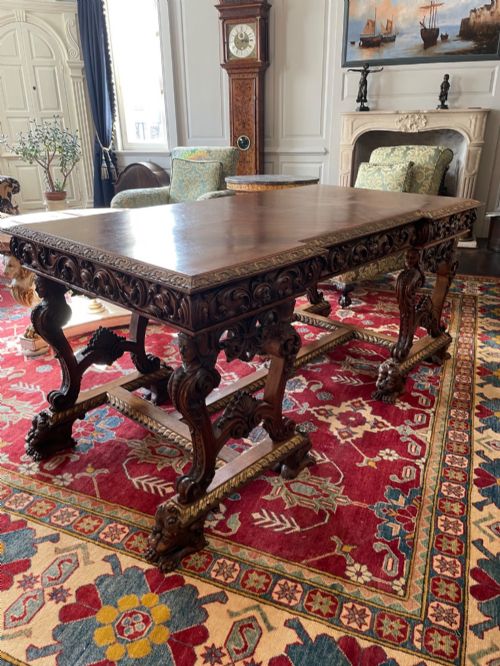
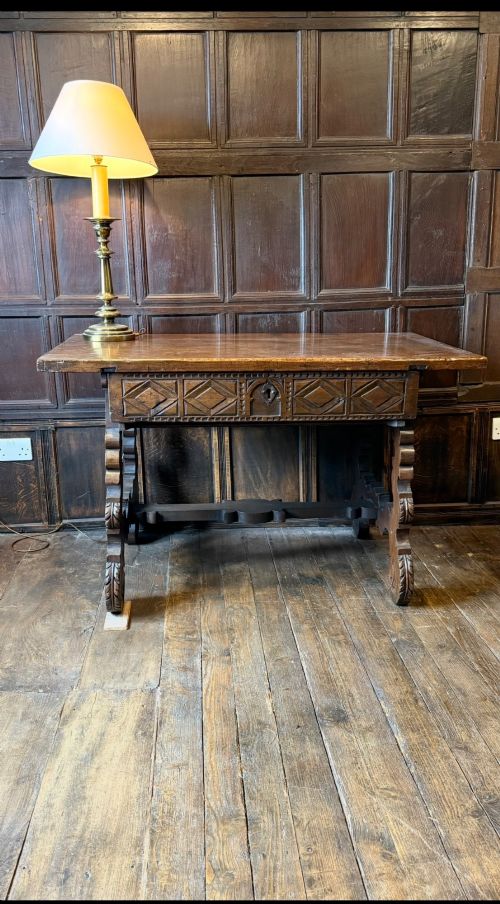
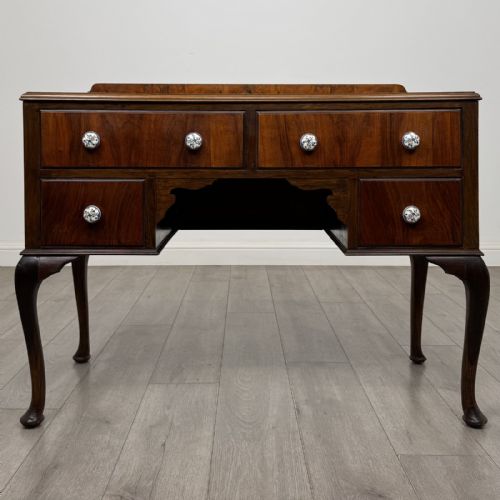
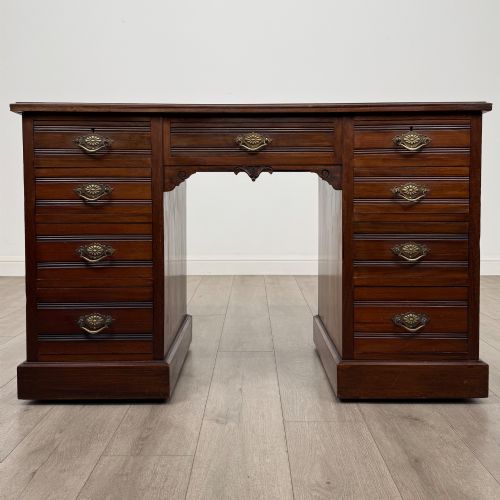
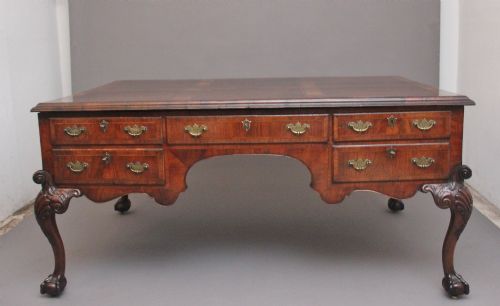
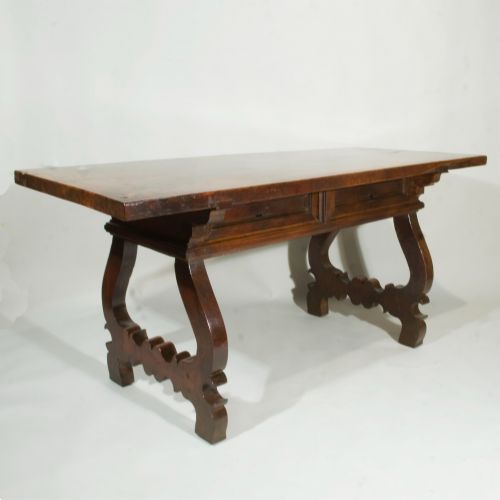
A dark walnut writing table encompasses everything from compact lowboys and side tables to large partners desks and twin pedestal forms. The selections span centuries of cabinetmaking, ranging from seventeenth-century Spanish and continental examples to Victorian, Edwardian, and Art Deco iterations.
Buyers frequently encounter nineteenth-century pedestal desks and eighteenth-century lowboys among these listings. These pieces serve practical functions in studies and libraries while displaying the rich, dark grains intrinsic to the timber.
Materials and construction
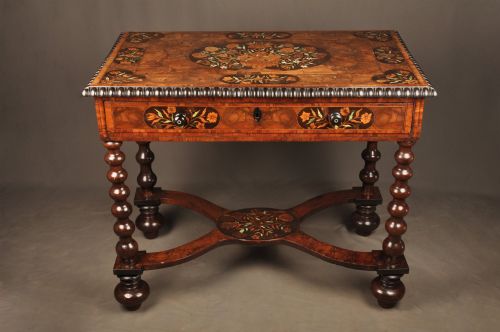
Cabinetmakers utilised solid walnut and burr walnut veneers over secondary timbers, often incorporating marquetry and intricate inlay. Surfaces frequently integrate tooled leather writing inserts, alongside brass hardware such as drop handles and escutcheons.
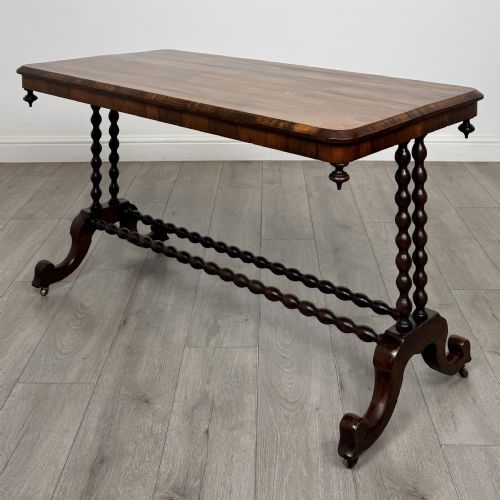
Structural elements rely on traditional joinery, sometimes supported by wrought iron or bone details. Carved motifs, barley twist supports, and turned spindle bases appear across various regional workshops and periods.
Dark Walnut Writing Table Retail Price Guide 2026
Typical asking prices for dark walnut writing table among the pieces listed under this phrase on Sellingantiques today, from the lower quarter to the upper quarter. They describe what is for sale here now, not the wider market.
A nineteenth-century table hides its working surface beneath an octagonal Reformed Gothic top.
Assessing quality
Quality depends upon the depth of the natural patina and the preservation of the original timber surfaces. Finely figured burr walnut and crisp, hand-carved details distinguish superior examples from plain utility pieces.
The integrity of the construction, from smooth drawer operation to intact leather insets, determines the standing of a desk. Original hardware and untouched patination elevate pieces originating from earlier centuries.
Betty Joel·Étienne Kohlmann
The Dark Walnut Writing Table Glossary
- Partners desk
- A large freestanding desk designed for two people to work opposite one another. These tables feature drawers and cupboards on both sides.
- Burr walnut
- A veneer taken from the knotted growth of a walnut tree, highly prized for its swirling grain patterns. It creates decorative, highly figured surfaces on tabletops and drawer fronts.
- Bureau plat
- A French freestanding writing table with one or more rows of drawers beneath the top. They often display bronze mounts and leather writing surfaces.
- Marquetry
- Decorative veneer work forming pictures or geometric patterns using various coloured woods. Craftsmen cut pieces precisely to fit flush into the surface.
Dark Walnut Writing Table: Frequently Asked Questions
What is a walnut lowboy?
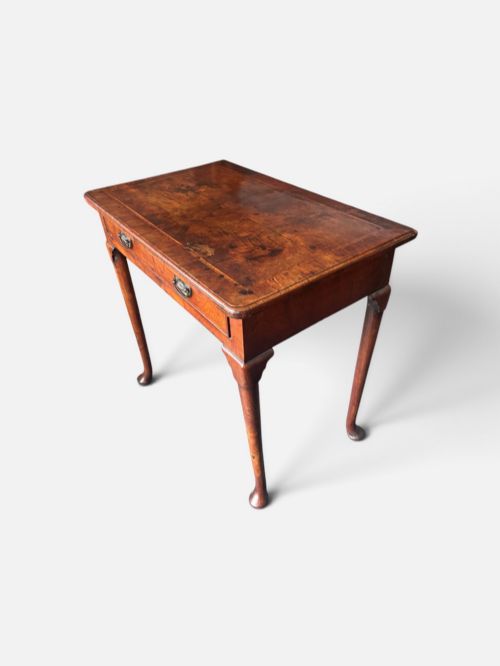
A lowboy is a compact table featuring one or more rows of drawers beneath the surface. Originating in the seventeenth and eighteenth centuries, these versatile tables served variously for writing, dressing, or serving.
They generally stand on slender legs, often terminating in pad or trilobe feet. Their modest proportions allow them to fit easily into smaller residential spaces.
How do I care for a leather desk top?
Many period writing tables feature tooled leather inserts that require gentle maintenance. Keep the leather clean from dust and away from direct sunlight to prevent drying.
Apply a specialist leather cream occasionally to maintain suppleness and protect the gold tooling. Avoid using harsh chemical cleaners or excess moisture on the surface.
Are partners desks double-sided?
Partners desks are designed specifically for two people to use simultaneously from opposite sides. Consequently, they feature working drawers or cupboards accessible from both fronts.
Because of this double-sided construction, these large tables usually stand proudly in the centre of a room rather than against a wall.
What distinguishes burr walnut from plain walnut?
Burr walnut utilises wood harvested from the abnormal growth knots of the tree. This produces a dense, swirling grain pattern full of intricate eyes and rich movement.
Plain walnut timber displays a straighter, more uniform grain structure. Cabinetmakers reserved burr veneers for the most decorative focal points of high-status furniture.