




Dark Walnut Open Shelf
A dark walnut open shelf brings deep timber grain and accessible display space to a room, uniting utility with rich nineteenth-century character.
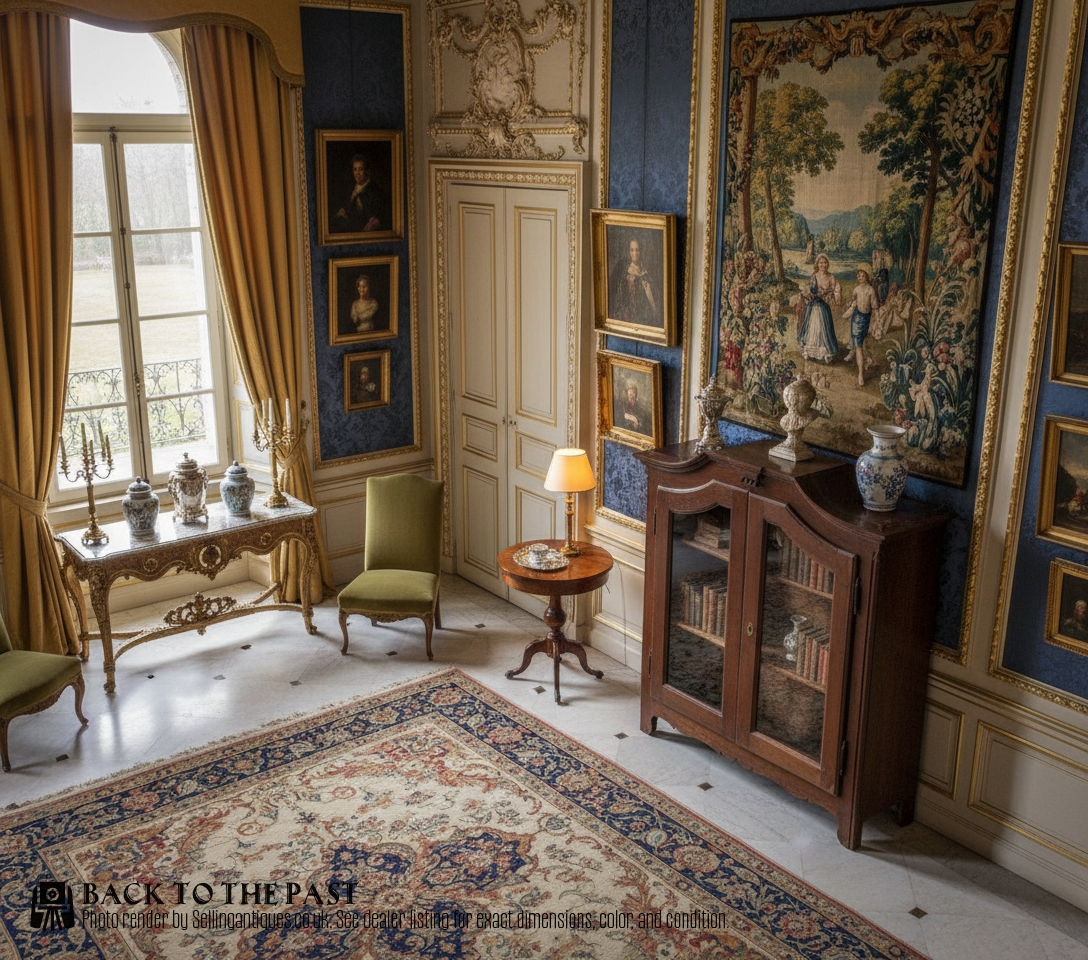
Dark Walnut Open Shelf
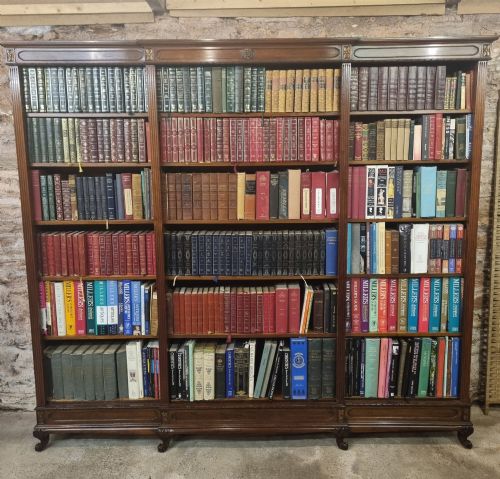
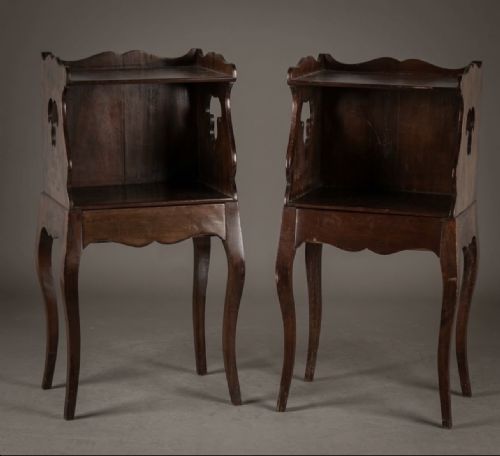
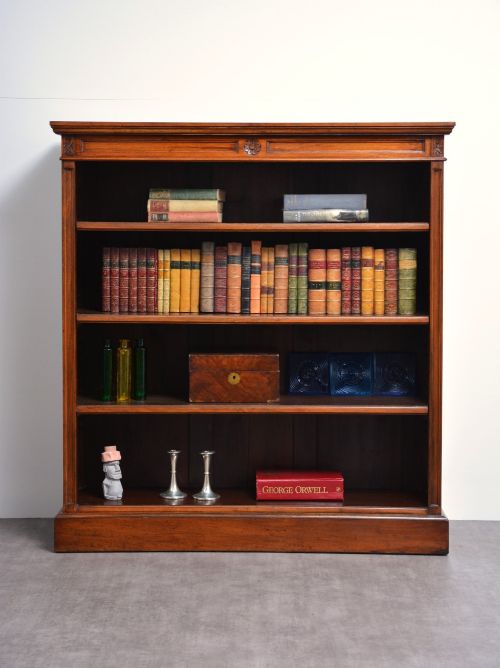
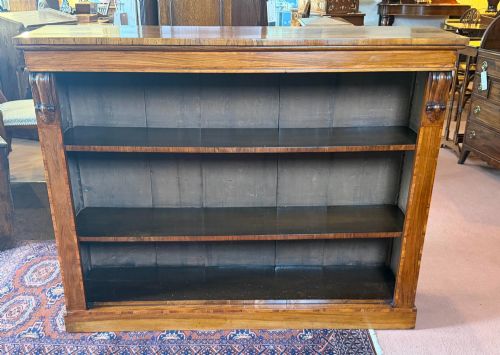
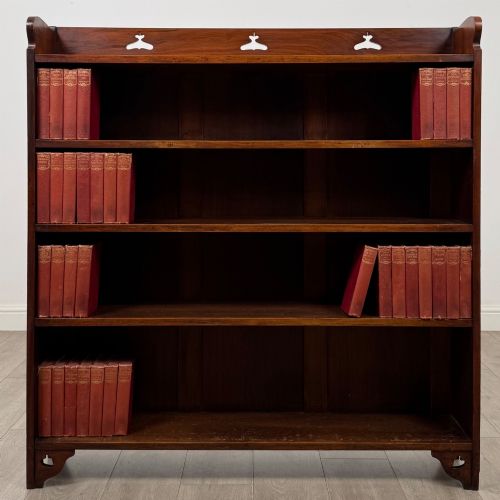
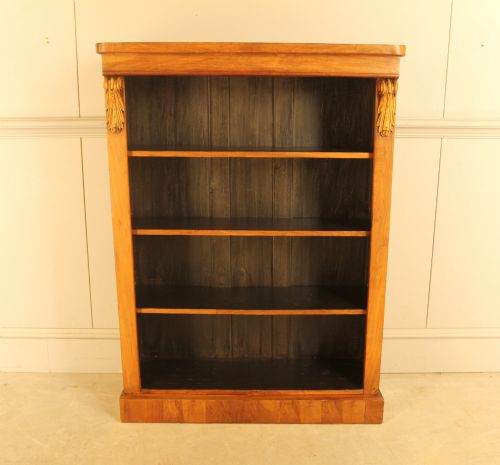
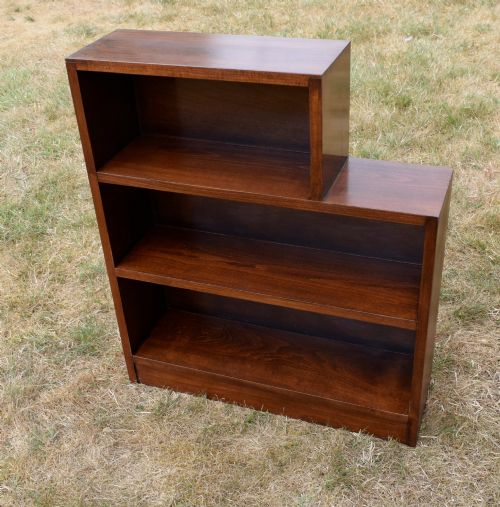
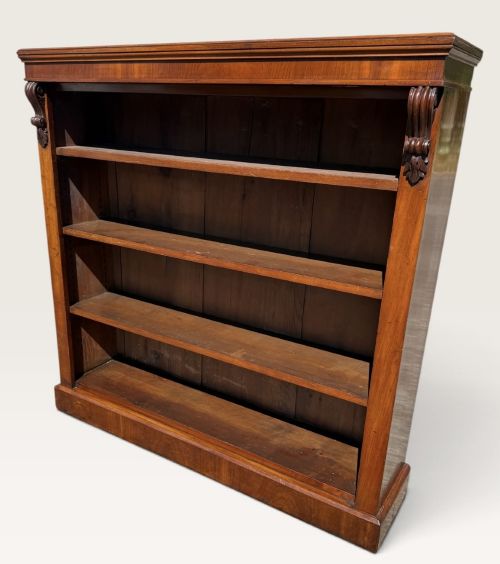
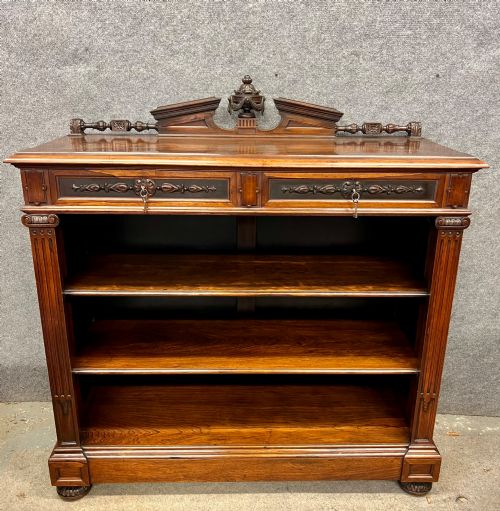
When you search for a dark walnut open shelf, you encounter pieces designed to hold books, collections, and decorative objects without the barrier of doors. These functional furnishings appear primarily in Victorian, Edwardian, and later twentieth-century formats, ranging from tiered etageres to substantial bookcases.
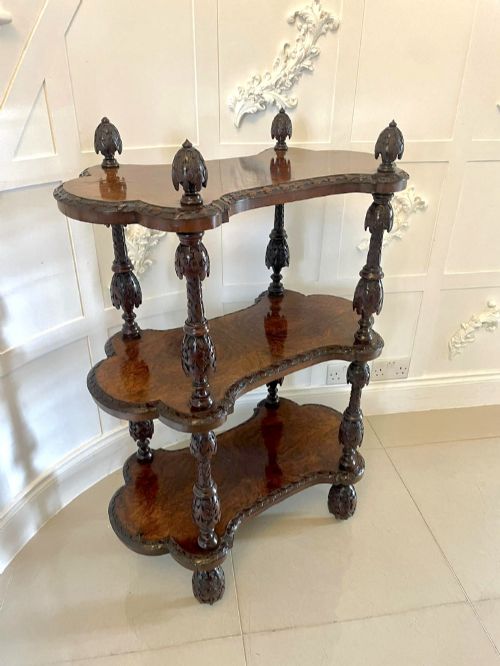
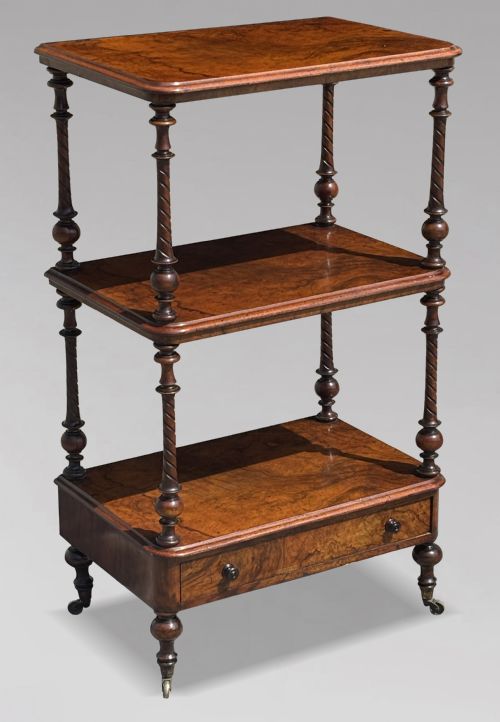
The version you are most likely to meet on this page is the Victorian open bookcase or multiple-tier whatnot, often featuring adjustable shelves and rich walnut timber. These pieces bridge the gap between storage and display, utilising open sides to keep rooms feeling light while providing sturdy platforms for daily use.
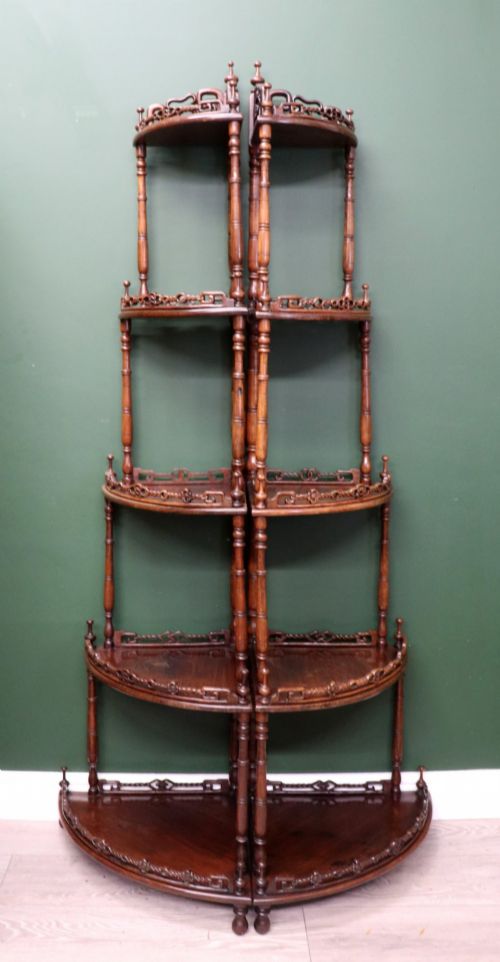
Origins stretch from English workshops to French and Italian makers, encompassing styles from Arts and Crafts to Japonisme and Art Deco. Such diversity ensures that whether you seek a corner unit, a stepped shelf, or a console table, the dark walnut construction anchors the design.
What varies in quality
The grade of timber selection dictates much of the visual impact, with highly figured burr walnut veneers and matched grains marking out superior examples. Plain timber surfaces rely on proportion and clean joinery rather than elaborate patterning.
Execution of decorative details separates standard production from exhibition pieces, evident in crisp hand carving, well-turned supports, and robust structural framing that withstands decades of weight without sagging.
A ladies davenport appears among the shelves, proving that nineteenth-century multi-tasking furniture loved a hidden writing slope just as much as a display.
Gabriel Viardot
The Dark Walnut Open Shelf Glossary
- Burr walnut
- A veneer taken from the wart-like growth on a walnut tree, producing swirling, highly decorative grain patterns. Makers reserved this prized material for prominent display surfaces.
- Etagere
- A piece of furniture consisting of a set of open shelves for displaying small objects. These tiered units originated in France and often stand on slender uprights.
- Whatnot
- A multi-shelved open cabinet used for storing and exhibiting ornaments or books. Victorian examples frequently incorporate three or more tiers supported by turned columns.
- Japonisme
- The influence of Japanese art and design on Western works, visible in specific nineteenth-century pieces. This style introduced asymmetrical arrangements and refined linear details.
- Frieze
- The wide horizontal band situated beneath the top surface of a bookcase or cabinet. Carvers often decorated this area with foliage or geometric motifs.
Dark Walnut Open Shelf: Frequently Asked Questions
How do I style an open shelf?
Balance books placed vertically with stacks laid horizontally, interspersing ceramics or small sculptures to break up the lines. Leave some space empty so the dark walnut grain remains visible.
Keep heavier volumes on the lower tiers to ground the unit visually and physically. This arrangement prevents the top-heavy look that open shelving can sometimes acquire.
Are these shelves suitable for heavy books?
Many nineteenth-century bookcases feature adjustable wooden shelves supported by sturdy brackets, designed specifically to carry substantial libraries. Inspect the thickness of the timber boards before loading them with dense volumes.
Units with fixed partitions or reinforced backs offer additional rigidity. For very heavy collections, distribute the weight evenly across the lower sections.
Where should I place a whatnot?
Corner whatnots fit neatly into unused angles of a room, while freestanding etageres work well against plain walls where their open sides create a sense of space. Avoid damp areas and direct sunlight to protect the walnut veneer.
Positioning them away from direct heat sources prevents the timber from drying out or warping. A stable floor ensures multi-tiered structures remain secure.