
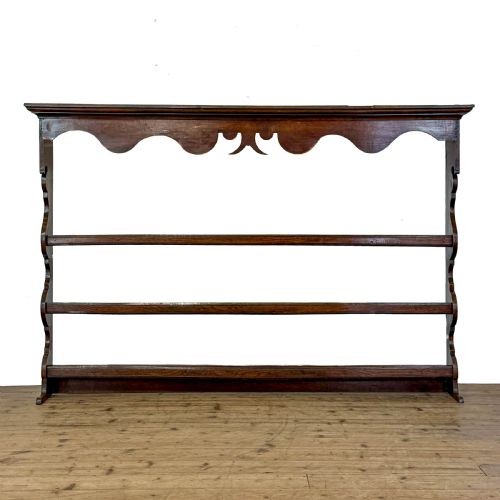
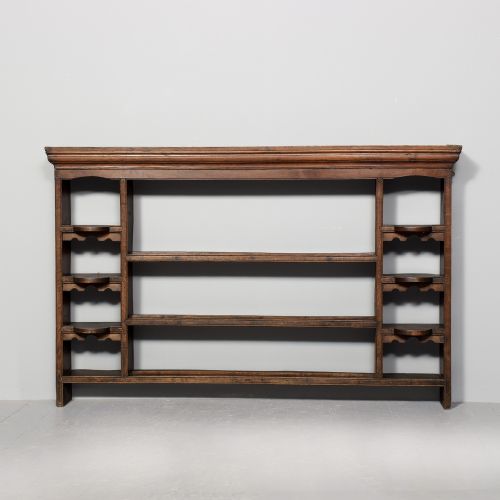


18th Century Wooden Shelving
These 18th century wooden shelving pieces combine practical storage with period craftsmanship, offering authentic character for traditional interiors.
18th Century Wooden Shelving
When you search for 18th century wooden shelving, you encounter a variety of forms including plate racks, wall shelves, bookcases, dressers, corner cabinets, and cupboards. These pieces originate from domestic settings across England, France, and Italy, reflecting regional storage needs of the period.
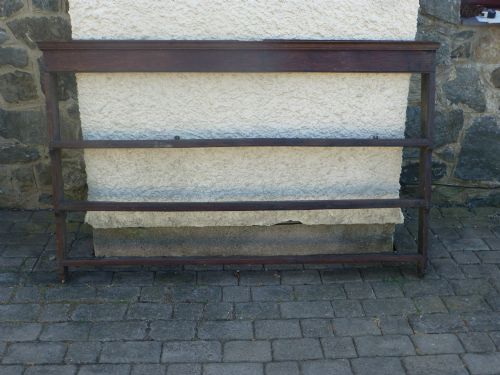
The version you are most likely to meet on this page is the oak plate rack or wall shelf from the Georgian era, often designed to display ceramics in a dining space or kitchen. Alongside these, mahogany hanging shelves and walnut cabinets appear, demonstrating finer formal aesthetics.
The inventory spans the 18th century, Georgian period, and stretches slightly into 1800, encompassing English country, French provincial, Italian Baroque, and Welsh country styles. Each object type serves a specific domestic function, from wall-mounted plate display to freestanding bookcases.
Materials and construction
Cabinetmakers utilised solid timbers predominantly from local and imported sources, with oak and mahogany forming the primary structural materials alongside walnut, pine, and painted wood. Brass and iron hardware such as hinges and brackets provide structural support and functional closure.
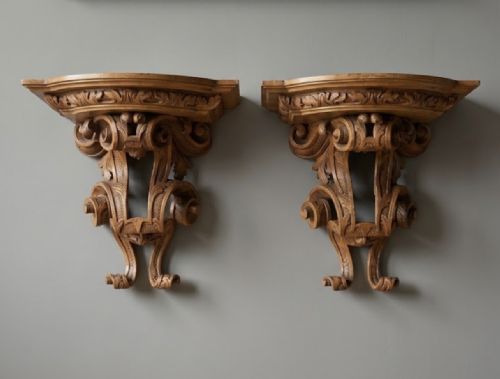
Joinery techniques rely on traditional hand-cut joints suited to heavy domestic timber, while decorative elements include carving on pieces like the mid 18th century dome top fitted cabinet. Surfaces range from naturally aged oak and bleached oak to painted finishes and polished mahogany.
Listings feature items from the 18th century, Georgian period, and 1800, constructed in oak, mahogany, walnut, pine, and painted wood.
Evaluating quality and proportion
Quality in these pieces rests upon the integrity of the timber selection and the retention of original structural elements such as backboards and shelving tiers. Superior examples maintain balanced proportions and harmonious integration between the display racks and underlying cabinets.
The refinement of the surface treatment distinguishes finer items, whether through the warm grain of Georgian mahogany, the rich patina of Italian walnut, or deliberate painted finishes. Pieces that retain their original hanging mechanisms or brass details offer a more complete historical example.
The 18th Century Wooden Shelving Glossary
- Plate rack
- A wall-mounted or dresser-top rack featuring horizontal slats or grooves designed to hold plates upright for display and drying. These form a primary category within 18th century wooden shelving.
- Waterfall bookcase
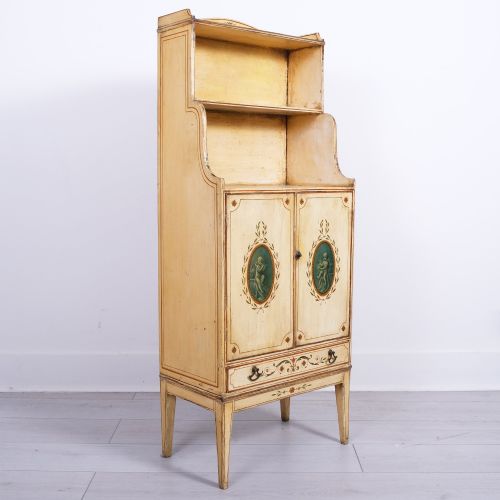
- A set of open bookshelves where each successive shelf is slightly narrower than the one below, creating a stepped profile. This style appears in late 18th century George III examples.
- Chiffonier
- A low cabinet featuring shelving or a small superstructure on top, utilised for storing and displaying tableware or small objects. It represents a more formal interior furniture type.
- Corner whatnot
- A multi-tiered open shelving unit designed to fit into the corner of a room for display purposes. Mahogany versions of this form date to the Georgian period.
- Patina
- The surface sheen and colour developed by wood through age, handling, and regular polishing over centuries. It serves as an indicator of period authenticity.
18th Century Wooden Shelving: Frequently Asked Questions
How do I hang a heavy wooden wall rack safely?
Wall-mounted plate racks and hanging shelves require secure fixing into solid masonry or direct wall studs using appropriate brackets.
Because these oak and mahogany pieces carry significant weight, professional installation ensures the antique frame remains strain-free.
What is the difference between a plate rack and a dresser rack?
A plate rack typically mounts directly to a wall as a standalone display unit for ceramics.
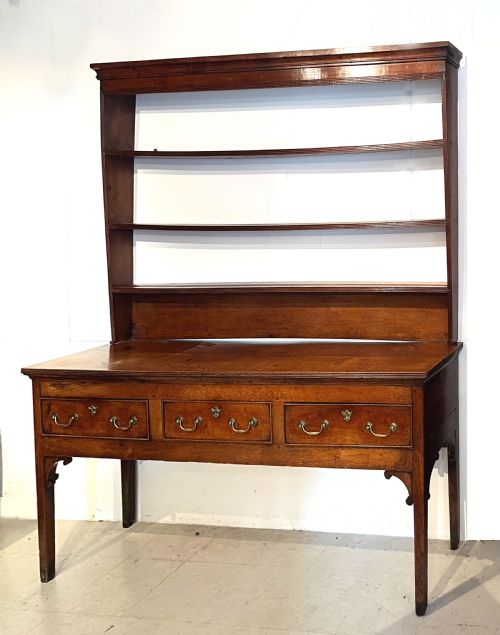
A dresser rack sits atop a base cabinet or lower dresser base to form a combined storage and display piece.
How do I care for 18th century timber shelves?
Maintain stable indoor humidity levels away from direct heat sources to prevent the timber from warping or splitting.
Apply microcrystalline wax occasionally to nourish the surface without building up excessive residue.
Are these shelves suitable for heavy modern books?
Many wall shelves and hanging racks were built for lighter ceramics or folded linens rather than dense modern volumes.
Bookcases and heavier oak cabinets accommodate substantial loads, but wall-mounted tiers require careful weight distribution.