

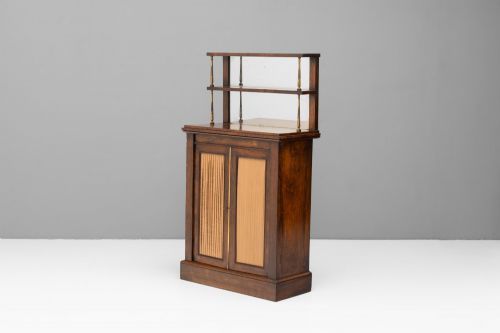
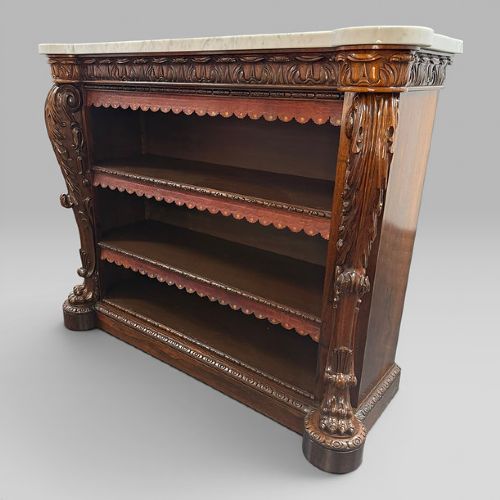
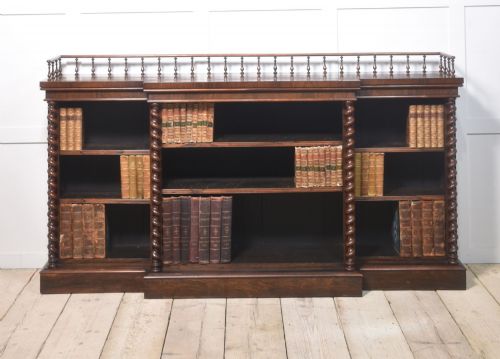
Dark Rosewood Shelving
Dark rosewood shelving brings rich, dense grain and tiered display space into a room, most often seen in open bookcases and tiered whatnots from the nineteenth century.
Dark Rosewood Shelving
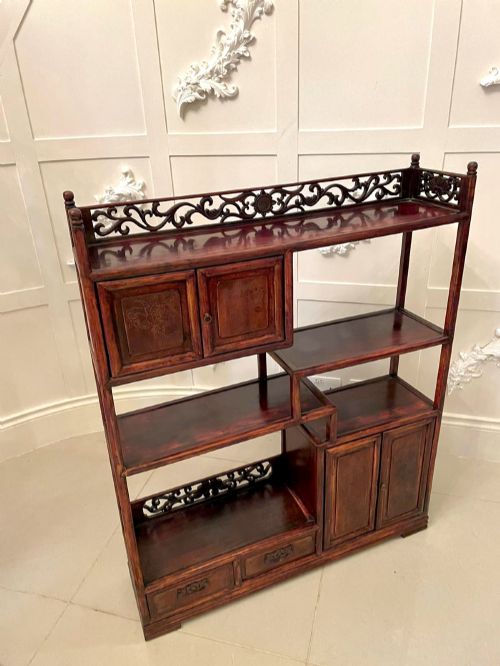
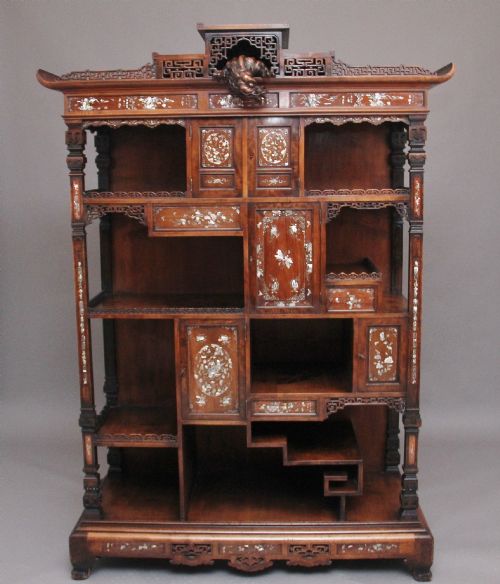
Dark rosewood shelving encompasses open bookcases, whatnots, etageres, and wall-mounted display units designed for books and ornaments. These pieces span the Regency, William IV, and Victorian eras, alongside Edwardian examples and nineteenth-century Chinese hardwood cabinets.
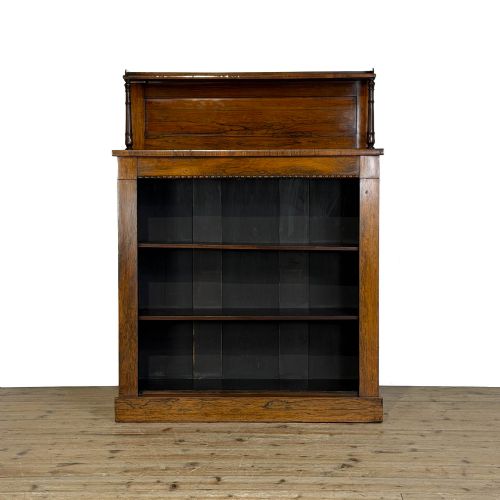
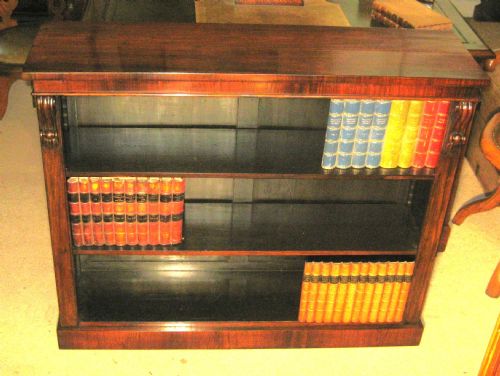
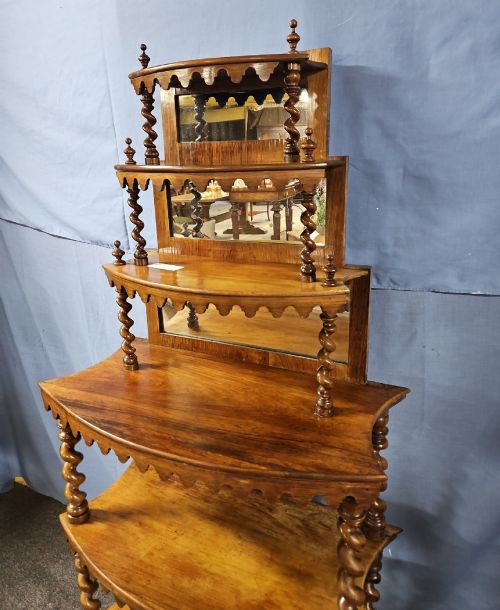
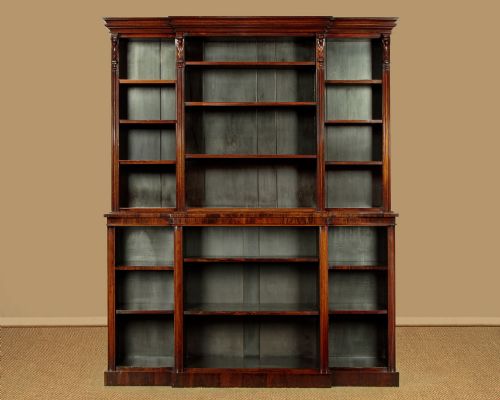
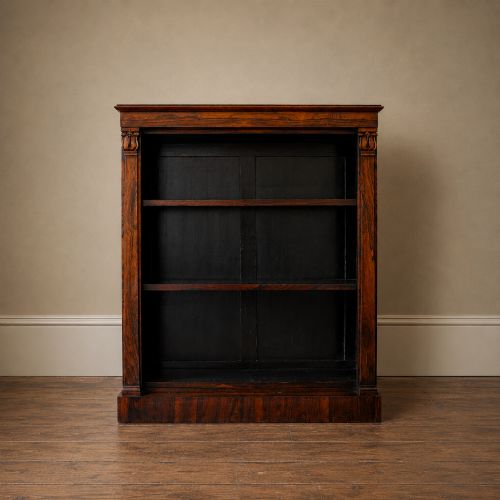
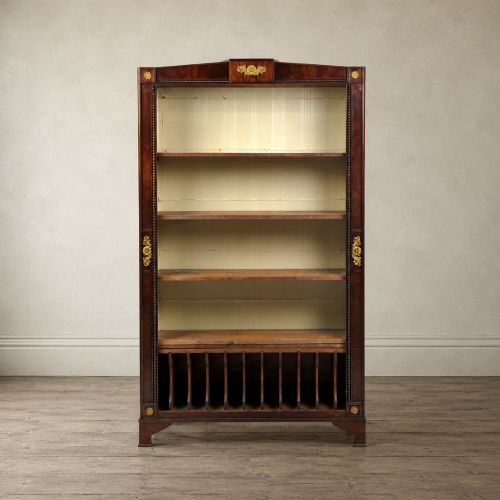
The most common formats on this page are open bookcases with adjustable shelves and multi-tiered whatnots standing on slender uprights. Makers of these pieces utilised rich timber to create functional display furniture for libraries, drawing rooms, and studies.
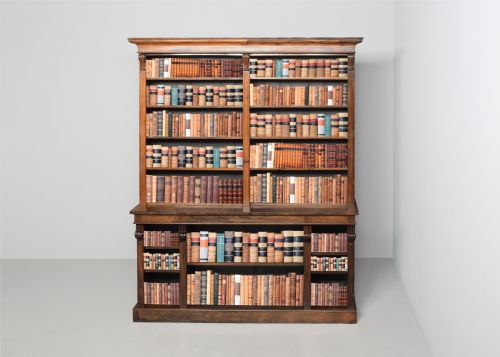
Dating ranges from the early nineteenth century through to the Edwardian period, capturing stylistic shifts from grand Regency proportions to later Victorian decorative detailing. Pieces appear in various sizes, from small bedside or hall shelves to large breakfront bookcases.
Materials and Construction
Cabinet makers built these shelves using dense rosewood, often applied as fine veneers over sturdy secondary timbers such as pine or hardwood. The natural weight and dark grain of the rosewood provide structural stability and a deep, polished surface.
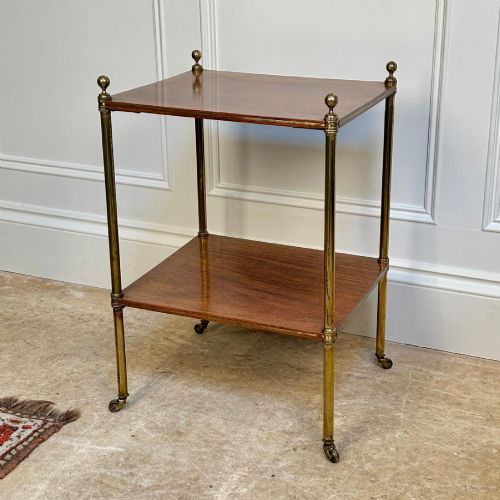
Construction frequently incorporates contrasting materials, including brass inlay, mirrored panels, marble tops, and glass doors. Structural joins rely on traditional cabinet-making techniques suited to supporting heavy collections of books and display objects.
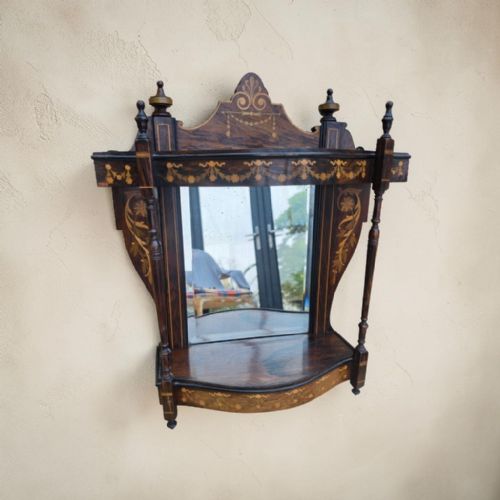
A small walnut mirror with tiny corner shelves proves that Victorians wanted somewhere to display trinkets even in the hallway.
Assessing Quality and Execution
Quality in these pieces rests upon the selection of timber veneers and the crispness of carved details like corbels, spindles, and turned supports. Superior examples display harmonious grain matching across wide surfaces and well-integrated decorative brasswork.
Proportion and functional integrity also dictate standing, particularly in pieces with adjustable shelving mechanisms or integrated mirror backs. Finer pieces maintain balanced architectural lines without feeling heavy or disproportionate in smaller domestic spaces.
Gillows·Samson and Son
The Dark Rosewood Shelving Glossary
- Open Bookcase
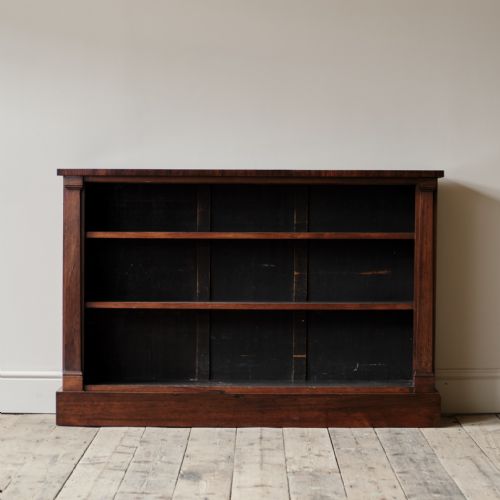
- A bookcase lacking doors, designed for easy access to volumes. These units frequently feature adjustable wooden shelves supported by brass pegs.
- Whatnot
- A multi-tiered piece of freestanding furniture used for displaying ornaments and books. It typically stands on upright corner posts and dates widely across the nineteenth century.
- Etagere
- A French term for a set of open shelves used for display. These pieces often feature delicate uprights and multiple tiers.
- Breakfront
- A piece of furniture where the central section projects forward from the flanking wings. This architectural arrangement adds depth and visual rhythm to larger bookcases.
- Corbel
- A projecting bracket supporting a shelf or super-structure. In nineteenth-century shelving, these elements often carry carved scroll or acanthus detail.
Dark Rosewood Shelving: Frequently Asked Questions
How do I care for rosewood shelves?
Dust rosewood furniture regularly with a soft, dry cloth to prevent surface scratching. Avoid placing these pieces in direct sunlight or near heat sources to protect the polished timber finish.
Condition can be maintained by occasionally applying a suitable furniture wax to nourish the grain. Keep humidity levels stable in the room to prevent timber movement and veneer lifting.
Were these shelves made for books?
Many pieces, particularly open bookcases, were designed specifically to house libraries in formal rooms and studies. Adjustable shelving allowed owners to accommodate volumes of varying heights.
Other formats, such as whatnots and etageres, served primarily as decorative display surfaces for ceramics, silver, and ornaments. The distinction often shows in the depth and sturdy construction of the tiers.
How do I date a rosewood bookcase?
Dating relies on stylistic markers, construction methods, and timber characteristics. Regency and William IV pieces often display classical proportions and brass inlay, while Victorian examples introduce heavier carved corbels.
Later Edwardian versions tend to be lighter in scale and sometimes incorporate Sheraton revival motifs. Inspecting the backboards and fixings also helps confirm the period of manufacture.
Can I adjust the shelf heights?
Many nineteenth-century open bookcases feature original adjustable shelving systems using rack-and-pinion hardware or brass strips. This allows owners to reposition shelves according to book sizes.
Fixed shelves are more common in smaller whatnots and specialised display cabinets where structural rigidity takes priority over flexibility. Checking the interior uprights reveals whether the support system is adjustable.