

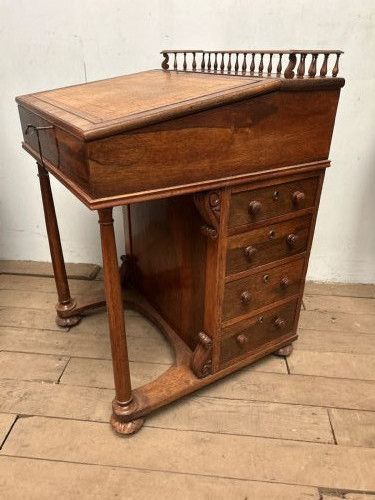
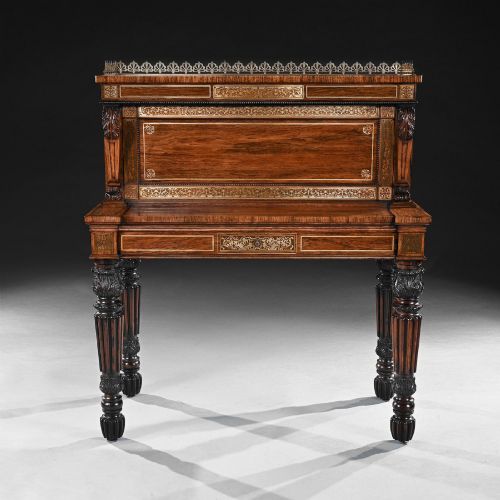
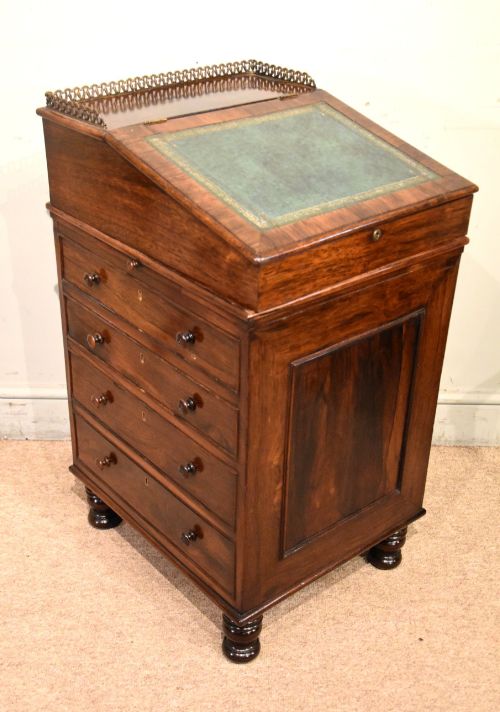


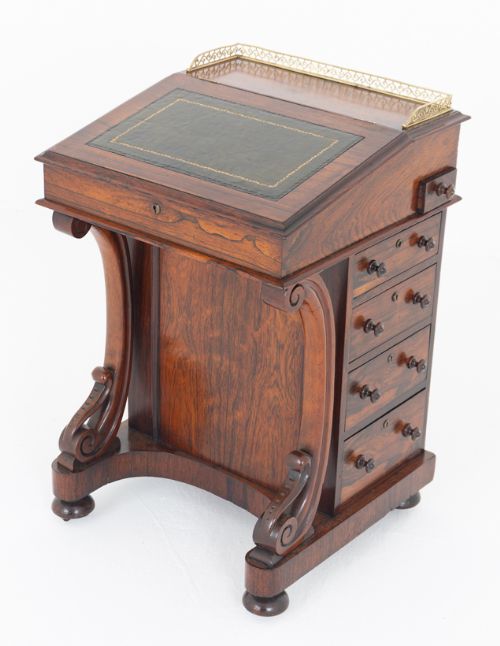


Dark Rosewood Davenport
These dark rosewood davenport desks are compact writing cabinets offering fitted storage and sloped surfaces, prized for their rich timbers and ingenious domestic utility.
Dark Rosewood Davenport
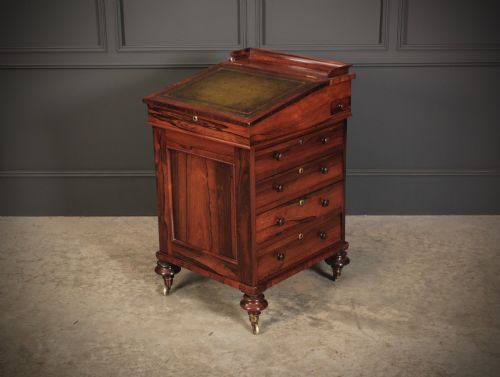
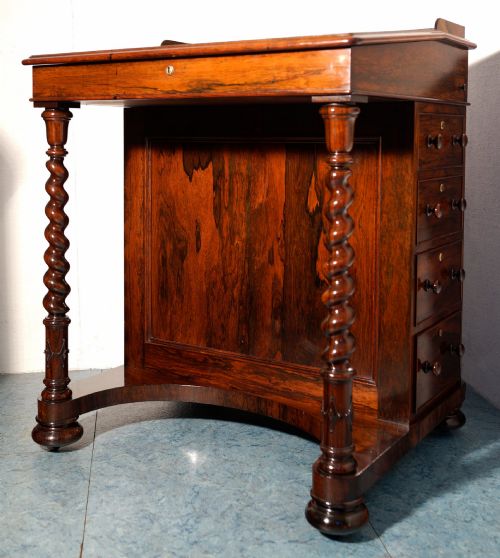
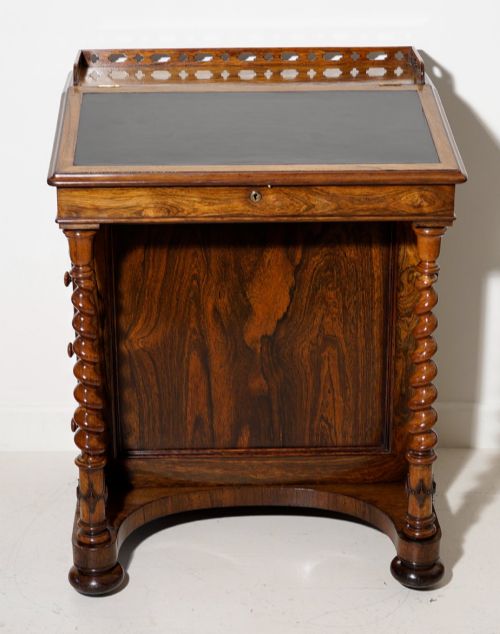
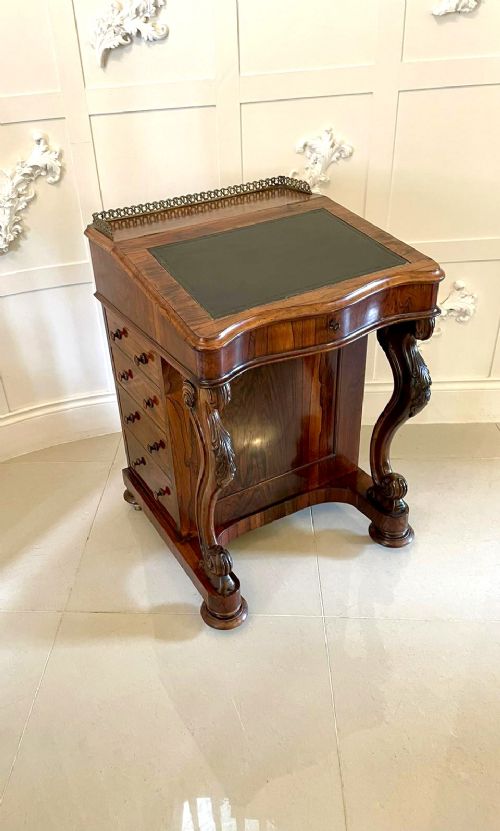
A dark rosewood davenport is a small, freestanding writing desk built with a sloped, hinged writing surface and a set of drawers accessed from the side. You will encounter these writing tables most frequently from the Regency, William IV, and Victorian periods.
The form developed as a compact piece of study furniture that combined a secure storage compartment with a comfortable writing slope. Surviving examples reflect designs originating in the nineteenth century, ranging from simple Regency models to later Sheraton Revival interpretations.
How they were made
Cabinet makers built these desks using dark rosewood or palisander veneers laid over secondary timbers, often incorporating brass hardware and leather writing inserts. Internal fittings frequently utilised lighter contrasting woods such as satinwood and boxwood for inlay work.
Construction techniques included sliding top mechanisms and side-opening drawer pedestals designed to maximise utility in limited domestic spaces. Surface decoration relied on natural timber grain patterns paired with precise stringing and inlay.
Dark Rosewood Davenport Retail Price Guide 2026
Typical asking prices for dark rosewood davenport among the pieces listed under this phrase on Sellingantiques today, from the lower quarter to the upper quarter. They describe what is for sale here now, not the wider market.
Materials recorded on this page include rosewood, palisander, brass, leather, satinwood inlay, and boxwood inlay.
What varies in quality
Quality in a dark rosewood davenport rests upon the selection of timber figures and the precision of the cabinet work, particularly around sliding mechanisms and internal pigeonholes. Superior pieces display harmonious grain matching across the slope and drawer fronts.
Attribution to specific workshops or the integration of sophisticated brass inlays and fine satinwood stringing distinguishes higher-grade examples. The crispness of the turning on supports and the integrity of the secondary timbers further separate standard production from exceptional pieces.
Gillows Oxford Street Workshop
The Dark Rosewood Davenport Glossary
- Davenport desk
- A compact nineteenth-century writing cabinet featuring a sloping lid and side drawers. The form takes its name from an early patron who commissioned a similar desk.
- Palisander
- A dense, dark tropical timber often grouped with rosewood in nineteenth-century furniture descriptions. It provides a heavily figured, rich reddish-brown surface.
- Stringing
- Thin lines of contrasting wood inlay used to decorate furniture surfaces. Boxwood and satinwood are typical materials for this delicate border work.
- Sliding top
- A mechanism allowing the upper writing slope to move forward independently of the pedestal base. This adjustment provided a more comfortable knee clearance for the writer.
Dark Rosewood Davenport: Frequently Asked Questions
How were these desks used?
Owners sat at the sloping top to write letters, manage household accounts, and store stationery within the internal compartments. The side drawers kept writing implements and papers neatly organised and secure.
Because they are freestanding and finished on all sides, they could be placed anywhere within a room rather than pressed flat against a wall.
How do I date a davenport?
Dating relies upon stylistic markers such as turned supports, brass gallery rails, and the presence of satinwood or boxwood inlay. Regency and William IV pieces often display bolder architectural forms, while Victorian and Sheraton Revival examples introduce lighter decorative treatments.
Construction methods within the drawers and the specific grain of the rosewood or palisander veneer further help establish the period of manufacture.
How do I live with a davenport?
These desks fit easily into smaller residential spaces due to their compact footprint and dual role as surface and storage. Keep them away from direct heat sources and strong sunlight to protect the rosewood veneer and leather surfaces from drying out.
Regular polishing with appropriate wax preserves the dark grain and maintains the subtle lustre of the timber.