
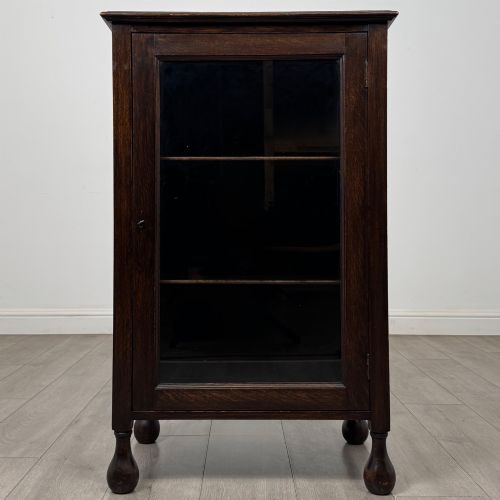
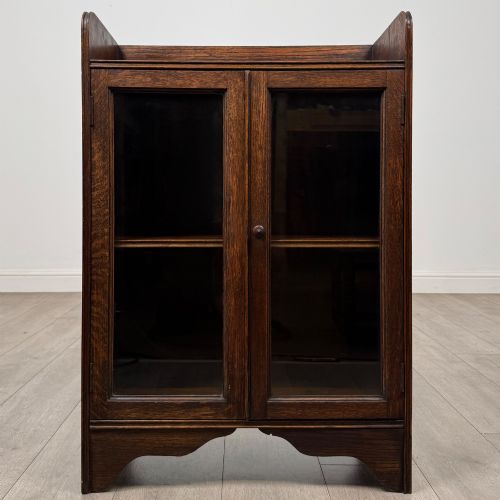
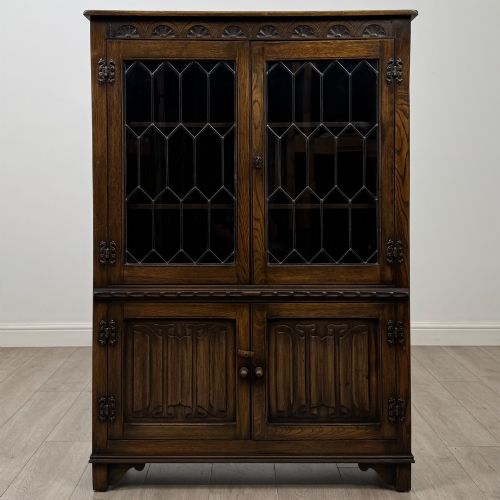
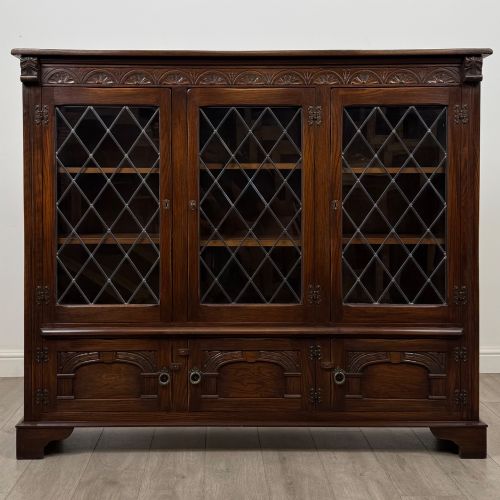
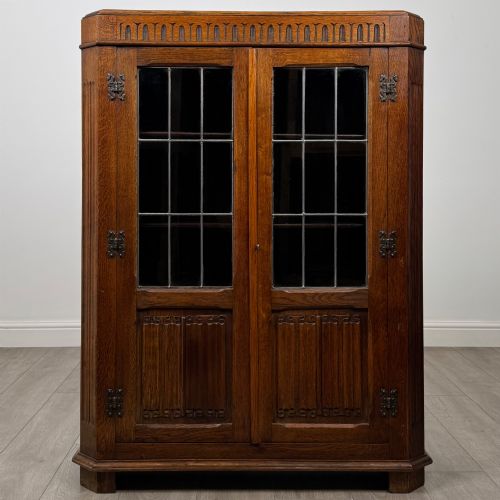
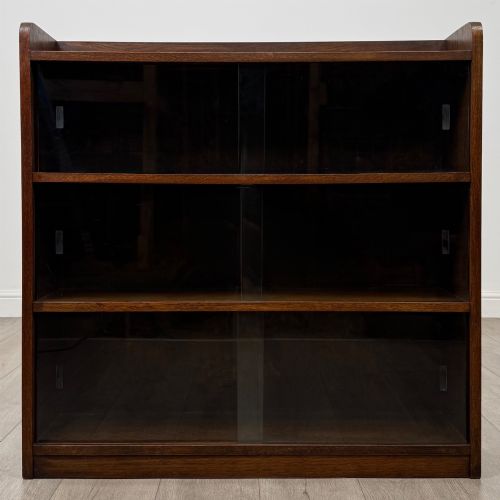
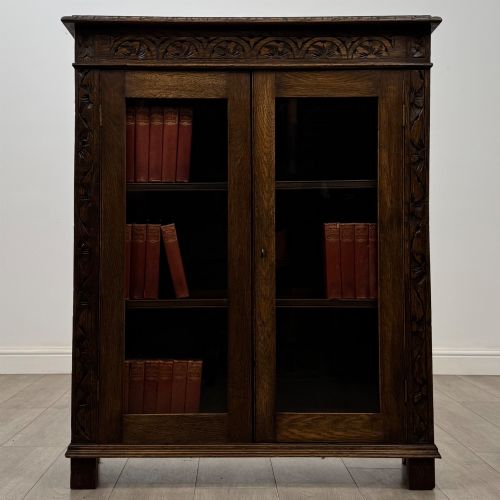
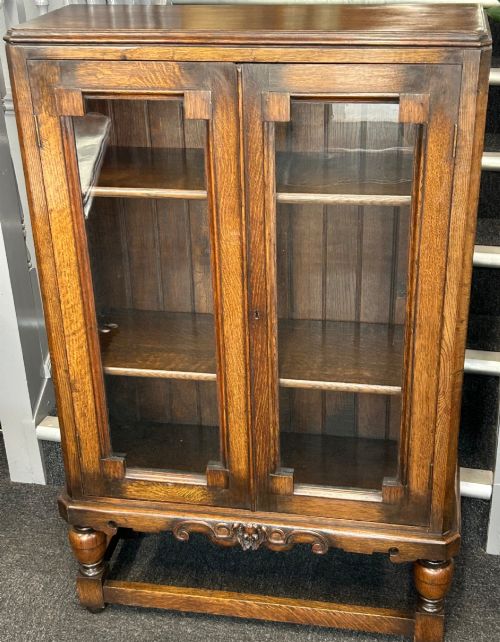
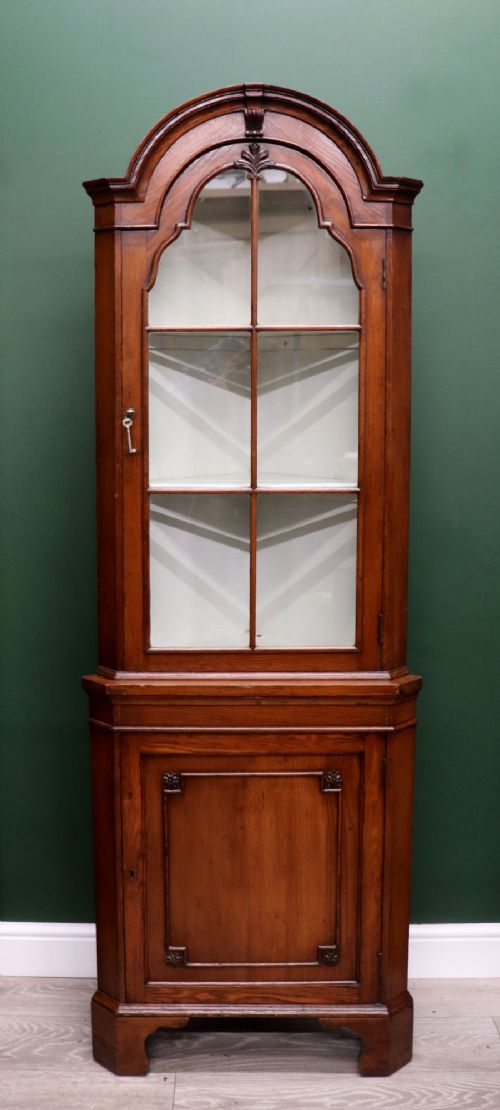


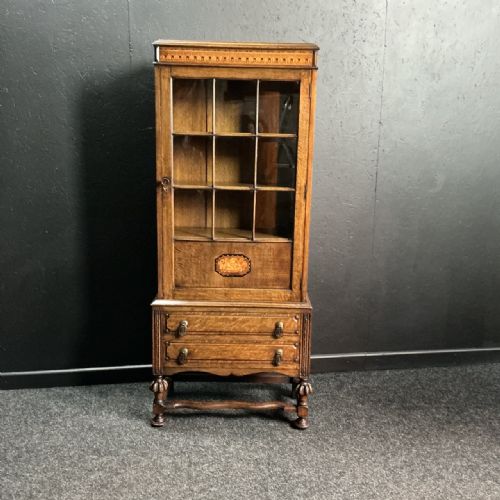


Dark Oak Vitrine
A dark oak vitrine offers a handsome timber frame and clear glass panels to show off treasured collections without fuss.
Dark Oak Vitrine
When you search for a dark oak vitrine, you are looking at sturdy display cabinets and bookcases designed to protect and exhibit objects behind glass. The pieces on this page span several eras, reaching from the eighteenth century through the Victorian and Edwardian periods into the nineteen-twenties and thirties.
The most common formats you will meet are upright floor-standing display cabinets, corner cabinets, and two-part bookcase combinations. Many of these utilise traditional styles such as Jacobean Revival, Arts and Crafts, and French Provincial, bringing substantial timber presence to a room.
Origins vary from British workshops to French provincial makers and Dutch craftspeople, each applying distinctive regional detailing to the dark oak carcass. Whether configured with a single glazed door or as a larger two-door standing unit, these cabinets centre upon visibility and sturdy construction.
How they were made
Makers built these cabinets primarily using solid oak timber and oak veneer, often selecting quarter-sawn boards to reveal characteristic medullary rays. Structural stability relied upon sturdy joinery, complemented in some examples by applied oak veneer over secondary timbers.
Glazing required lead or timber framing to support glass panes safely within the doors, while iron and brass hardware provided hinges, locks, and handles. Interior linings occasionally incorporated fabric to soften the background behind displayed objects.
The listings here include examples spanning the eighteenth, nineteenth, and twentieth centuries, incorporating Edwardian and Art Deco aesthetics.
What varies in quality
The degree of hand-carving distinguishes simpler production from finer commissions, with deep relief work and linenfold panels requiring significant skill. Carved embellishments, proportion, and the crispness of revival detailing set superior examples apart from standard workshop output.
Timber selection and surface finishing also dictate the standing of a piece. Well-figured oak timber, clean joints, and preserved patination demonstrate careful initial construction and thoughtful long-term maintenance.
The Dark Oak Vitrine Glossary
- Vitrine
- A glass-fronted display cabinet used specifically for showing porcelain, curiosities, or books. The term originates from the French word for glass.
- Linenfold
- A style of wood carving that imitates folded linen cloth, frequently seen on panels from the Tudor Revival and later periods. It provides subtle texture to flat wooden surfaces.
- Jacobean Revival
- A nineteenth and twentieth-century style imitating seventeenth-century English furniture. It employs dark oak, heavy proportions, and geometric moulding.
- Corner cabinet
- A specialist storage piece designed to fit snugly into a ninety-degree room junction. These units maximise floor space while offering glass display doors.
- Oak veneer
- A thin layer of superior oak timber applied over a secondary wood base. This technique allowed cabinetmakers to achieve decorative grain patterns without using solid timber throughout.
Dark Oak Vitrine: Frequently Asked Questions
What is a vitrine?
A vitrine is an enclosed cabinet featuring glass panels designed primarily for displaying decorative items, ceramics, or books.
These pieces protect delicate objects from dust while allowing them to be viewed clearly from the outside.
Where should I place a corner cabinet?
A corner cabinet fits neatly into empty room junctions, making efficient use of awkward spaces without dominating floor area.
They work well in dining rooms or studies where wall space is at a premium.
How do I care for dark oak?
Maintain dark oak surfaces by dusting regularly with a dry cloth and avoiding direct sunlight or excessive heat.
Applying traditional beeswax occasionally helps nourish the timber and preserve the finish.
How do I identify Edwardian oak furniture?
Edwardian pieces often combine traditional craftsmanship with lighter proportions, frequently drawing inspiration from earlier Jacobean or arts and crafts styles.
Look at the interior construction and hardware to distinguish them from later twentieth-century reproductions.