
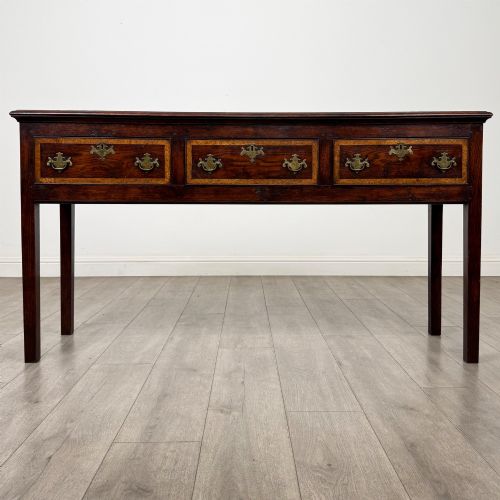
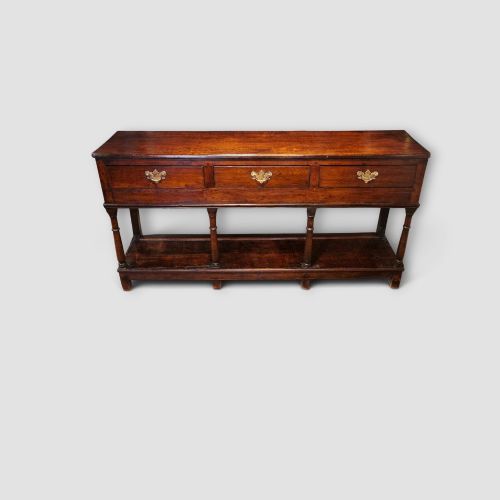
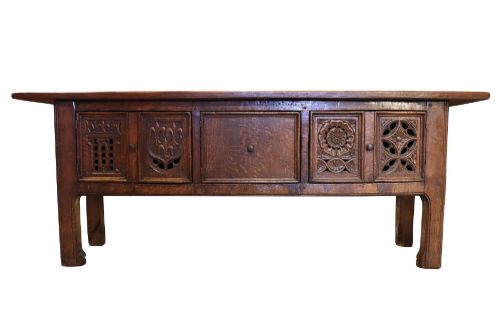
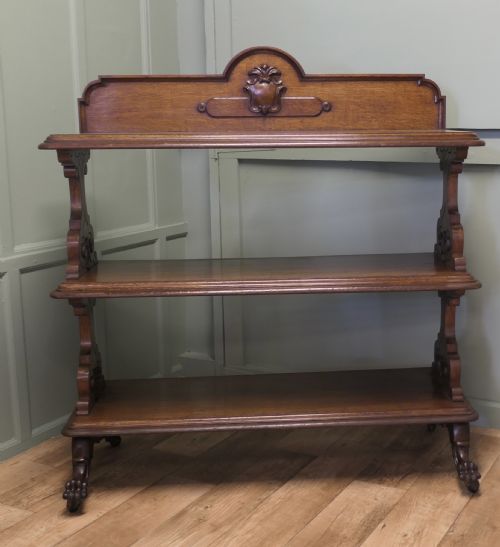
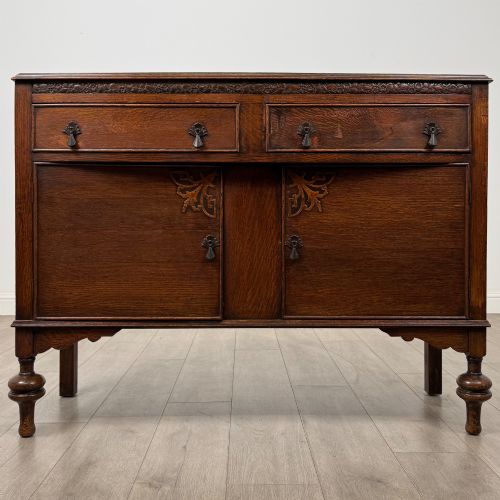
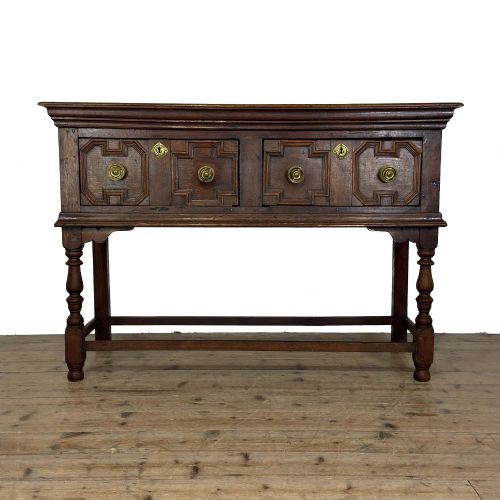
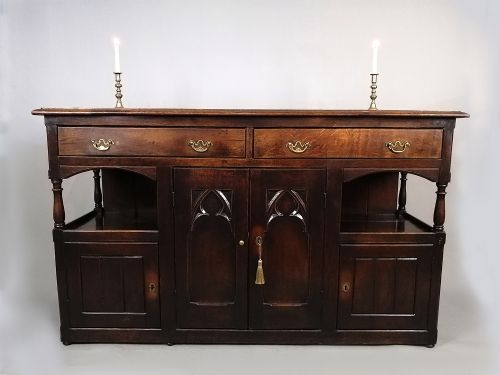
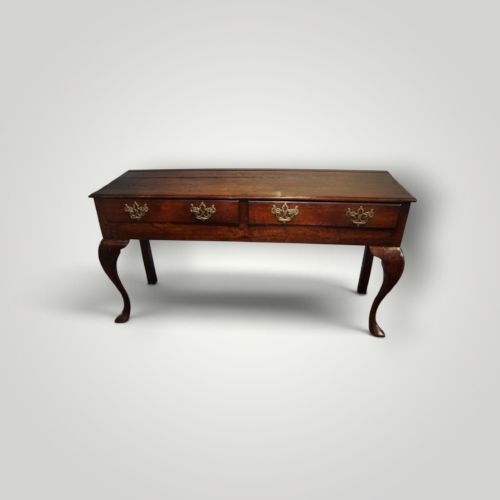
Dark Oak Sideboard Table
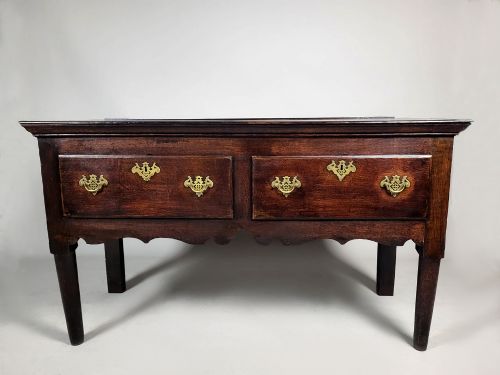
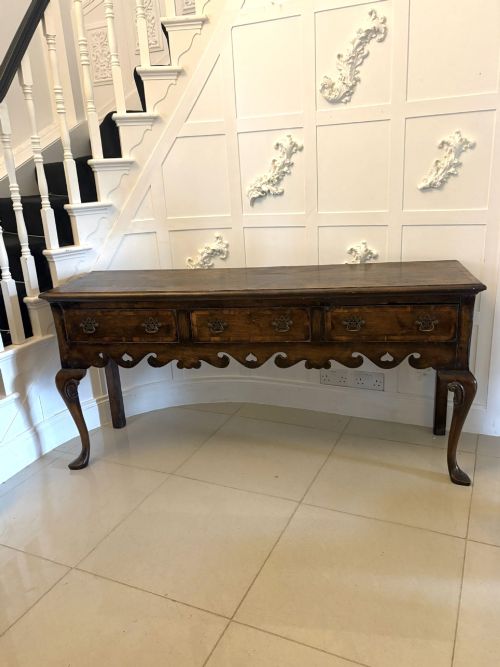
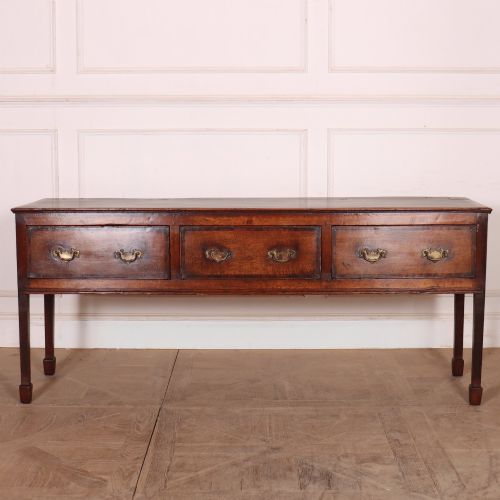
A dark oak sideboard table brings solid timber grain and centuries of utility into a dining room or hallway.
Dark Oak Sideboard Table
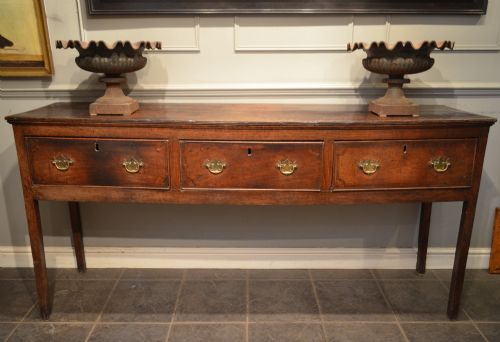
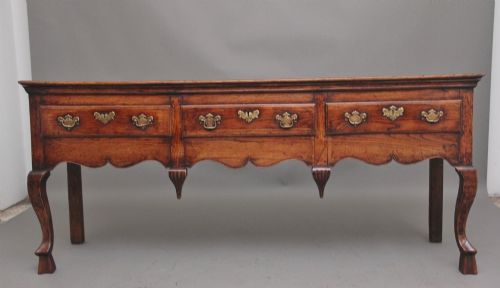
A dark oak sideboard table serves as a robust surface and storage unit, combining the functions of a serving table and a low cupboard. Buyers searching for a dark oak sideboard table encounter pieces that bridge centuries of design, from seventeenth-century provincial work to twentieth-century revivals.
The form appears under various historic designations including dresser bases, console tables, and serving tables. Examples span the seventeenth, eighteenth, and nineteenth centuries, alongside Edwardian and nineteen-twenties interpretations of earlier styles.
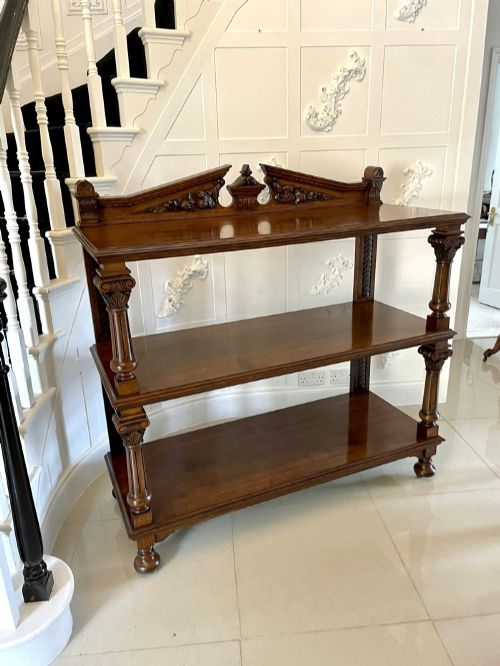
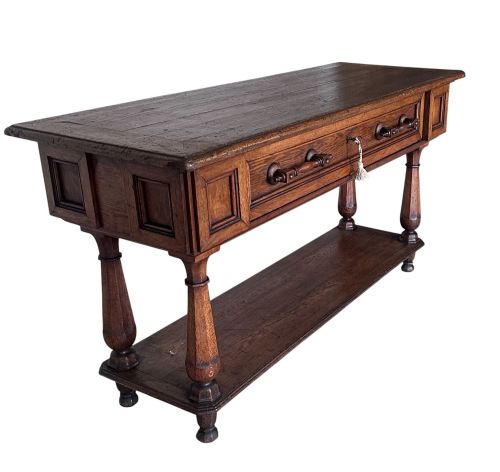
Regional variations emerge within the selection, featuring Welsh, Lancashire, French, and Dutch examples alongside English pieces. These items range from simple utilitarian boards with potboards to richly carved Gothic Revival and Jacobean style furniture.
Materials and construction methods
Makers built these pieces primarily using solid oak timber, frequently augmented with secondary woods like elm and supported by brass and iron hardware. Selected examples incorporate marble tops or inlaid timber details to create contrasting surfaces.
Construction techniques include traditional frame and panel assembly, geometric moulding, and hand-carved ornamentation. Potboards, drawers, and cupboards are integrated into the lower sections to provide structural stability and storage.
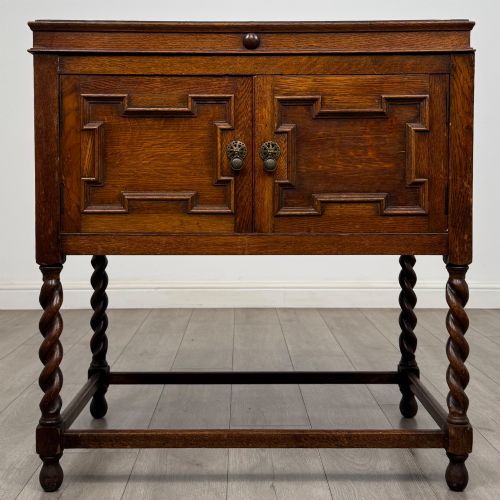
Design styles represented include Georgian, Jacobean Revival, Gothic Revival, and English Country.
Distinctions in construction and age
Quality separates primitive provincial furniture from sophisticated urban cabinet work through the crispness of hand-carved details and the integration of original brasses. Early examples from the seventeenth and eighteenth centuries display distinct tool marks and patination developed through long use.
Proportion and scale dictate the desirability of a piece, with narrow proportions or small dimensions requiring greater joinery skill. Later revival pieces from the Edwardian period or the nineteen-twenties vary according to the fidelity of their Jacobean or Georgian styling.
The Dark Oak Sideboard Table Glossary
- Potboard
- A low open shelf positioned near the floor beneath a dresser base, originally designed for storing heavy pots and pans. This platform grounds the piece visually and adds structural rigidity.
- Dresser base
- The lower portion of a traditional kitchen or dining room dresser, featuring drawers and cupboards without the upper plate rack. It functions independently as a serving table or sideboard.
- Geometric moulded
- A style of decorative framing utilised on drawer fronts and cupboards during the seventeenth and early eighteenth centuries, created by applying small moulded wooden strips in geometric patterns.
- Cabriole leg
- A furniture leg that curves outward at the knee and tapers inward toward the ankle, ending in a simple foot. This form gained popularity during the Queen Anne and Georgian periods.
- Linenfold
- A style of carved wooden panelling that resembles folded vertical sheets of fabric. It appears frequently on cupboards and cabinet doors from revival periods.
Dark Oak Sideboard Table: Frequently Asked Questions
What is a dark oak sideboard table used for?
These pieces provide a wide surface for serving food, displaying ceramics, or placing lamps in a dining room or hallway. The integrated drawers and lower cupboards offer enclosed storage for tableware and household linens.
Historically, similar tables functioned as workspace in kitchens or serving points in dining spaces. Today, their sturdy construction suits everyday domestic use.
How do I identify an 18th century piece?
Eighteenth-century examples display hand-cut joinery, pegged joints, and timber surfaces showing natural wear and rich patination. Details such as original brass drop handles and geometric mouldings help confirm the period.
Regional variations, including Welsh and Lancashire forms, also exhibit specific construction traits typical of provincial eighteenth-century workshops.
What is the difference between a dresser base and a sideboard?
A dresser base originates from furniture designed to hold plates and kitchen equipment, typically featuring a row of drawers above cupboards or an open potboard. A sideboard evolved specifically for dining room service, often lacking the deep potboard base found on earlier dressers.
In practice, both terms overlap significantly within antique listings and serve similar domestic functions.
How do I care for antique oak furniture?
Maintain oak timber by keeping it away from direct heat sources and sudden temperature shifts that can cause the wood to split. Regular dusting with a dry cloth preserves the finish without requiring heavy polishes.
Applying a traditional beeswax occasionally helps nourish the grain and protect the historical patination.