




Dark Oak Low Bench
These dark oak low bench items are sturdy timber seats and low tables crafted from durable wood, built to last for generations.
Dark Oak Low Bench
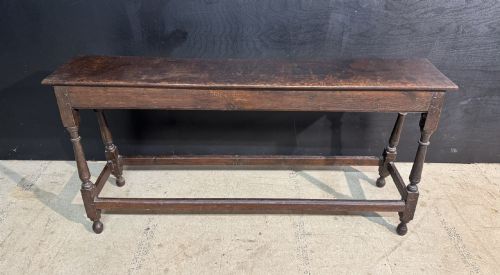
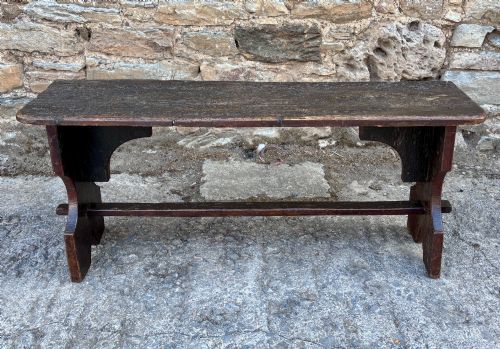
A dark oak low bench encompasses low seating and occasional furniture fashioned primarily from timber, often appearing in forms such as joint stools, luggage stands, coffee tables, and low benches. These pieces originate from various eras including the Georgian period, the Victorian era, and the Edwardian decades, alongside earlier examples.
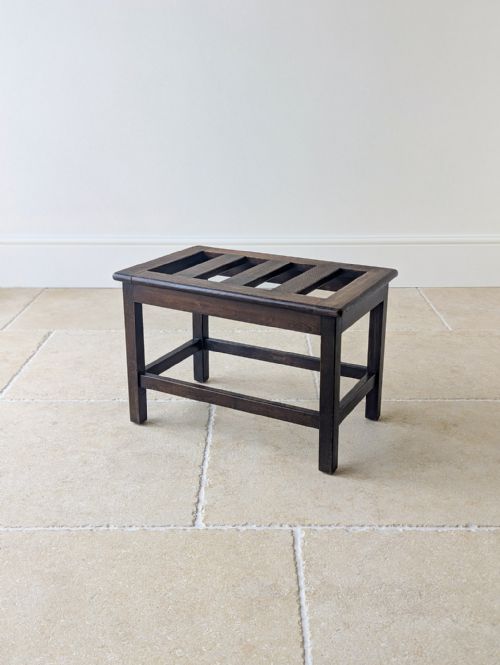
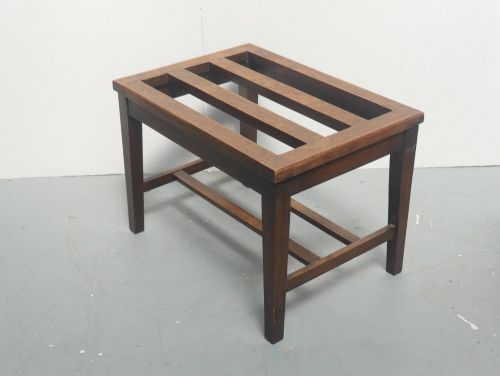
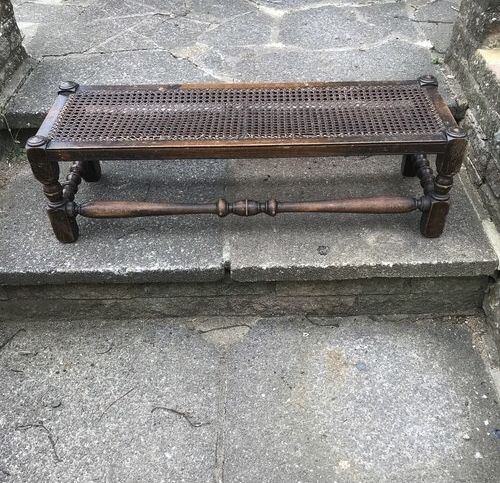
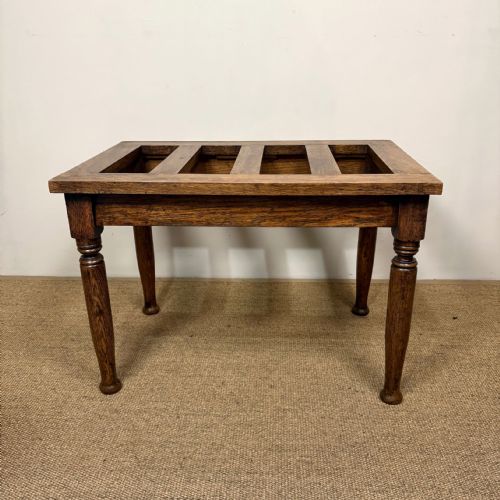
The version most commonly met on this page is the functional oak luggage stand or low stool, frequently featuring turned legs, cane inserts, or upholstered tops. Such items serve practical purposes in domestic spaces while displaying the robust characteristics of traditional woodwork.
Makers and craftsmen across these periods utilised solid oak and pine, incorporating styles ranging from rustic country and Gothic revival to Jacobean revival. Each piece demonstrates how utilitarian furniture adapted to domestic needs over centuries without losing its heavy wooden character.
How they were made
The construction relies heavily on solid oak timber, sometimes complemented by secondary woods like pine, shaped through traditional joinery techniques such as mortise and tenon joints. Carpenters utilised hand tools to fashion thick boards into benches, stools, and trestle tables.
Surface details often include carved ornamentation, turned legs, and applied iron or wrought iron hardware for structural reinforcement. Caning and fabric upholstery appear on specific seating variants, adding textural contrast to the dense wooden frames.
Several items designed for luggage hold heavy bags with the same stoic patience they offered travellers a century ago.
What varies in quality
The standard of timber selection and the integrity of the joinery dictate the overall quality of each dark oak low bench. Pieces fashioned from dense, well-seasoned solid oak with tight joints maintain greater structural stability than those constructed from lighter or mixed timbers.
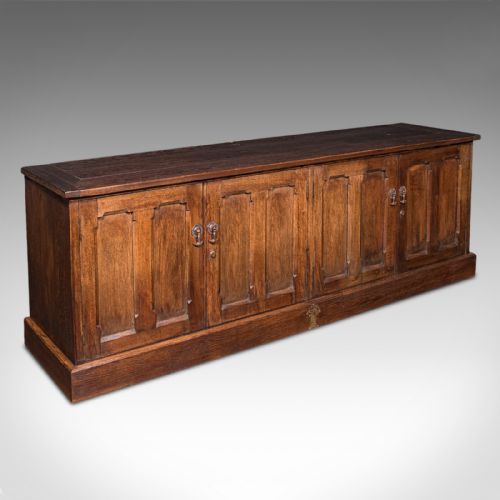
The refinement of hand carving and the proportion of turned legs separate simpler utility items from more elaborate workshop productions. Detail in the execution of Gothic or Jacobean revival motifs reflects the skill of the maker.
The Dark Oak Low Bench Glossary
- Joint stool
- A sturdy wooden stool constructed with mortise and tenon joints pegged together, common in early domestic interiors. These items served as seating or small surfaces.
- Luggage stand
- A low wooden frame designed to hold baggage, typically featuring slatted tops, webbing, or cane surfaces supported by four legs. They often date from the Edwardian period.
- Trestle form
- A structural arrangement where a horizontal top board is supported by two or more upright frames or trestles. This method provides stable support for long coffee tables and benches.
- Gothic revival
- An architectural and decorative style drawing inspiration from medieval design, featuring pointed arches, tracery, and heavy carved details on oak furniture.
Dark Oak Low Bench: Frequently Asked Questions
What is a dark oak low bench used for?
These low wooden items serve multiple functions around the home, acting as low coffee tables, seats, or luggage stands in bedrooms and hallways. Their sturdy construction makes them suitable for daily utility.
They also function as display surfaces for decorative objects or books, bringing a heavy timber element into both traditional and contemporary interior schemes.
How do I care for antique oak furniture?
Maintenance involves dusting with a dry cloth and occasionally applying natural beeswax to nourish the timber surface. Avoiding direct sunlight and extreme temperature changes protects the wood from splitting.
Keeping the environment stable ensures that the joints remain firm and the dark finish retains its depth over decades of use.
How do I identify a 19th-century oak piece?
Nineteenth-century items often display hand-cut joinery marks, dense oak grain, and patination acquired through decades of handling. Stylistic cues such as Gothic revival carving or turned legs help place them in this era.
Examining the underside and interior surfaces reveals tool marks and construction methods consistent with Victorian and Georgian workshop practices.
Are these benches made of solid oak?
The listings on this page feature pieces constructed primarily from solid oak and timber, sometimes paired with secondary materials like pine for internal framing. The use of heavy wood gives them their characteristic weight and durability.
Craftsmen selected these robust materials to ensure the furniture could withstand heavy daily use without structural failure.