



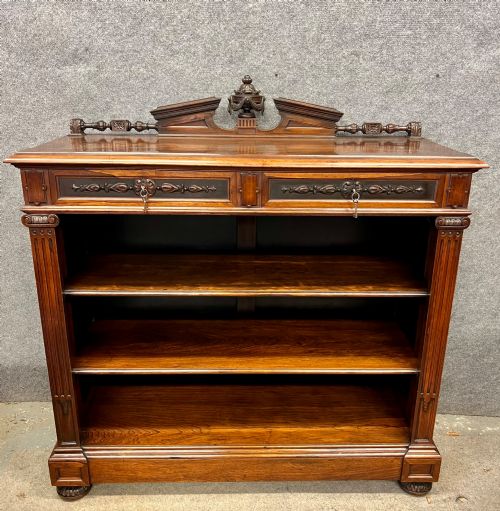
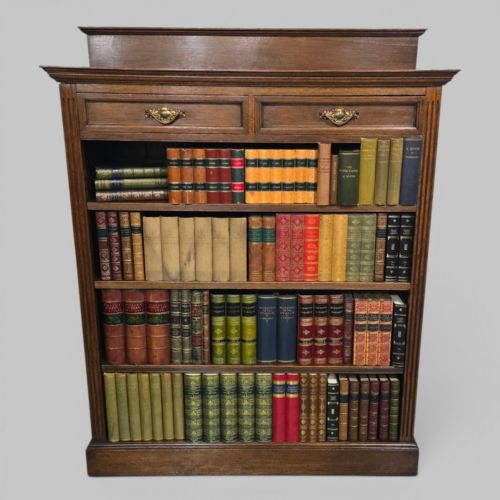
Dark Oak Library Shelves
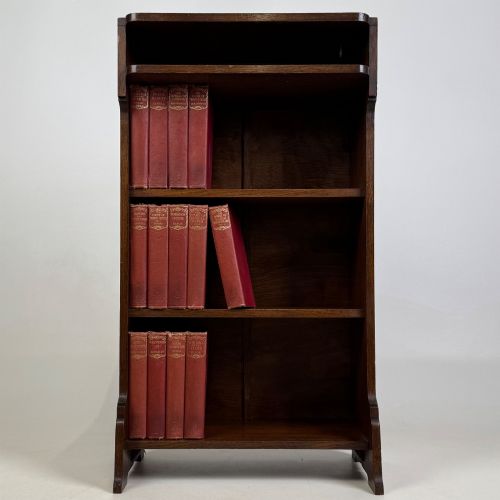
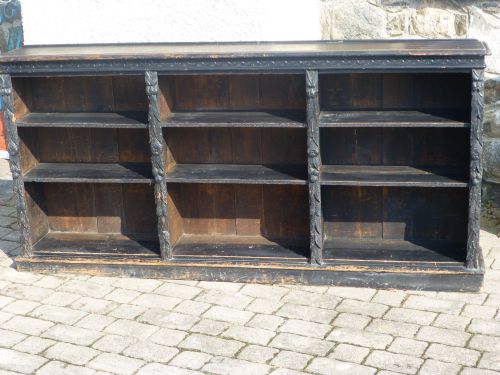
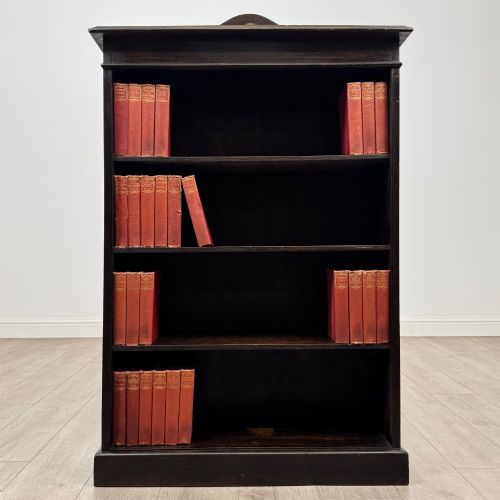
Dark oak library shelves bring weight and utility to a room, ranging from simple open bookcases to revolving tiers and tall architectural cabinets.
Dark Oak Library Shelves
Dark oak library shelves encompass open bookcases, revolving tiers, and tall architectural cabinets designed to hold heavy volumes. When searching for dark oak library shelves, buyers encounter pieces primarily from the Victorian and Edwardian eras, alongside late nineteenth century productions.
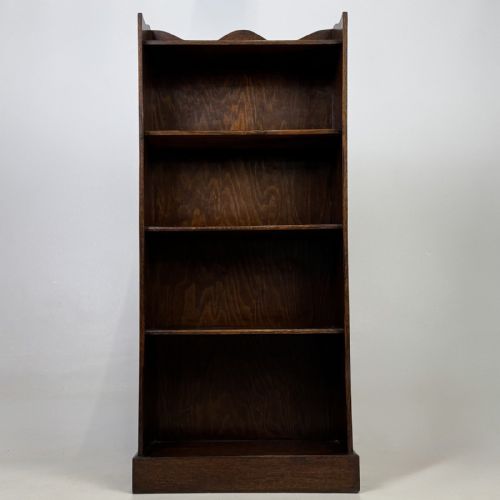
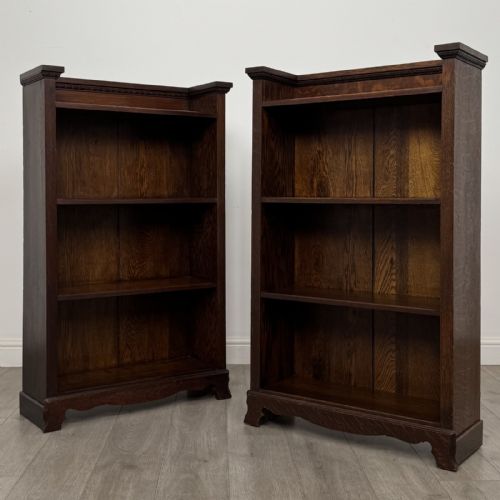
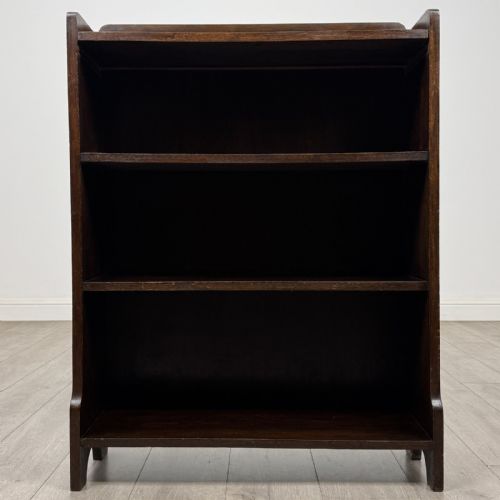
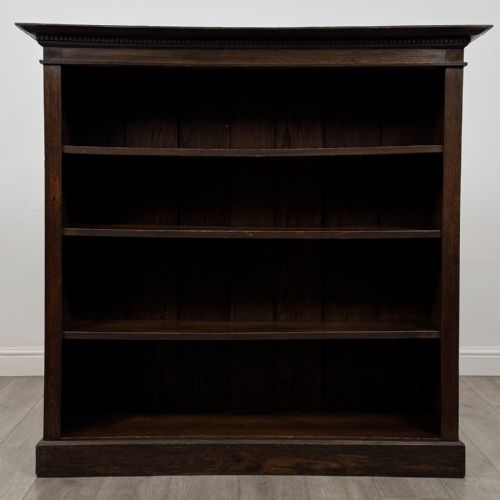
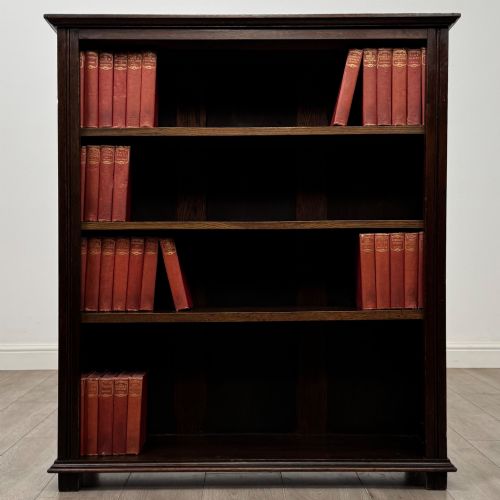
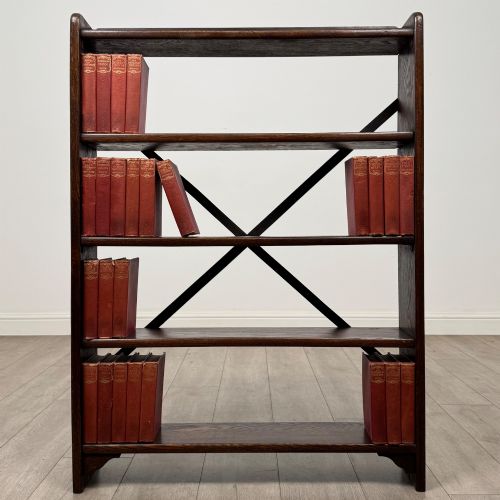
The most common formats on this page are open bookcases featuring adjustable shelving, dentil cornices, or raised galleries. Examples range from low dwarf bookcases to tall breakfront designs and industrial pieces incorporating iron backs.
Origins stretch across British periods like the Arts and Crafts movement and Jacobean Revival, alongside occasional French regional library carts. Makers such as Gillows and Waring and Gillows appear among these heavy timber items.
How they were made
Construction relies heavily on solid oak and ebonised oak, supported by occasional walnut framing. Timber selection dictates the structural integrity needed to bear rows of heavy books without sagging.
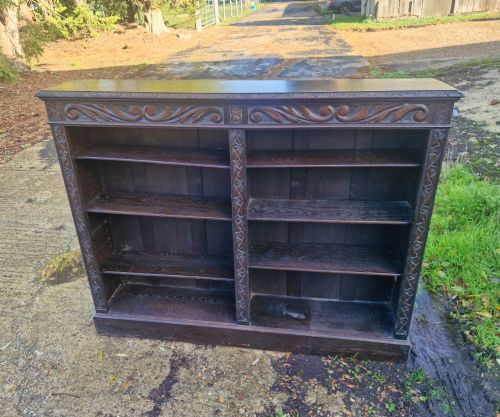
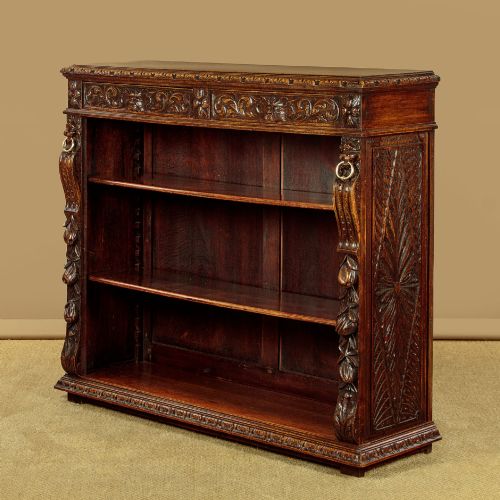
Metal components such as brass and iron appear in structural brackets, sliding mechanisms, and industrial bracing. Carved details, dentil cornices, and raised galleries showcase period woodworking techniques applied to architectural forms.
Dark Oak Library Shelves Retail Price Guide 2026
Typical asking prices for dark oak library shelves among the pieces listed under this phrase on Sellingantiques today, from the lower quarter to the upper quarter. They describe what is for sale here now, not the wider market.
Listings span the Victorian, Edwardian, and 1920s periods, incorporating materials such as oak, ebonised oak, brass, iron, and glass.
What varies in quality
Quality reveals itself in the depth of carving, the precision of architectural mouldings like dentil cornices, and the integration of adjustable shelving mechanisms. Finer pieces demonstrate careful timber selection, such as golden oak or figured grain, paired with substantial proportions.
Workshop origin distinguishes standard utility furniture from pieces bearing cabinetmaker attribution. The presence of secondary materials like brass hardware, carved green man motifs, or specialised stacking barrister systems elevates a piece above basic utilitarian shelving.
Gillows·Waring and Gillows
The Dark Oak Library Shelves Glossary
- Dentil cornice
- A classical moulding pattern composed of small, evenly spaced rectangular blocks resembling teeth. This architectural detail frequently crowns Victorian and Edwardian library bookcases.
- Breakfront
- A large cabinet design where the central section projects forward from the flanking wings. This format provides visual depth to grand institutional and domestic libraries.
- Ebonised
- Timber treated with a chemical stain or finish to imitate ebony. This dark, light-absorbing surface was favoured in nineteenth-century revival styles.
- Revolving bookcase
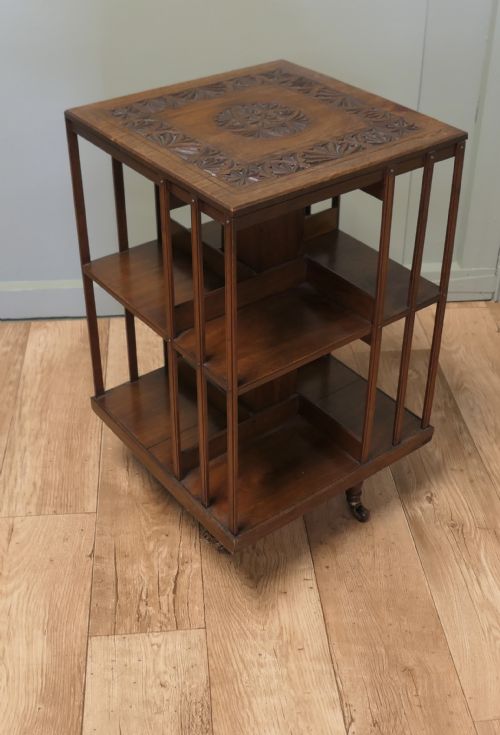
- A compact, rotating shelving unit designed to sit on a floor or tabletop for easy access to dictionaries and reference volumes. These items often feature carved revolving mechanisms.
- Barrister bookcase
- A stacking bookcase featuring glazed doors that lift and slide inward above each shelf. This modular design protected law books from dust.
Dark Oak Library Shelves: Frequently Asked Questions
Are the shelves adjustable?
Many Victorian and Edwardian examples on this page feature adjustable shelving to accommodate varying book heights. Racks utilise wooden side notches or metal pins to shift shelves.
Buyers should check individual listings to confirm whether a specific bookcase retains its adjustable mechanism.
What is a barrister bookcase?
A barrister bookcase is a stacking modular unit with glass-fronted shelves that lift and retract. This design allowed lawyers to transport their libraries easily.
Edwardian versions in oak remain popular for modern studies due to their enclosed protection against dust.
How do I spot a Victorian piece?
Victorian dark oak library furniture often displays heavier carving, architectural cornices, and darker timber patination. Styles range from Gothic Revival to Flemish carved motifs.
Nineteenth-century construction frequently employs solid oak boards with hand-cut joinery.
Can these hold heavy books?
Solid oak construction and adjustable wooden shelving provide the structural rigidity necessary for heavy volumes. Industrial variations incorporate iron backs for additional stability.
These pieces were originally built for institutional and domestic reference libraries carrying substantial weight.