


Dark Oak Bookstand
A dark oak bookstand brings solid timber utility and rich grain into a room, offering practical page-turning support or neat shelf organisation.
Dark Oak Bookstand
When you search for a dark oak bookstand, you encounter a practical range of timber library furnishings spanning several distinct periods. These pieces serve to hold volumes upright on tables, desk surfaces, or floor spaces.
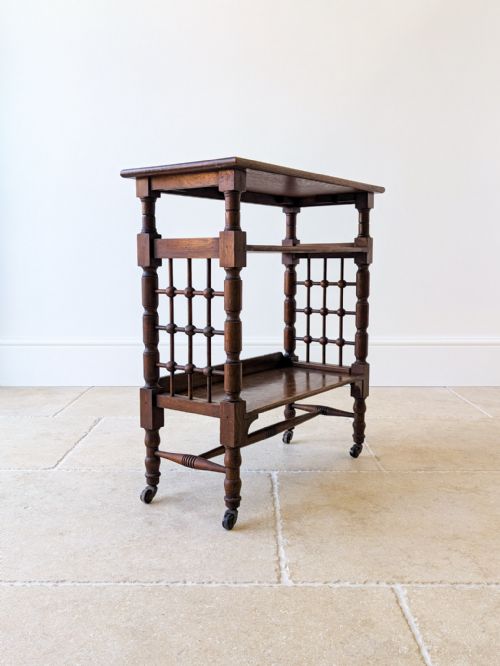
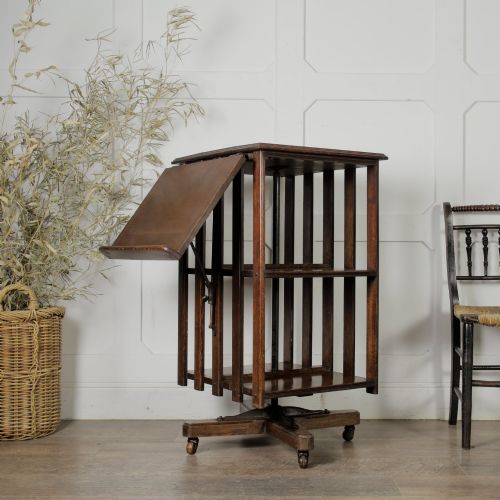
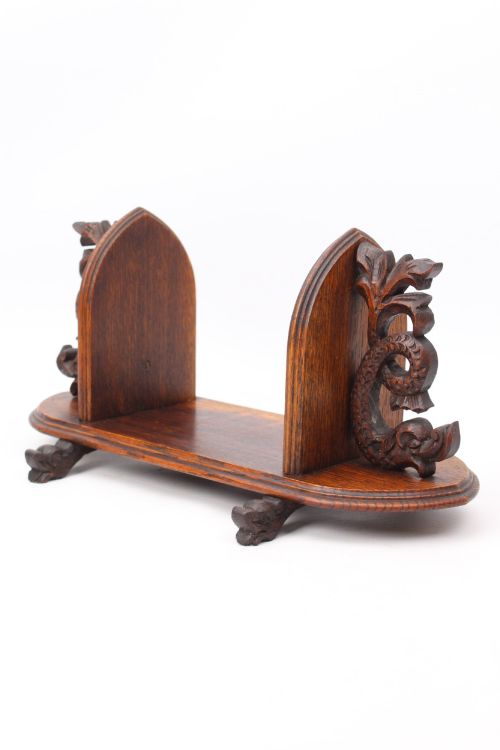
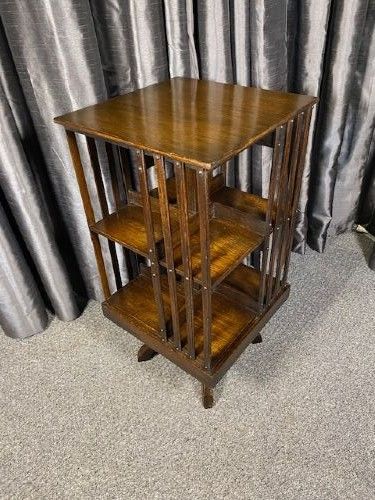
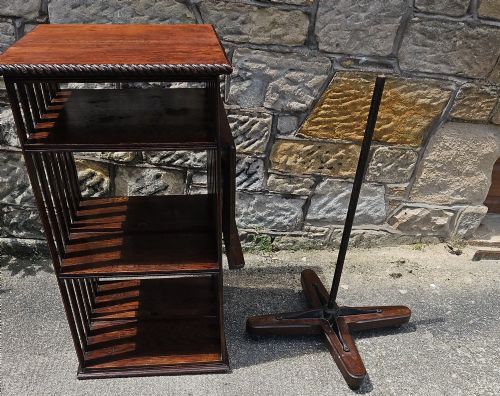
The selections visible here include revolving bookcases, tabletop stands, lecterns, and extending book slides. Edwardian examples appear frequently, alongside Victorian, eighteenth-century, and early twentieth-century interpretations.
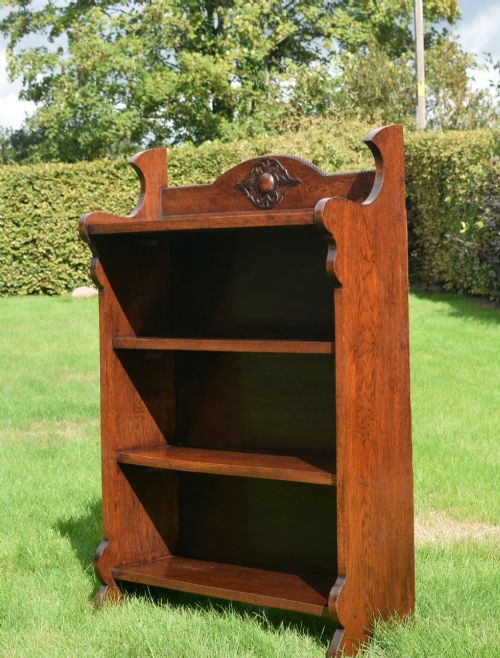
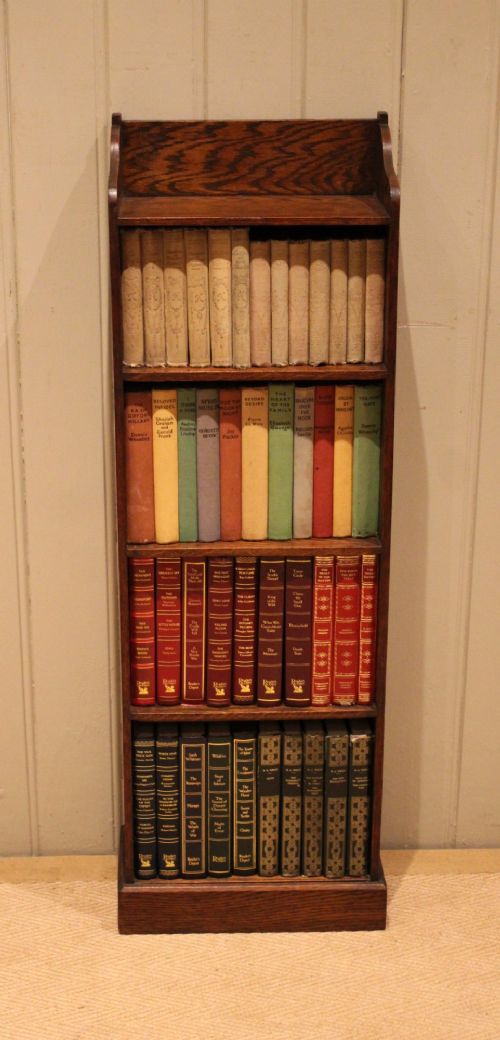
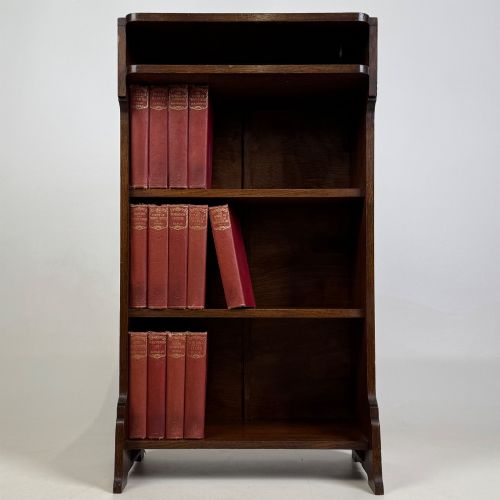
Forms range from small fret-cut waterfall bookcases and slim open shelves to substantial revolving designs and carved lecterns depicting eagles. Buyers select these items to house working libraries while adding deep wood tones to domestic interiors.
How they were made
Makers utilised solid oak timbers, chosen for durability and deep grain patterns, supplemented by functional metal elements. Cast iron and brass appear in moving mechanisms, hinges, and extending book slide mounts.
Construction techniques include traditional joinery alongside fret-cut ornamentation and deep relief carving, particularly visible on Gothic Revival lecterns and Edwardian revolving frames. Surfaces often display rich dark finishes that highlight the natural figure of the oak.
Periods represented span from the eighteenth century through the Victorian, Edwardian, and 1930s eras.
What varies in quality
The standard of a dark oak bookstand rests upon timber selection and the precision of its joinery. Superior examples exhibit tightly fitted joints, solid oak construction throughout rather than thin veneering, and crisp, hand-carved detailing.
Mechanical elements also dictate distinction, particularly in revolving bookcases and extending slides. Smooth rotation, robust internal spindles, and well-cast brass or iron fittings separate standard utility items from finer workshop output.
The Dark Oak Bookstand Glossary
- Revolving bookcase
- A freestanding tabletop or floor-standing bookcase designed to turn on a central spindle for easy access to volumes from any angle.
- Lectern
- A slanted stand designed to support a book at an angle for reading, often featuring carved wooden supports or figural elements such as an eagle.
- Book slide
- An adjustable desktop accessory with expanding sides, usually fitted with metal ends, designed to hold a row of books upright between them.
- Waterfall bookcase
- A tiered shelving unit where each lower shelf steps forward from the one above, creating a cascade effect.
- Gothic Revival
- A nineteenth-century design style drawing inspiration from medieval architecture, characterised by pointed arches, tracery, and heavy carved ornamentation.
Dark Oak Bookstand: Frequently Asked Questions
Where should I place a revolving bookcase?
Revolving bookcases suit corners, beside armchairs, or close to desks where access to a small working library is useful.
Because they turn on a central axis, they require clearance on all sides to function correctly without bumping surrounding furniture.
How do extending book slides work?
Book slides feature a base track that expands or contracts to accommodate varying numbers of volumes between two upright ends.
They sit neatly on tables or desk surfaces to keep reference books organised and upright.
How do I date an oak bookstand?
Dating relies on stylistic markers such as Gothic Revival carving, Edwardian fret-cut details, or Victorian proportions.
Construction methods and metal hardware also offer clues to the era of manufacture.