






Brown Wood Reading Stand
A brown wood reading stand brings hands-free focus to any room, offering stable support for books and folios.
Brown Wood Reading Stand
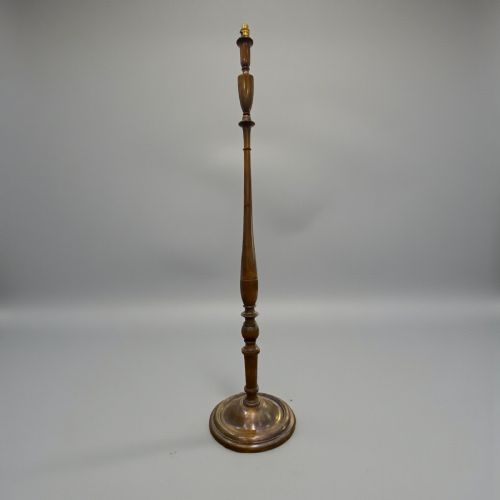
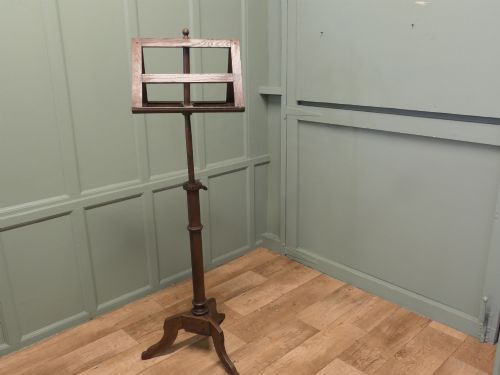
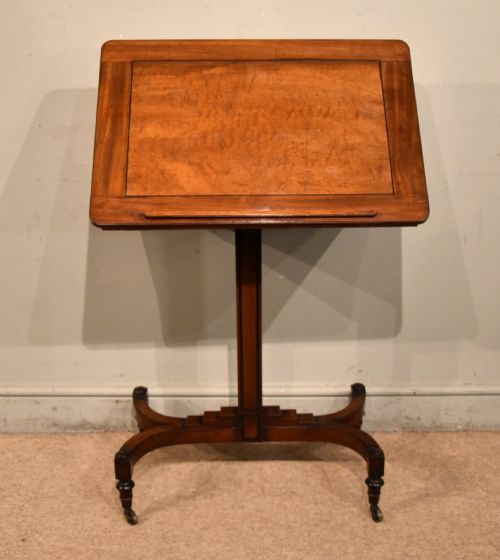
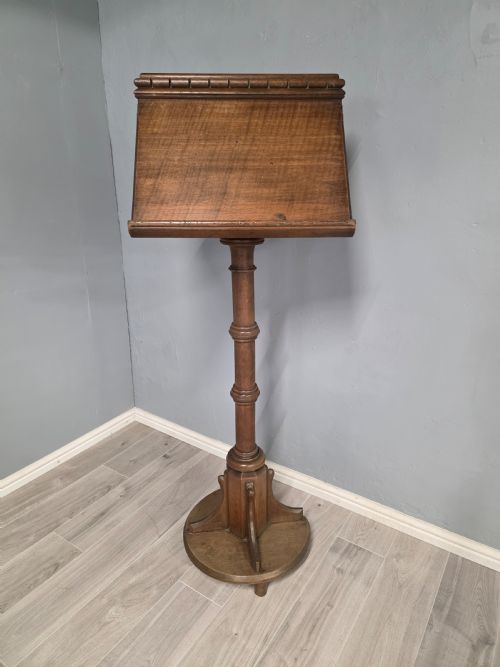
A brown wood reading stand serves as a dedicated support for books, lecterns, and folios, appearing in forms such as table tops, floor-standing models, and adjustable reading tables. These pieces emerge from periods including the Georgian, Regency, Victorian, and Edwardian eras, utilising rich timbers suited to scholarly and domestic interiors.
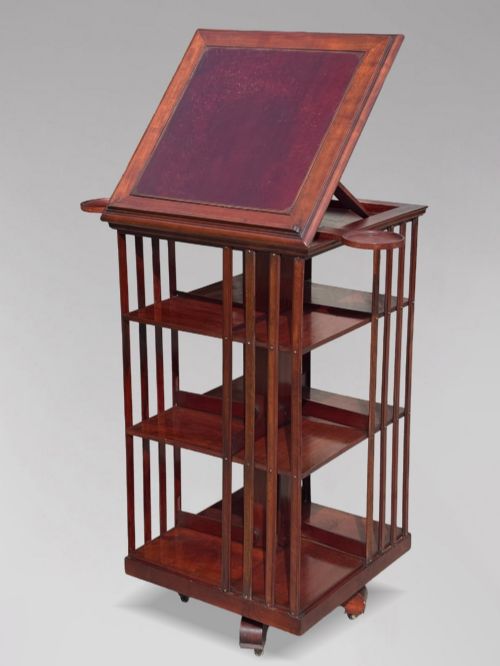
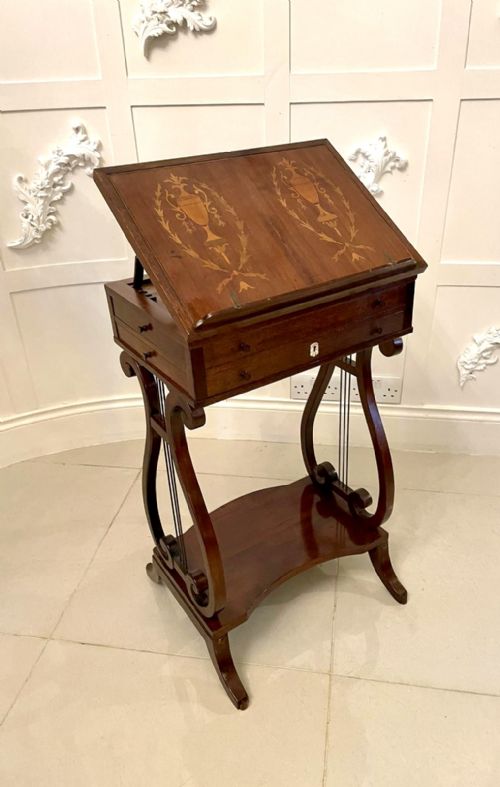
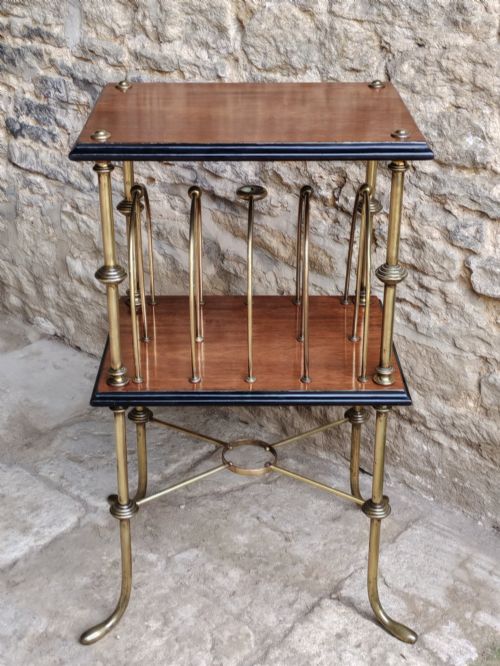
The most common examples on this page are mahogany and oak reading tables or stands, often featuring adjustable mechanisms or folding bookrests. Buyers encounter diverse manifestations ranging from compact campaign table tops to substantial floor-standing pieces and revolving bookcases adapted for reading materials.
Materials and construction
Cabinet makers relied primarily on mahogany and oak, often selecting finely figured veneers and incorporating satinwood inlay for decorative contrast. These timbers provided the structural density necessary for load-bearing book rests and heavy reading tables.
Metal hardware such as brass brackets, ratchets, and adjustable screws allowed stands to alter their angles and heights. Selected pieces integrated secondary materials like leather, fabric, and gilt to finish writing surfaces and book-holding ledges.
Brown Wood Reading Stand Retail Price Guide 2026
Typical asking prices for brown wood reading stand among the pieces listed under this phrase on Sellingantiques today, from the lower quarter to the upper quarter. They describe what is for sale here now, not the wider market.
Listings span the Georgian, Regency, Victorian, and Edwardian periods, utilising primary materials such as mahogany, oak, and satinwood.
Distinctions in craftsmanship
Quality rests in the precision of the adjustable mechanism and the smoothness of its operation, where superior examples move fluidly without play in the joints. The selection of timber grain, particularly figured mahogany and well-matched oak, dictates the visual merit of the piece.
Cabinetwork integrity defines the upper tier, seen in tight joinery, clean inlay work, and robust brass fittings that endure repeated adjustment. Lesser pieces show simpler construction with basic hinges and plain timber surfaces lacking refined secondary details.
The Brown Wood Reading Stand Glossary
- Lectern
- A tall stand with a sloping top designed to hold a book or speech for a standing reader. These often feature carved details or pivoting book rests.
- Revolving bookcase
- A freestanding tiered case mounted on a rotating pivot that allows easy access to books from any seating position. These frequently incorporate inlaid mahogany tops.
- Campaign table top
- A portable furniture form designed for easy transport, featuring folding or removable components. These compact reading stands sit securely on existing surfaces.
- Satinwood inlay
- A contrasting decorative wood veneer inserted into recesses within the primary mahogany surface to create geometric or floral patterns. This technique highlights the refined status of Edwardian and Georgian pieces.
Brown Wood Reading Stand: Frequently Asked Questions
How do I adjust a reading stand?
Most adjustable stands utilise a brass ratchet mechanism or a central screw column to alter the reading angle or height.
Users simply lift the bookrest to the desired notch or turn the adjustment key until the surface locks firmly into place.
Where were these stands used?
These pieces found their places in libraries, studies, churches, and drawing rooms for holding large folios, Bibles, and daily reading material.
Floor-standing and table models provided practical support for scholars, clerics, and readers before the widespread use of modern lighting and seating.
How do I care for mahogany and oak?
Maintain the timber surfaces by dusting regularly with a soft, dry cloth and applying natural beeswax periodically to nourish the grain.
Keep these stands away from direct heat sources and strong sunlight to prevent the wood from drying out or splitting.
Are these stands suitable for modern books?
The sturdy ledges and adjustable angles accommodate modern volumes, cookbooks, and tablets just as effectively as historical folios.
Their stable timber construction provides reliable hands-free support across various reading environments.