

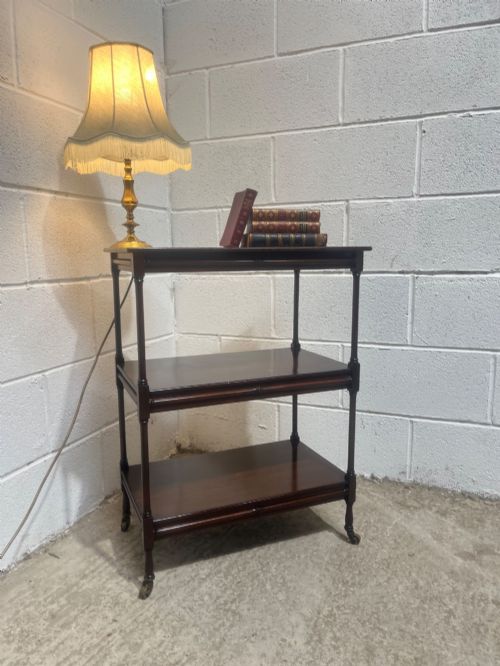
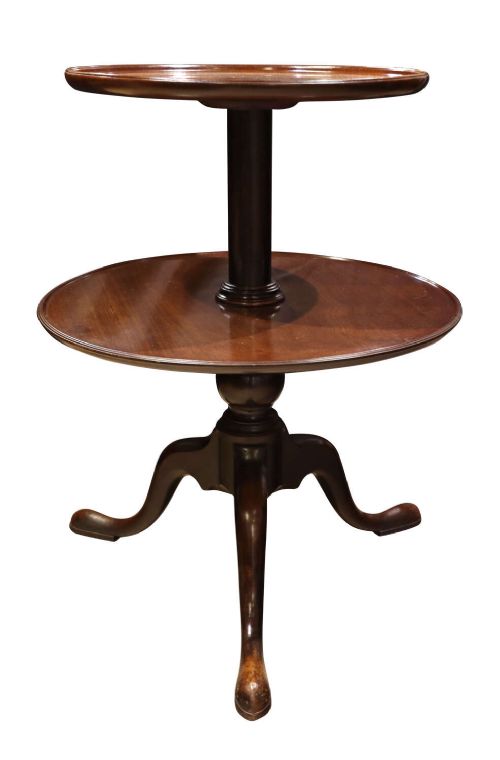
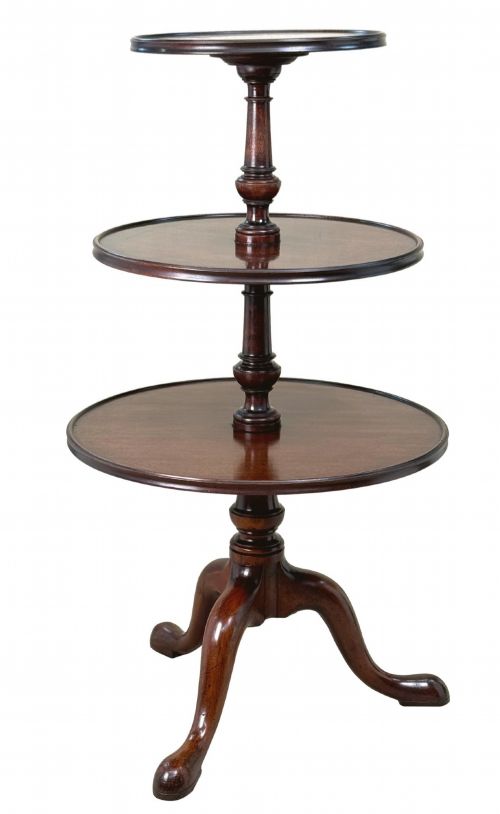
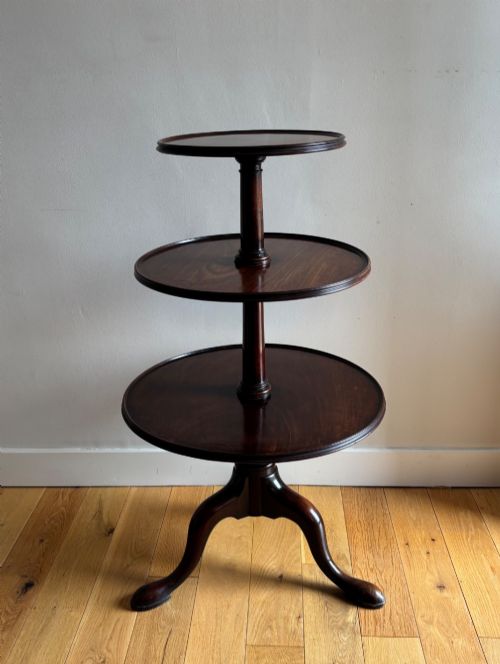
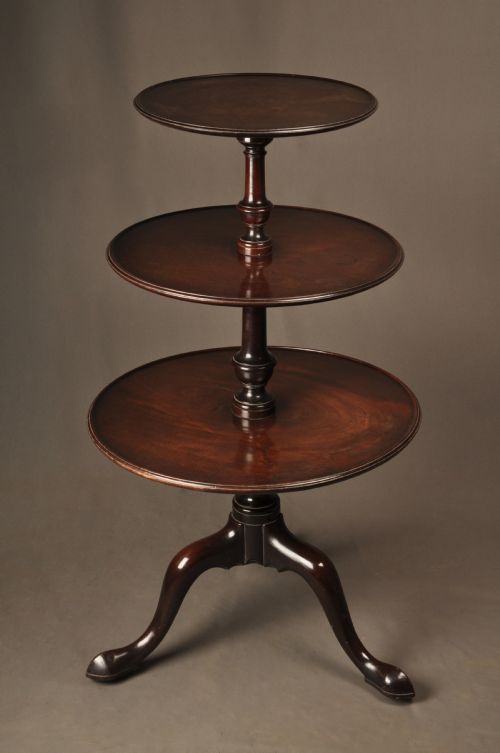

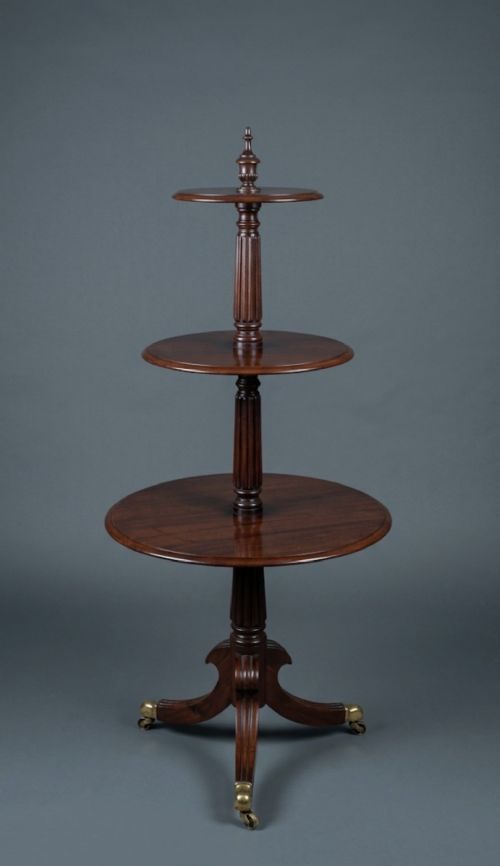
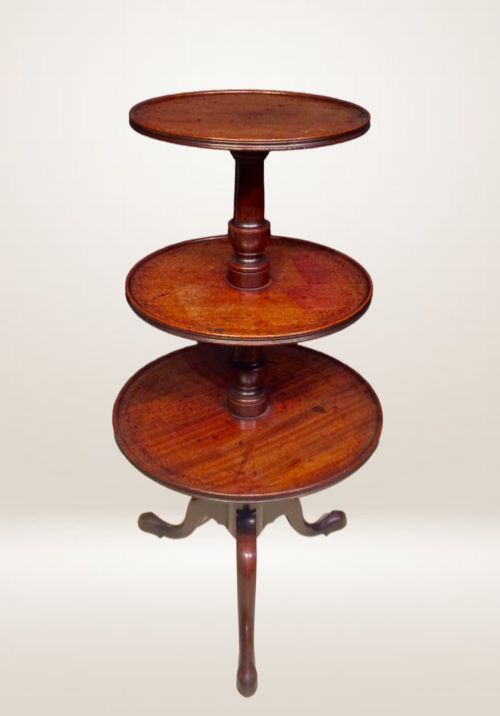


Dark Mahogany Waiter
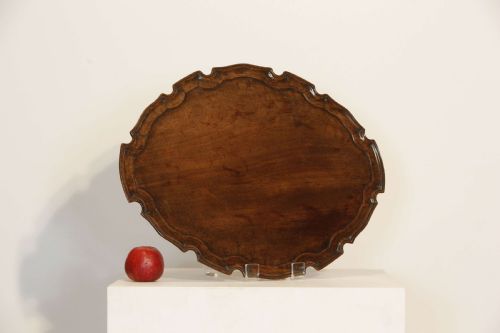
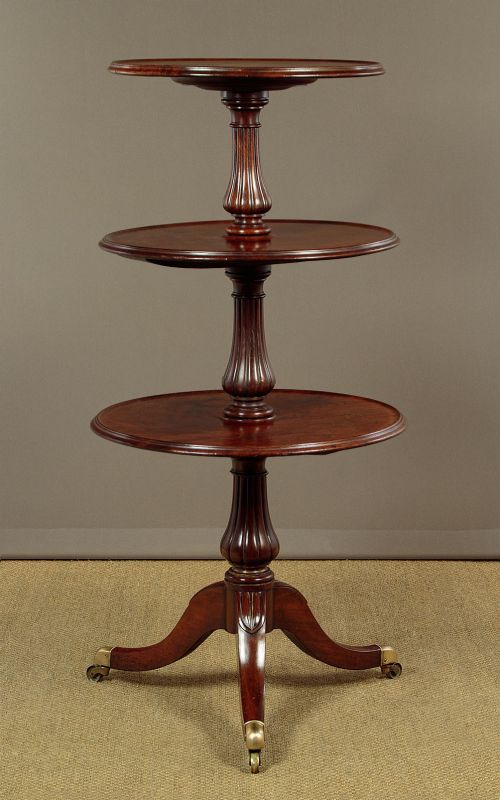
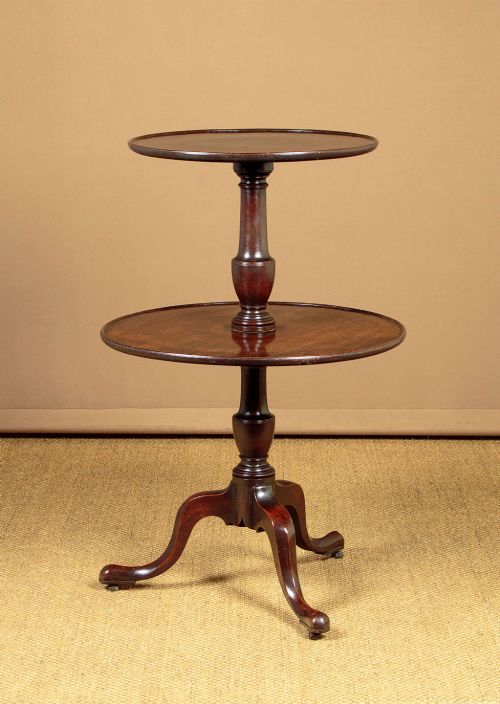
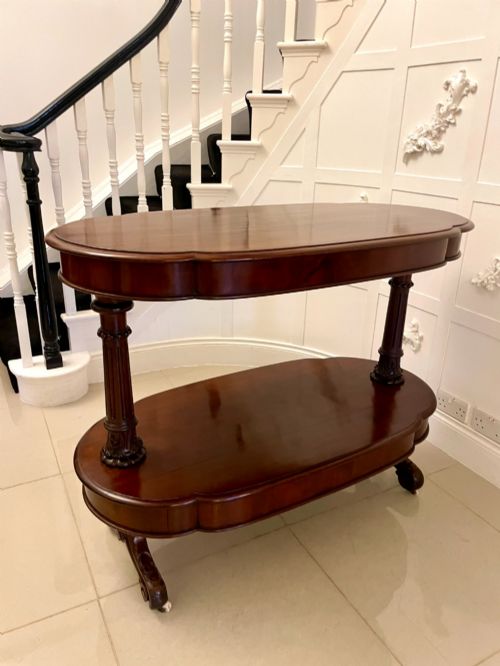
A dark mahogany waiter brings tiered circular utility to dining, moving smoothly from Georgian origins into later Victorian rooms.
Dark Mahogany Waiter
Most examples found here date from the Georgian and Regency periods through to the Victorian era. These pieces served a practical role in dining rooms before large sideboards became common practice.
What varies in quality
Quality rests in the selection of the mahogany timber and the crispness of the turning on the central pillar. Superior pieces display finely figured grain and stable revolving mechanisms that turn without wobble.
Proportion and subtlety of detail distinguish finer workshops from standard production. The grace of the tripod legs and the fit of the tiered joints mark the distinction between ordinary and accomplished work.
Dark Mahogany Waiter Retail Price Guide 2026
Typical asking prices for dark mahogany waiter among the pieces listed under this phrase on Sellingantiques today, from the lower quarter to the upper quarter. They describe what is for sale here now, not the wider market.
Gillows of Lancaster and London
The Dark Mahogany Waiter Glossary
- Dumb waiter
- A tiered freestanding serving table used to hold food or drink. It allowed diners to help themselves without servants present.
- Tripod base
- A three-legged support structure commonly found beneath the central pillar of these tiered tables. It provides stability on uneven floors.
- Cuban mahogany
- A dense, dark timber harvested in the Caribbean, prized for its rich grain and deep colour. It was frequently used in finer 18th century furniture.
- Revolving
- A top or tier mounted on a central pivot that allows the tray to spin. This mechanical feature allowed diners to reach items placed on the far side of the tray.
Dark Mahogany Waiter: Frequently Asked Questions
What is a dark mahogany waiter used for?
These tiered stands held extra plates, bottles of wine, and dishes during meals when guests preferred privacy from household staff.
Today they function as display stands for plants, books, or decorative objects in living spaces.
How do I tell a Georgian piece from a Victorian one?
Georgian versions tend to feature lighter proportions, finer timber selection, and restrained carving on the central column.
Victorian and later iterations often display heavier timber stock, bolder turning, and occasionally mechanical folding frames.
Do all tiers rotate on these stands?
Many multi-tiered examples feature rotating trays to allow easy access to items placed across the table.
Some smaller or folding versions remain fixed in place depending on their specific period design.
Where should I place a tiered stand in my home?
These pieces fit naturally beside seating areas or in corners where vertical display adds interest without taking up floor space.
Their circular footprint makes them straightforward to position alongside armchairs or in dining rooms.