

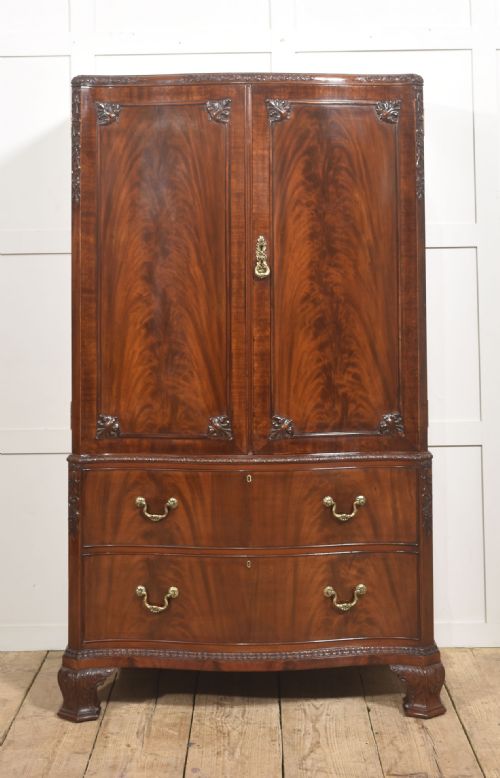


Dark Mahogany Serpentine Chest
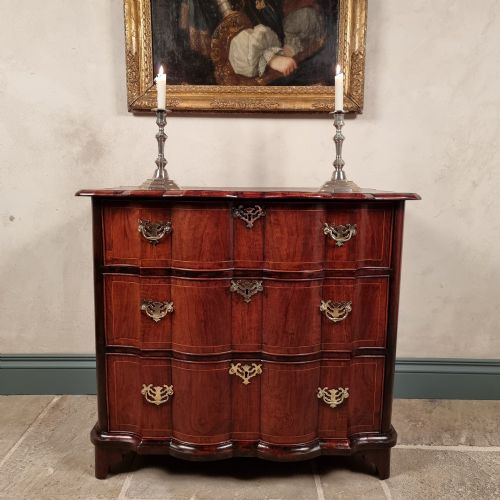
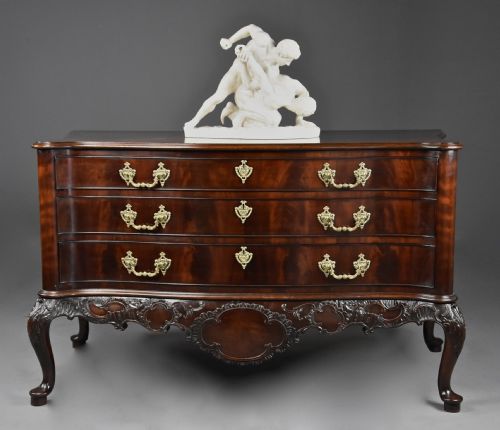
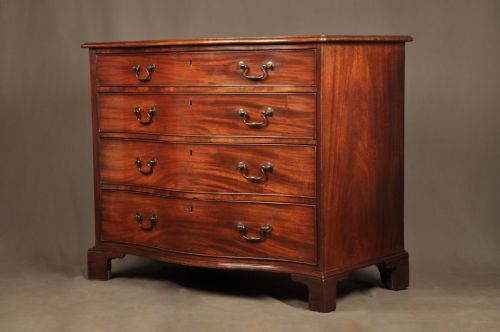
A dark mahogany serpentine chest brings undulating curves and rich timber grain to a room, offering both practical storage and undeniable presence.

Dark Mahogany Serpentine Chest
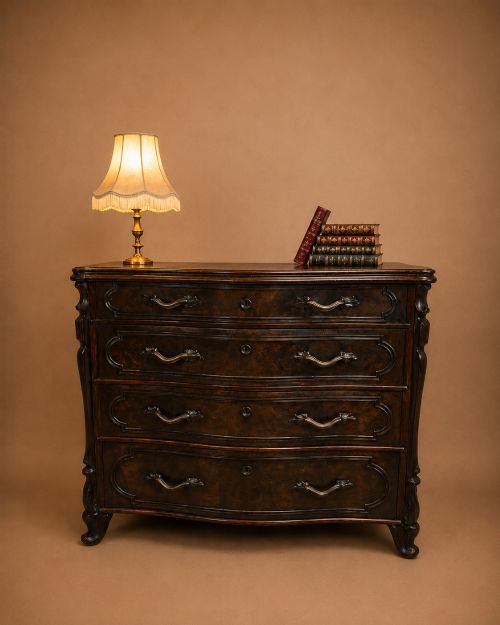
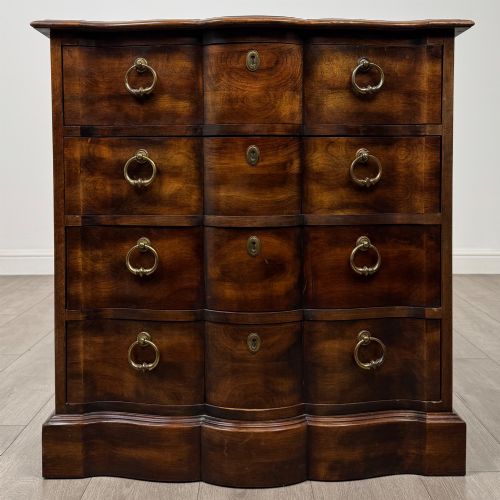
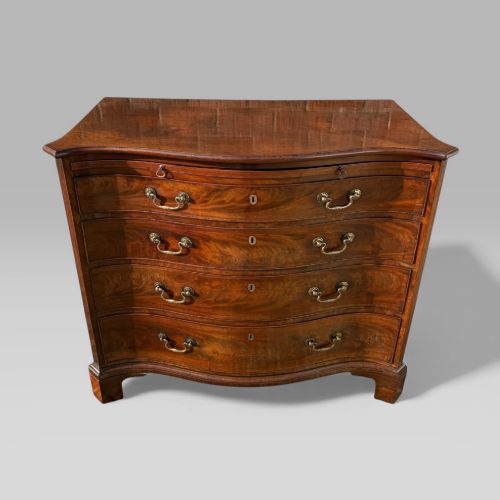
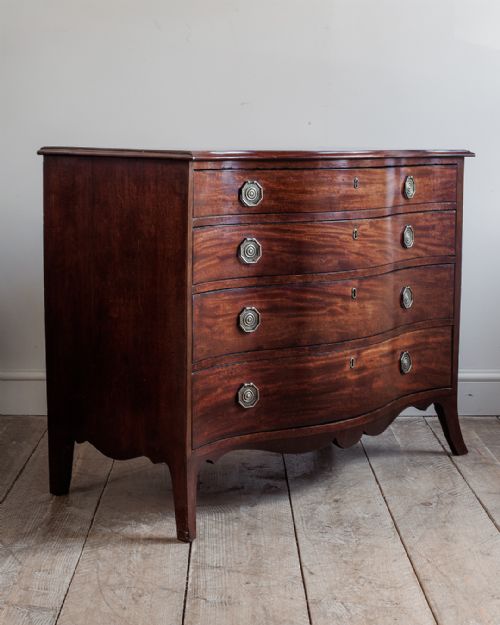
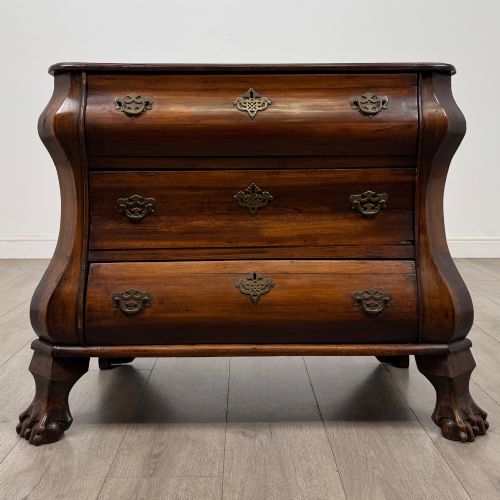
A dark mahogany serpentine chest presents a curved, wave-like front that requires immense skill to construct timber drawers to a non-linear plan. You will encounter these pieces chiefly from the Georgian and Edwardian eras, spanning original 18th-century examples to later Georgian Revival interpretations.
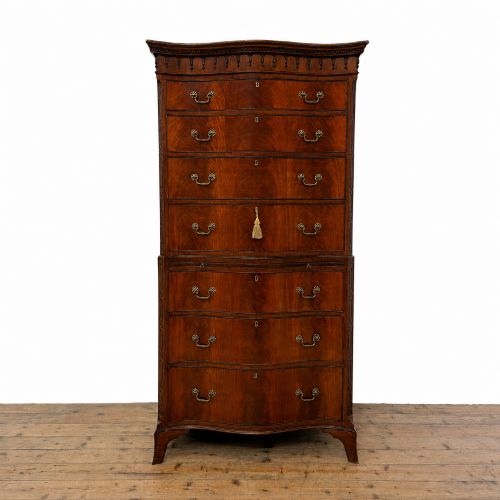
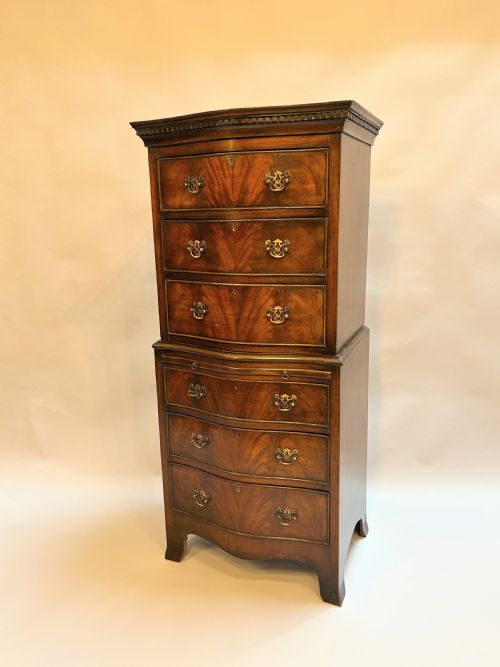
The primary form is the standard chest of drawers, though the listings also include tallboys, bedside lamp chests, and linen presses. Eighteenth-century pieces sit alongside Edwardian and 1920s revivals, giving a clear choice between period originals and later cabinetmaking.
Materials and Technique
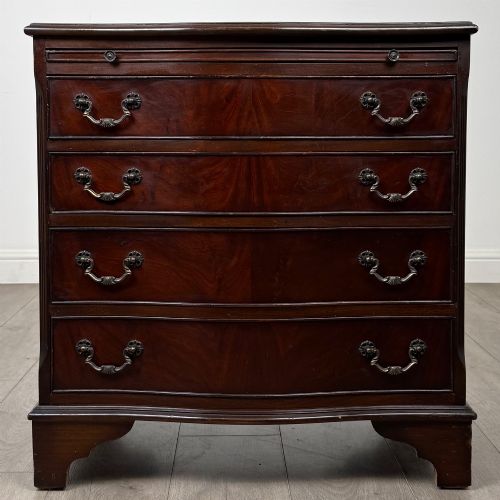
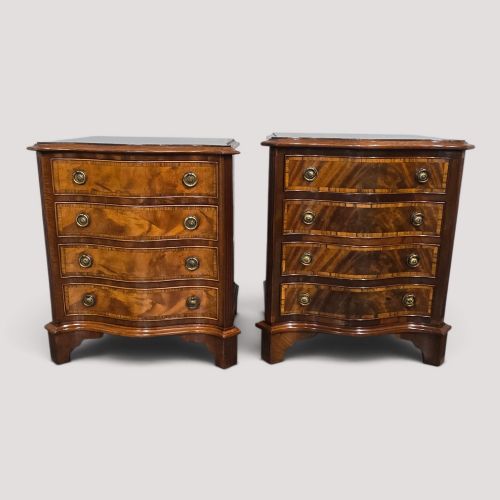
Cabinetmakers built these pieces using solid mahogany and hardwood frames, frequently applying flame mahogany veneer to the drawer fronts to create striking grain patterns. Boxwood inlay and brass hardware finish the construction details.
The serpentine shape demands precise sawing and jointing of the timber rails and drawer sides so that the undulating curves align perfectly across the front of the carcase.
Listings feature mahogany, oak, and satinwood, spanning Georgian, William IV, and Edwardian periods.
Distinctions in Execution
The division between ordinary and exceptional pieces lies in the choice of timber figure and the crispness of the serpentine sweep. Figured mahogany and flame veneers demand expert matching across multiple drawers, which elevates the visual impact.
Secondary timbers, dovetail construction, and the retention of original brass handles and sliding writing brushes indicate the standard of workshop execution in both Georgian originals and later revivals.
Waring and Gillows
The Dark Mahogany Serpentine Chest Glossary
- Serpentine
- A front profile shaped with a convex centre flanked by concave curves, creating an undulating outline.
- Tallboy
- A tall chest of drawers, often constructed in two sections as a chest on chest or incorporating a linen press.
- Flame mahogany
- A veneer cut from timber where the branch meets the trunk, producing a flamed, flickering grain pattern.
- Boxwood inlay
- Narrow strips of pale boxwood set flush into the darker mahogany surface to create contrasting geometric or linear borders.
- Writing brush and slide
- A pull-out shelf positioned above the top drawer, traditionally utilised for dusting clothes or writing notes.
Dark Mahogany Serpentine Chest: Frequently Asked Questions
How do I date a serpentine chest?
Dating relies on timber selection, construction methods, and hardware styles. Eighteenth-century pieces show hand-cut dovetails and period handles, while Edwardian revivals often utilise machine-sawn elements and distinct internal framing.
Examining the secondary timbers inside the drawers helps confirm whether a piece originates from the Georgian period or later revival workshops.
What is a serpentine front?
A serpentine front curves outward in the middle and inward toward the edges, forming an S-shape when viewed from above. This design requires precise cabinetmaking to ensure the drawers operate smoothly within a curved carcase.
The complexity of this shape made it a hallmark of skilled craftsmanship in both 18th-century and revival pieces.
Where should I place a tallboy?
A tallboy offers vertical storage, making it suitable for bedrooms or dressing rooms where floor space is limited. Its height allows for multiple drawers without occupying a wide footprint.
Securing taller pieces to the wall ensures stability when the upper drawers are fully opened.
How do I care for mahogany veneer?
Maintaining mahogany veneer involves keeping the wood away from direct sunlight and steady temperature fluctuations to prevent the timber from drying out. Regular dusting with a soft cloth preserves the polished surface.
Applying traditional wax polish periodically nourishes the grain and maintains the depth of the dark timber.