


Dark Mahogany Piano
These dark mahogany piano pieces include revolving stools, music chairs, and benches spanning the Regency, Victorian, and Edwardian periods.
Dark Mahogany Piano
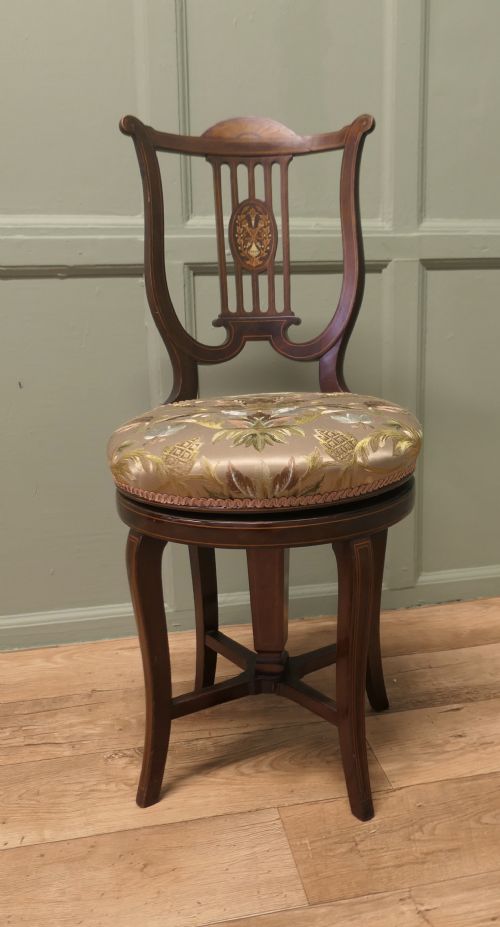
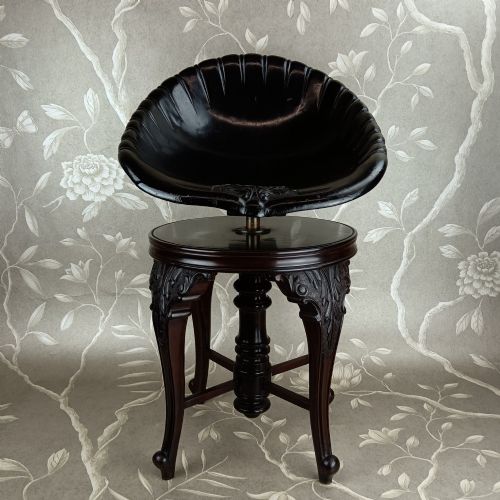
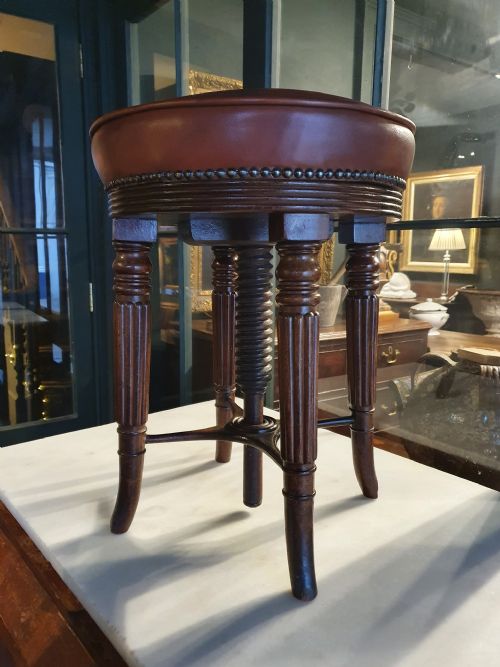
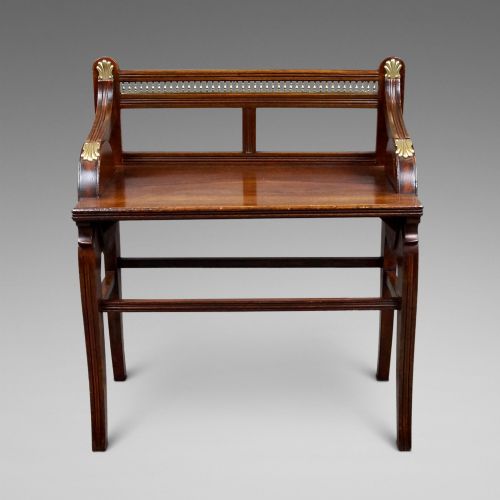
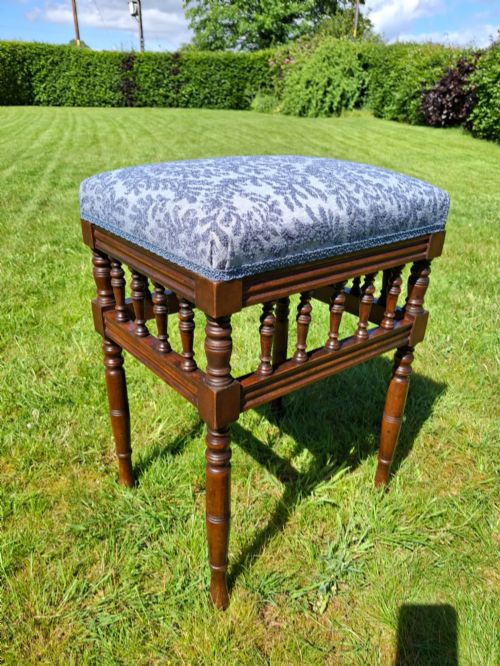
When you search for a dark mahogany piano, you encounter a selection of seating designed for musicians, alongside occasional full instruments and related stools. The most common forms on this page are revolving piano stools and music chairs originating from the Victorian and Edwardian eras.
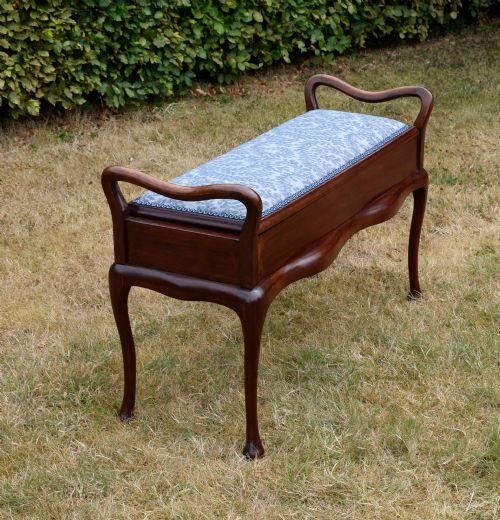
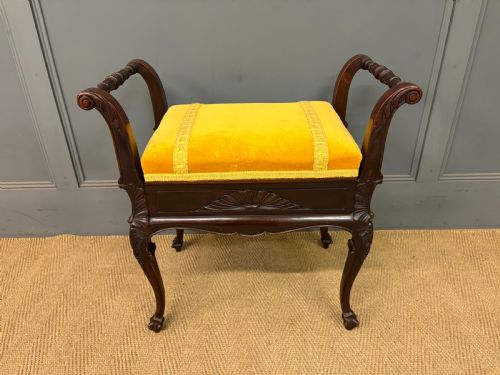
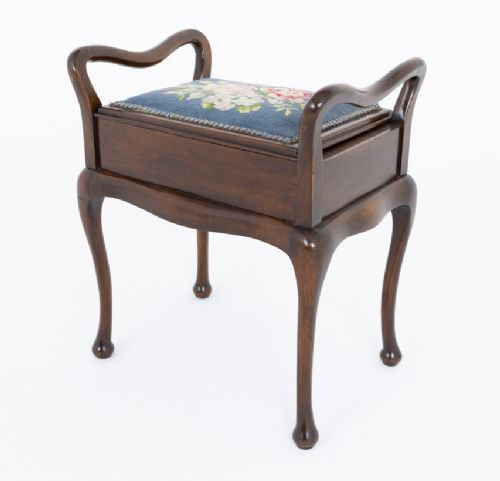
The selection ranges from compact single swivel stools to long duet benches with hinged seats or storage compartments. Pieces frequently incorporate revival styles such as Chippendale, Sheraton, and Queen Anne, reflecting the historicism popular during the nineteenth and early twentieth centuries.
How they were made
Cabinetmakers constructed these frames primarily from solid mahogany and mahogany veneers, often pairing the dark timber with brass hardware and adjustable mechanisms. Upholstered elements frequently employ materials such as fabric, velvet, tapestry, and wool.
Specialised seating incorporates functional elements like rise-and-fall swivel mechanisms, revolving tops, and lyre-shaped backrests. Papier-mâché components also appear in specific Victorian music stools alongside the primary wood frames.
Musicians once required specialised revolving chairs with low backs so their elbows would not catch while playing the cello.
What varies in quality
The distinction between standard commercial production and finer work lies in the execution of carved details, such as ball and claw feet or turned and tapered legs. Superior examples demonstrate precise joinery in the revolving mechanisms and robust internal framing for height-adjustable seats.
Maker attribution elevates certain pieces, particularly those bearing the marks of established firms like Jas Shoolbred, Jennens & Bettridge, or Gillows. The choice of secondary materials, including high-grade upholstery fabrics and substantial brass fittings, further distinguishes higher-tier items.
Jennens & Bettridge·Jas Shoolbred·Gillows
The Dark Mahogany Piano Glossary
- Revolving piano stool
- A seat with a top that turns on a central screw mechanism to adjust height. This design allowed keyboard players to find a comfortable seating level.
- Duet piano stool
- A wider bench designed to accommodate two players simultaneously. These often feature hinged seats opening to reveal storage for sheet music.
- Lyre back
- A chair back shaped in the symmetrical outline of a classic stringed musical instrument. This motif is typical of music room seating from the Regency and Victorian periods.
- Rise and fall
- An alternative description for an adjustable height mechanism operated by a swivel screw. It allows the seated person to raise or lower the seat level.
- Papier-mâché
- A moulded composite material made from paper pulp or layers of paper reinforced with glue. In Victorian pieces, it is sometimes combined with mahogany structures and decorated with inlay or paint.
Dark Mahogany Piano: Frequently Asked Questions
How do adjustable piano stools work?
Adjustable piano stools operate via a central wooden or metal screw mechanism hidden beneath the seat. Turning the upholstered top clockwise or anticlockwise raises or lowers the seating height.
This system allowed nineteenth-century musicians to adjust their posture precisely relative to the keyboard height.
What is a duet piano stool?
A duet piano stool is an extended bench built to seat two people side by side for four-hands piano playing. Many examples feature a hinged top that lifts to store sheet music inside.
These benches date largely from the late Victorian and Edwardian periods.
How do I identify a Victorian music chair?
Victorian music chairs often feature distinctive backrests, such as lyre shapes or supportive scroll designs, paired with revolving seats. They were built for harpists, cellists, and pianists requiring upper-body freedom.
The frames are constructed from dark mahogany, occasionally incorporating brass and upholstered pads.