


Dark Mahogany Ottoman
Dark mahogany ottoman selections bring substantial timber frames and traditional upholstery together, offering practical low seating that grounds a period room.
Dark Mahogany Ottoman
A dark mahogany ottoman search directs attention to sturdy wooden stools and footstools produced across multiple centuries, including Georgian, Victorian, and later revival periods.
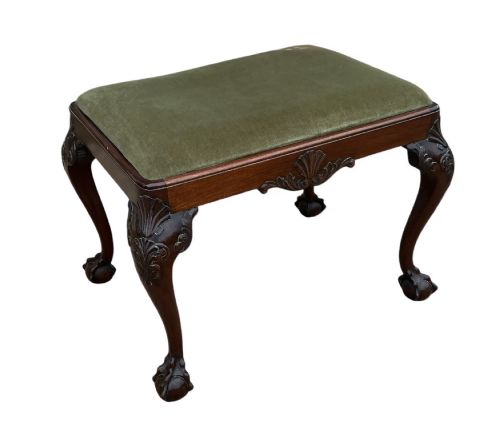
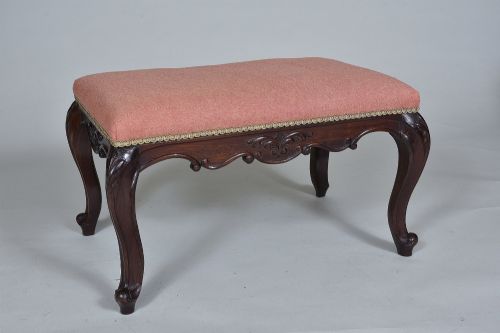
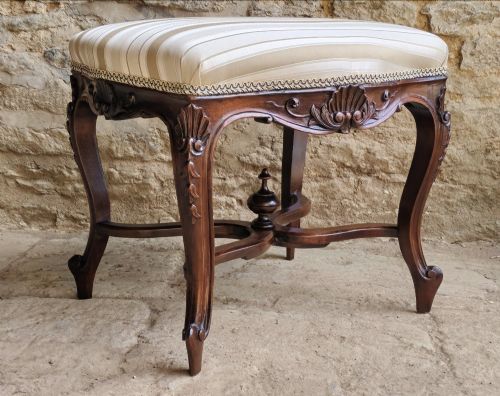
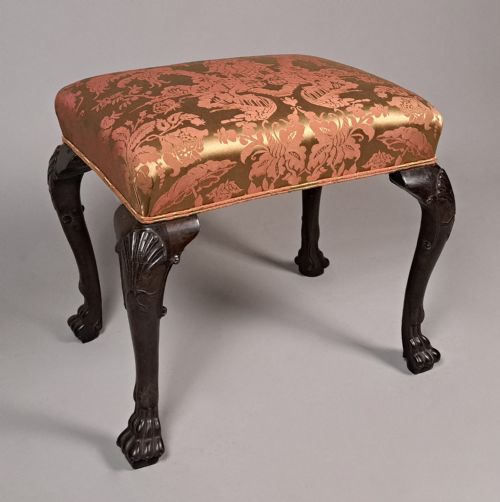
Buyers meet Victorian and 19th-century variants most frequently on this page, alongside Georgian examples and various revival pieces featuring carved cabriole legs or ball and claw details.
These low seating forms span standard footstools, music stools, dressing stools, and longer bench formats designed for domestic utility and comfort.
How they were made
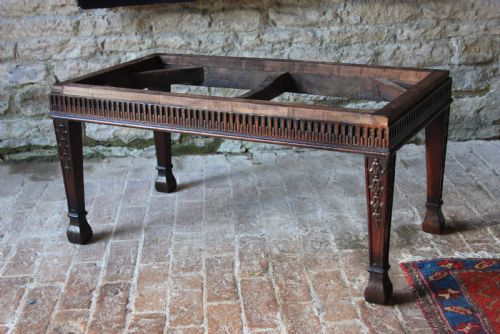
Craftsmen built these frames using solid mahogany and oak timbers, often shaping cabriole, sabre, or straight legs with hand-carved decorative motifs.
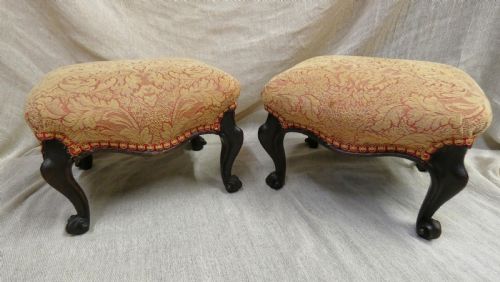
Upholstery techniques combined traditional webbing and stuffing with surface coverings in fabric, leather, velvet, wool, tapestry, and damask, secured with brass detailing.
Several listings combine solid mahogany frames with tapestry poufs, proving that past generations took their foot comfort just as seriously as their wall hangings.
What varies in quality
The standard of carving determines much of the distinction between pieces, separating simple turned supports from deeply sculpted cabriole legs and detailed ball and claw feet.
The original integrity of the timber frame and the quality of the textile upholstery selection further distinguish simpler domestic items from more ambitious cabinet work.
The Dark Mahogany Ottoman Glossary
- Cabriole leg
- A furniture leg that bends out in a convex curve and tapers inward to a concave curve, ending in a pad, claw, or scroll foot. This form appeared widely on Georgian and Victorian seating.
- Chippendale style
- A decorative aesthetic drawing on mid-18th-century English designs, characterised by ornate carving and ball and claw feet. Revival versions appeared frequently in the later nineteenth and early twentieth centuries.
- Damask
- A reversible figured fabric woven on a jacquard loom, frequently utilised for formal upholstery on period stools and chairs.
- X framed
- A furniture base constructed with intersecting diagonal members that form an X shape when viewed from the side, providing structural support and visual weight.
Dark Mahogany Ottoman: Frequently Asked Questions
What is a dark mahogany ottoman?
These pieces comprise solid mahogany wooden frames paired with upholstered tops, functioning as footstools, dressing stools, and low benches across various historic periods.
Craftsmen produced them in styles ranging from plain 19th-century utility designs to heavily carved Chippendale and Georgian revival forms.
How were footstools used historically?
Occupants used them primarily to elevate feet above cold floors or as low seats near dressing tables and music instruments.
Their sturdy timber construction allowed them to withstand daily domestic service in parlours and bedrooms.
How do I identify a Victorian stool?
Victorian examples often display turned or cabriole mahogany legs supporting rectangular or square upholstered pads covered in velvet, leather, or tapestry.
They frequently show the heavier timber proportions typical of nineteenth-century domestic joinery.
Can I place these in a modern interior?
Their dark timber tones and traditional upholstery integrate well into contemporary rooms as functional accent seating or small side tables.
Pairing them with neutral textiles allows the carved wooden frames to stand out against modern flooring.