



Dark Iron Candle Stand
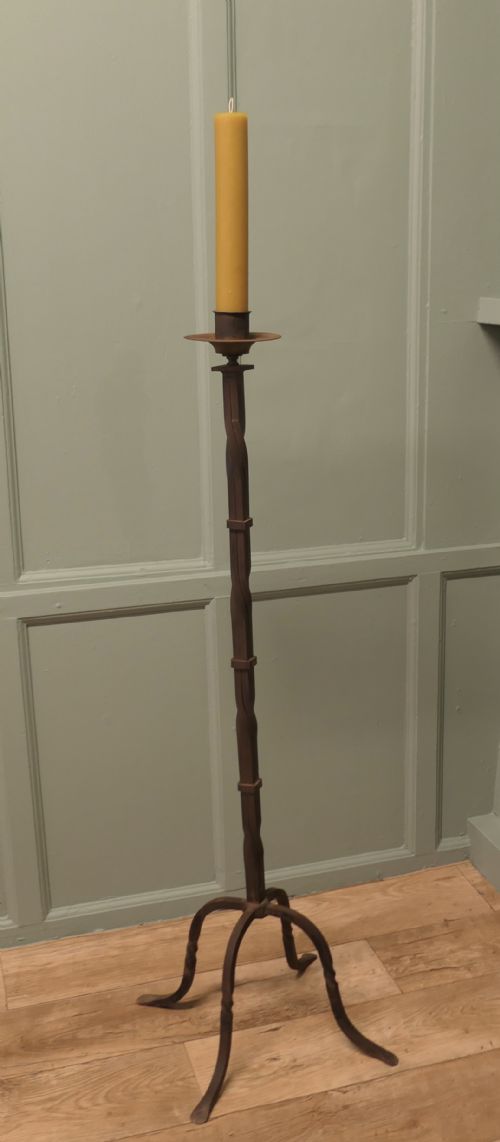
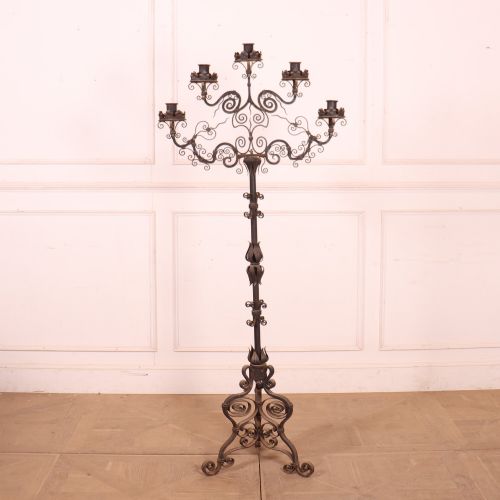
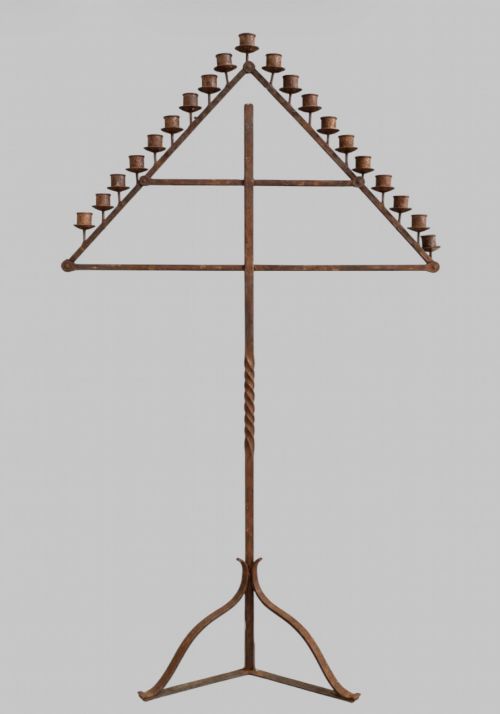
These dark iron candle stands are robust metal light-holders shaped across centuries for floor or table use.
Dark Iron Candle Stand
A dark iron candle stand brings heavy metal utility and period presence into a room, taking forms from simple chambersticks to architectural floor candelabras. Buyers searching for a dark iron candle stand encounter pieces spanning the eighteenth century through to the Art Deco era, encompassing both British vernacular items and continental European work.
Floor standing candelabras and torchères dominate the larger examples on this page, often built from wrought or cast iron with substantial presence. Table candlesticks and rushlight holders represent the smaller domestic scale, utilising iron alongside brass, bronze, and hardwood components.
Stylistic diversity ranges from plain Georgian and Welsh vernacular designs to Gothic Revival, Art Nouveau, and Secessionist pieces. The selection includes single items as well as matched pairs, giving options for both focal floor placement and table display.
How they were made
Blacksmiths and metalworkers shaped these objects primarily using wrought iron, cast iron, and steel, hammering and forging metal while hot to create structural durability. Components were joined mechanically or through early welding techniques, resulting in sturdy shafts, tripods, and drip pans.
Secondary materials such as brass, bronze, and hardwood appear in mounts, patinated figures, or bases to add contrast and decorative weight. Surface finishes often rely on the natural dark oxidisation of the metal or historical patination methods rather than heavy painted coatings.
Dark Iron Candle Stand Retail Price Guide 2026
Typical asking prices for dark iron candle stand among the pieces listed under this phrase on Sellingantiques today, from the lower quarter to the upper quarter. They describe what is for sale here now, not the wider market.
The selection includes Gothic Revival, Arts and Crafts, and Secessionist stylistic influences.
What varies in quality
The distinction between standard domestic items and superior examples lies in the ambition of the forging and the integrity of the original construction. Architectural floor candelabras and works by known metal ateliers demonstrate more sophisticated proportion and heavier gauge metalwork than utilitarian pieces.
The harmony of materials determines the success of mixed-medium objects, where iron integrates smoothly with brass or bronze details and wooden bases. Untouched surfaces with deep historical patination retain greater character than stripped or overly polished metal.
Hugo Berger Goberg
The Dark Iron Candle Stand Glossary
- Wrought iron
- Iron that has been heated and hammered into shape by hand, showing subtle tool marks and fibrous grain. It provides the tensile strength needed for slender stems and scrollwork.
- Torcher
- A tall stand or candlestick designed to hold a light source at a high level. They often feature decorative shafts and substantial weighted bases for stability.
- Rushlight holder
- A spring-loaded device designed to grip a dried rush dipped in animal fat for cheap illumination. These vernacular items often combine iron jaws with wooden block bases.
- Pricket candlestick
- A candlestick featuring an upward-pointing metal spike that impales the base of a wax candle to secure it. This form is common on older altar sticks and heavy iron standards.
- Secessionist
- An early twentieth-century Central European design movement characterised by geometric abstraction and stylised organic motifs. Metalwork from this style often employs clean silhouettes and hammered brass or iron surfaces.
Dark Iron Candle Stand: Frequently Asked Questions
What is a dark iron candle stand?
A dark iron candle stand is a utilitarian or decorative lighting support forged or cast from metal during the eighteenth, nineteenth, or early twentieth centuries. These objects range from tall floor-standing torchères and altar lights down to smaller table candlesticks and rushlight holders.
They reflect the metalworking traditions of various regions, including Welsh vernacular craft and continental Secessionist design. Their primary function was holding candles or rushlights securely in domestic, ecclesiastical, or architectural settings.
How do I style a floor candelabra?
Floor candelabras and torchères work best in corners, beside fireplaces, or framing architectural doorways where their height can make an impact. Because they are substantial metal objects, they anchor a room visually without needing surrounding clutter.
Pair them with simple taper candles to let the ironwork remain the central focus. Ensure they stand on level flooring, particularly heavier cast iron or bronze-patinated figures.
How do I date an iron candlestick?
Dating relies on observing the manufacturing technique, tool marks, and stylistic clues inherent in the iron or accompanying materials. Eighteenth-century and early nineteenth-century pieces often show hand-forged wrought iron construction with irregular surfaces and simple mechanical joins.
Later nineteenth-century and 1930s pieces introduce cast iron mass production, gas-light adaptations, or distinct aesthetic movements like Art Deco and Secessionist styling. Comparing the form against known period typologies helps narrow down the decade of manufacture.
Are these candle stands stable?
Most of these pieces are built from heavy iron, steel, or bronze-patinated cast metal designed to support candles securely under normal conditions. Floor-standing versions generally utilise tripod bases or heavy weighted feet to prevent tipping.
When living with older ironwork, check that the joints remain firm and that the candle sits securely in its cup or on its pricket. Lighter domestic chambersticks should be moved carefully when lit.