




Dark Floral Canvas
Dark floral canvas items bring moody, atmospheric botanical oil paintings and screens into rooms.
Dark Floral Canvas
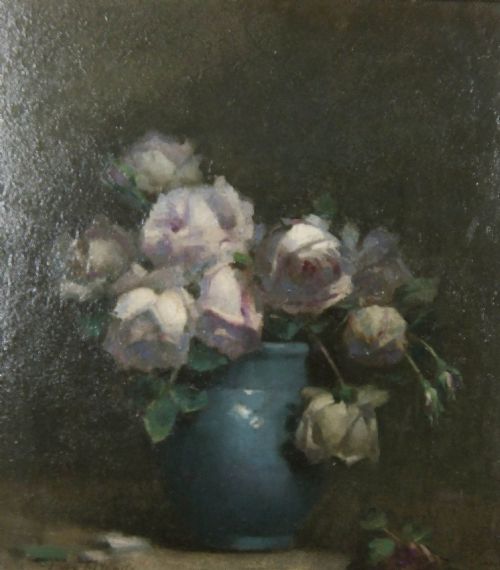
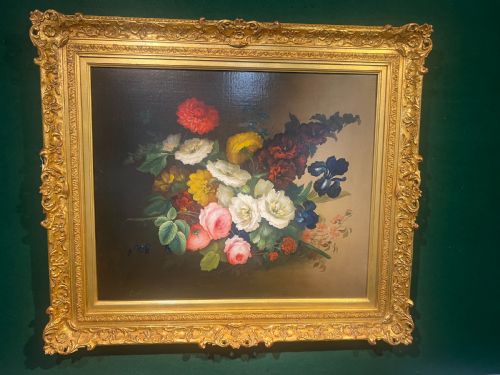
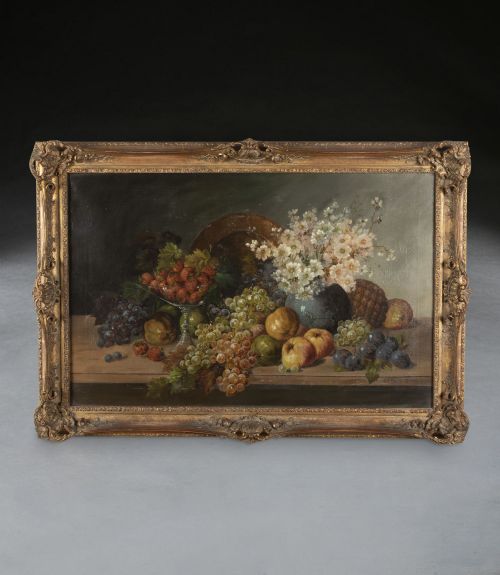
When searching for dark floral canvas, buyers encounter antique oil paintings and painted room dividers featuring rich botanical compositions against deep, shadowed backgrounds. These works span centuries, with pieces originating from seventeenth-century Dutch traditions through to twentieth-century British interpretations.
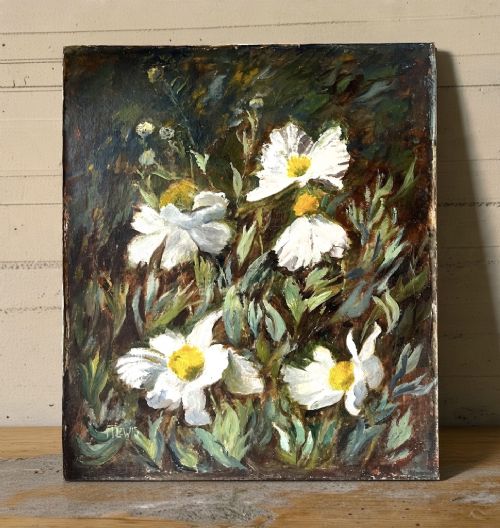
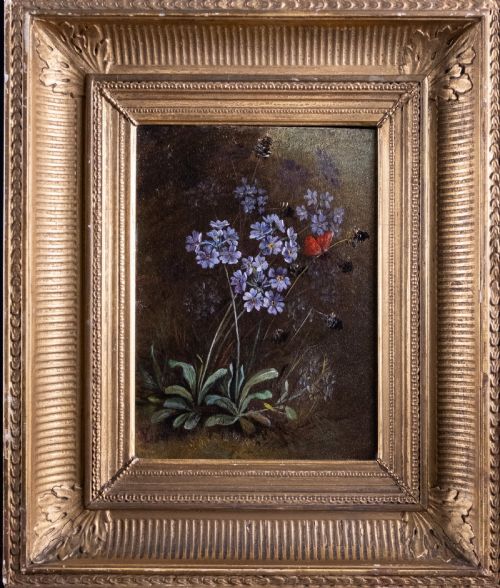
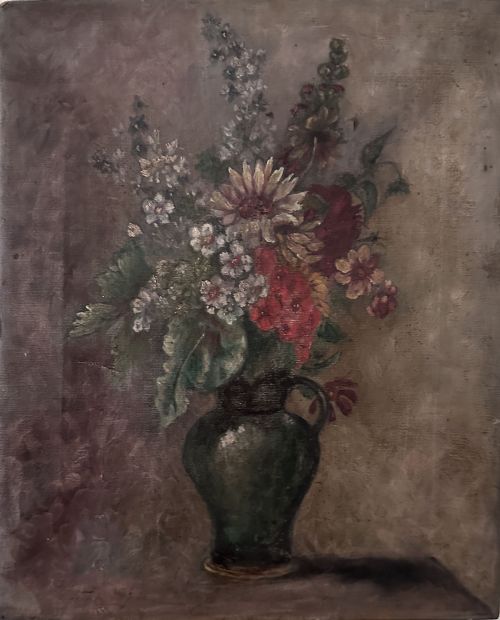
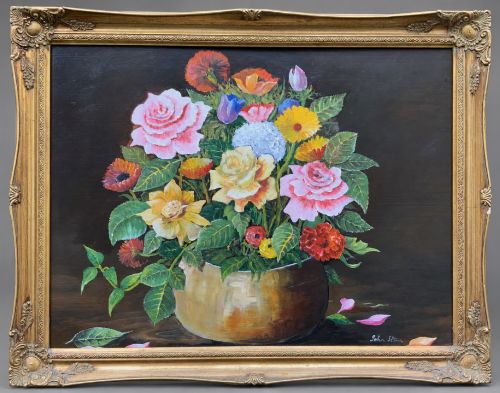
The most common formats on this page are oil paintings on canvas, frequently depicting roses, anemones, tulips, and mixed summer blossoms arranged in vases, baskets, or terracotta pots. Alongside traditional wall art, the selection includes decorated folding screens that translate these deep floral motifs into functional room dividers.
Materials and construction
The works utilise oil paint applied to woven canvas supports, sometimes mounted over wooden stretcher frames or incorporated into multi-panel room dividers. Pigments build rich depth against dark grounds, while supporting elements frequently include wood, gesso, gold leaf, and giltwood framing.
Artists layered oil medium to create tonal contrast between vibrant floral subjects and shadowed backgrounds, employing techniques derived from Flemish Baroque and Dutch Golden Age traditions. Surviving panels and stretched canvases show the physical integration of traditional ground layers and organic binding materials over centuries.
Dark Floral Canvas Retail Price Guide 2026
Typical asking prices for dark floral canvas among the pieces listed under this phrase on Sellingantiques today, from the lower quarter to the upper quarter. They describe what is for sale here now, not the wider market.
The listings encompass oil paintings, fine art, and room dividers spanning from the seventeenth century through the mid-twentieth century.
Assessing quality and execution
The distinction between standard works and exceptional examples lies in the handling of brushwork, compositional rhythm, and the treatment of light across the floral subjects. Superior paintings demonstrate precise botanical observation combined with confident, expressive application of oil paint, particularly in rendering petal textures and foliage against the deep background.
Framing and material preservation also separate pieces, as original giltwood frames or period-appropriate housing enhance the structural integrity and historical context of the canvas. The depth of the palette and the stability of the paint surface dictate the visual impact of each composition.
Gaspar Peeter Verbruggen·Edwin Steele·William Thomas Wood·Owen Bowen·James Stuart Park·Margaret Evangeline Wilson·Herbert Davis Richter·Terence Loudon·Kershaw Schofield
The Dark Floral Canvas Glossary
- Canvas
- A heavy woven fabric typically made from linen or cotton, used as a support surface for oil paintings. It is stretched tightly across a wooden frame before painting begins.
- Giltwood
- Wood that has been coated with a thin layer of gold leaf or gold powder. This finish is frequently found on antique picture frames surrounding floral still life paintings.
- Gesso
- A white paint mixture consisting of a binder mixed with chalk, gypsum, or pigment. It prepares rigid panels or canvases to receive oil paint.
- Still life
- A work of art depicting mostly inanimate subject matter, typically commonplace objects which may be either natural or man-made. Floral compositions are a primary subgenre within this category.
- Baroque
- An ornate artistic style originating in Europe during the early seventeenth century, characterised by dramatic use of light and deep shadow. This aesthetic heavily influences the dark backgrounds seen in these botanical works.
Dark Floral Canvas: Frequently Asked Questions
What periods do these paintings come from?
The pieces span multiple centuries, ranging from seventeenth-century Dutch works through eighteenth-century Baroque compositions and nineteenth-century Victorian pieces. Twentieth-century examples from the nineteen-twenties and nineteen-thirties are also represented.
This broad chronological range allows collectors to select works reflecting specific stylistic evolutions in European botanical painting.
How were these floral canvases displayed originally?
Paintings of this type were traditionally framed in wood, giltwood, or gold leaf surrounds and hung in domestic reception rooms or dining spaces. Larger decorated items, such as the four-fold tall screen, served as functional room dividers while displaying continuous painted flora.
Today, these items function similarly as focal wall art or statement architectural pieces within domestic interiors.
What subjects besides flowers appear on these canvases?
While botanical arrangements of roses, anemones, tulips, and morning glory dominate the compositions, certain works incorporate additional elements. Butterflies and fruit compositions frequently accompany the floral displays in seventeenth and eighteenth-century pieces.
Family group portraits and memorial painting styles also appear among the Victorian selections.
How do I care for an antique oil painting?
Antique oil paintings require stable environmental conditions away from direct sunlight, excessive moisture, and rapid temperature fluctuations. Dusting should be undertaken gently with a soft, dry brush, avoiding liquid cleaners or harsh chemicals on the canvas surface.
Consulting a professional conservator ensures the long-term stability of both the paint layer and the canvas support.