

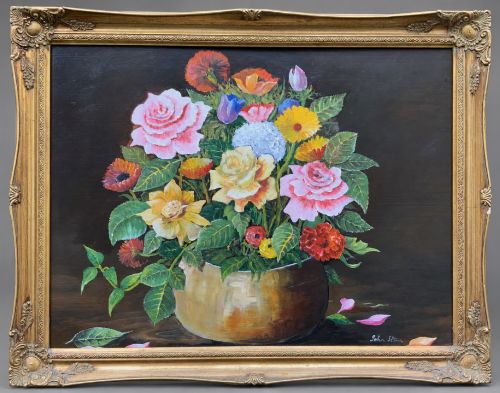
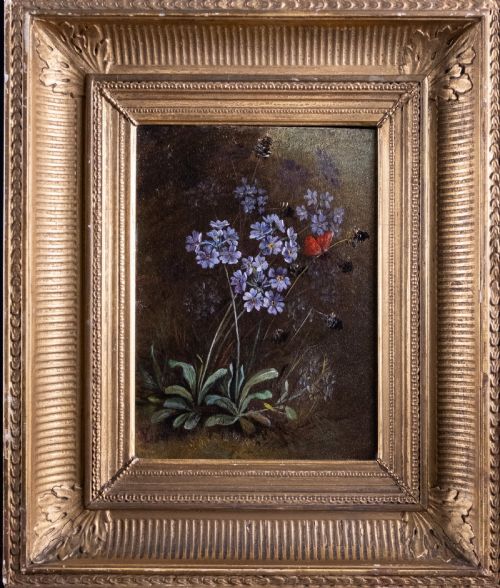
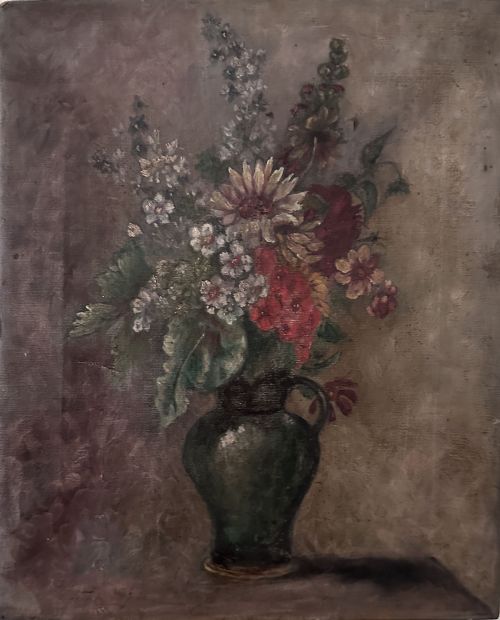
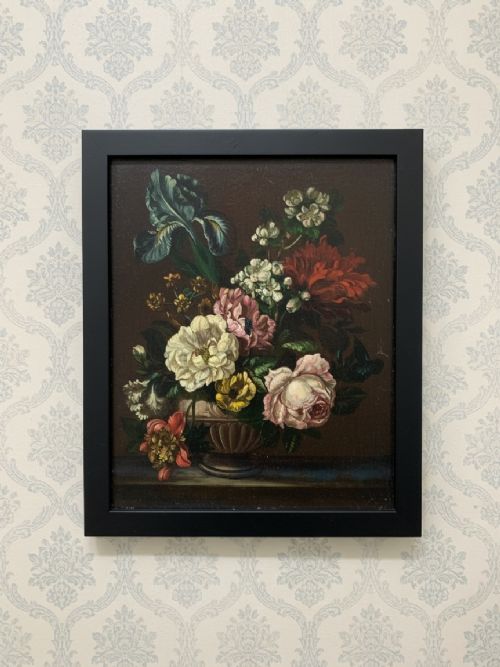




Dark Floral Artwork
Dark floral artwork brings moody, atmospheric botanical studies and dramatic still life paintings into a room, offering centuries of rich visual depth.
Dark Floral Artwork
Dark floral artwork encompasses centuries of botanical studies and still life compositions rendered in deep, shadowed palettes. These pieces range from seventeenth-century Dutch and Flemish traditions to nineteenth-century Victorian works and early twentieth-century oil paintings.
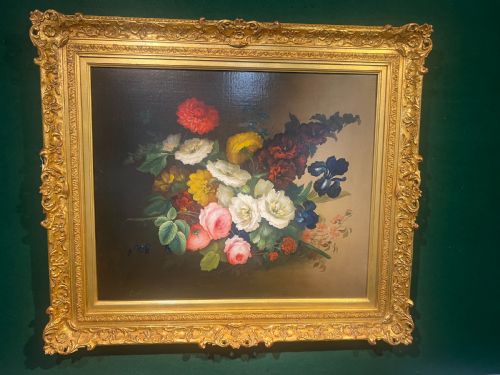
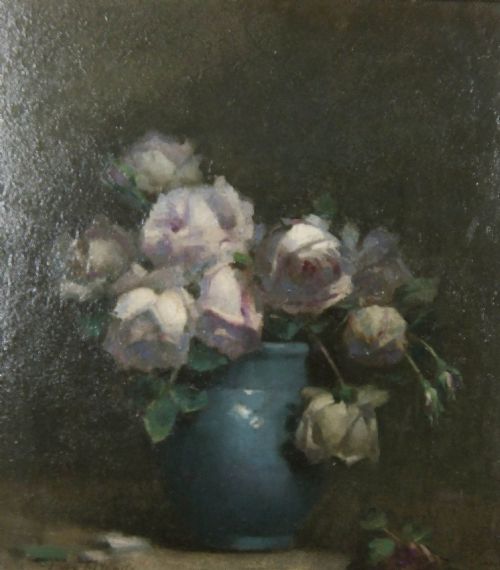
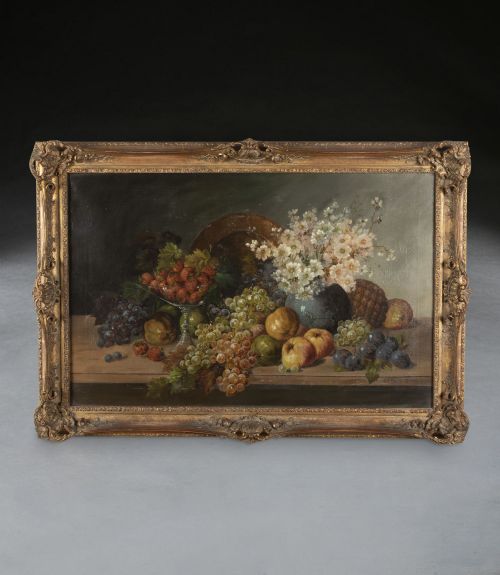
Buyers frequently encounter oil paintings on canvas or wood panels featuring roses, tulips, and summer flowers emerging from dark backgrounds. The selection includes framed art, fine oil paintings, and occasional decorative mirrors decorated with botanical motifs.
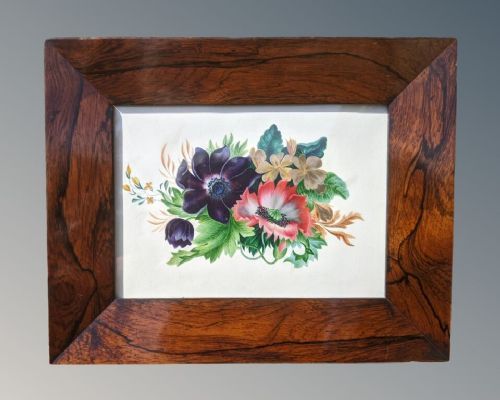
Originating across Britain, France, and the Netherlands, these works capture floral subjects with contrasting light and shadow. The tradition stretches from grand baroque compositions to intimate early twentieth-century depictions of anemones and roses.
Materials and Techniques
Artists painted primarily with oil paint on stretched canvas, oak panels, mahogany panels, or paper supports. Gilded wood frames and gesso mouldings often enclose these works, complementing the rich tones of the compositions.
Makers utilised layered oil pigments to achieve deep shadows and luminous highlights upon floral subjects. Some examples incorporate gouache, engraving, or reverse glass painting techniques alongside traditional canvas works.
Dark Floral Artwork Retail Price Guide 2026
Typical asking prices for dark floral artwork among the pieces listed under this phrase on Sellingantiques today, from the lower quarter to the upper quarter. They describe what is for sale here now, not the wider market.
Listings feature canvas, wood, oil paint, and glass materials across periods spanning from the seventeenth century to 1930.
Evaluating Quality
Quality rests in the handling of light, shadow, and botanical detail across the painted surface. Superior works demonstrate precise control over the forms of petals and leaves against deeply shadowed backgrounds.
The integrity of the canvas or wood panel and the preservation of the original paint layers dictate the overall standard. Finer examples maintain crisp brushwork and original framing that suits the period of the painting.
Gaspar Peeter Verbruggen·Edwin Steele·Catherine Thomas·William Thomas Wood·Owen Bowen·Paul Lelong·Calzolari·Pierre Joseph Redoute·James Stuart Park·John Curtis·Margaret Evangeline Wilson·Herbert Davis Richter·Terence Loudon·Kershaw Schofield
The Dark Floral Artwork Glossary
- Still life
- A painting or drawing depicting inanimate subject matter, typically commonplace objects such as flowers and fruit. These compositions rely on careful arrangement and lighting.
- Oil paint
- A type of slow-drying paint consisting of particles of pigments suspended in a drying oil. This medium allows artists to build rich, deep layers of colour.
- Panel
- A rigid flat piece of wood, such as oak or mahogany, used as a support for painting. Wooden panels predate widespread canvas use and offer a smooth painting surface.
- Gesso
- A plaster mixture used as a primer on wood or canvas before painting. It provides a smooth surface that holds oil paint effectively.
- Baroque
- An ornate artistic style prevalent in the seventeenth and eighteenth centuries. It is characterised by drama, deep contrast, and exuberant detail.
Dark Floral Artwork: Frequently Asked Questions
What periods do these pieces span?
The selection spans from the seventeenth century through the Victorian era up to the 1930s.
Works include eighteenth-century Dutch panels and early twentieth-century British oil paintings.
How were these paintings displayed?
These pieces typically hang as framed art on domestic walls to bring botanical warmth into interior spaces.
Many retain their period giltwood or wood frames designed to complement the dark palette.
What surfaces were used by artists?
Artists painted on stretched canvas, oak panels, mahogany panels, and paper supports.
Some examples also utilise glass surfaces for reverse painted and etched decorative mirror pieces.
How do I identify a still life?
A still life depicts stationary objects, most commonly arrangements of flowers in vases or baskets.
These compositions focus on the interplay of light against dark botanical subjects.