






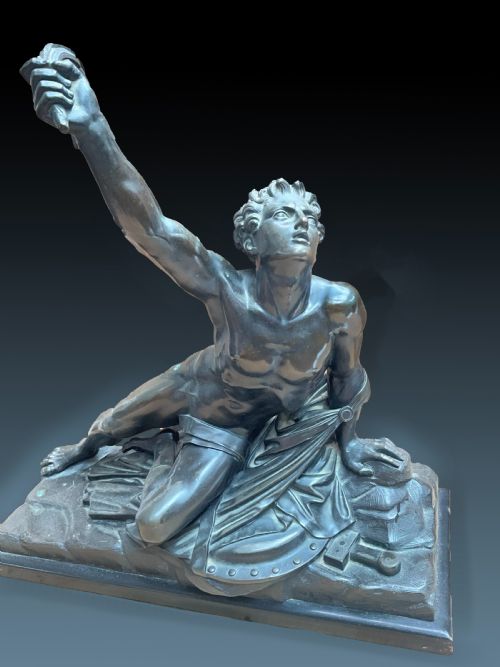
Dark Bronze Warrior Figure
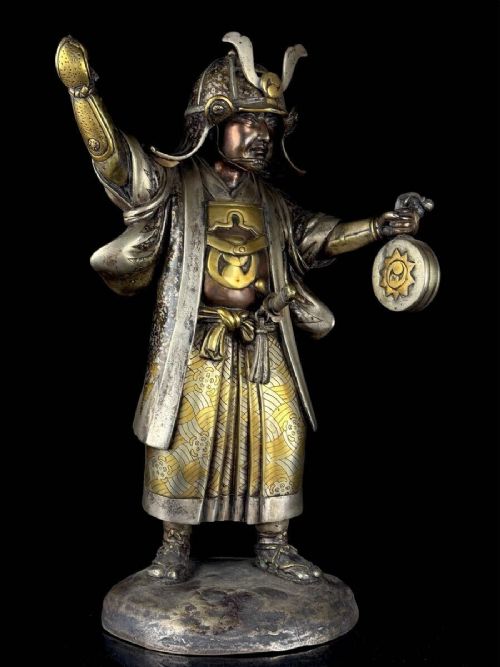
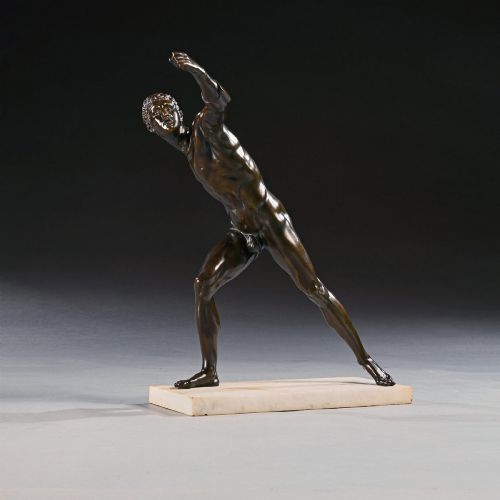
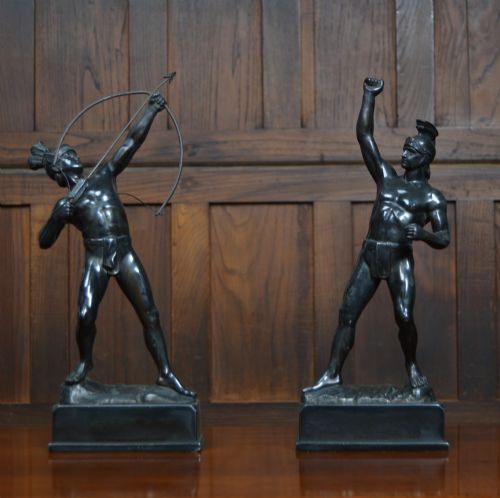
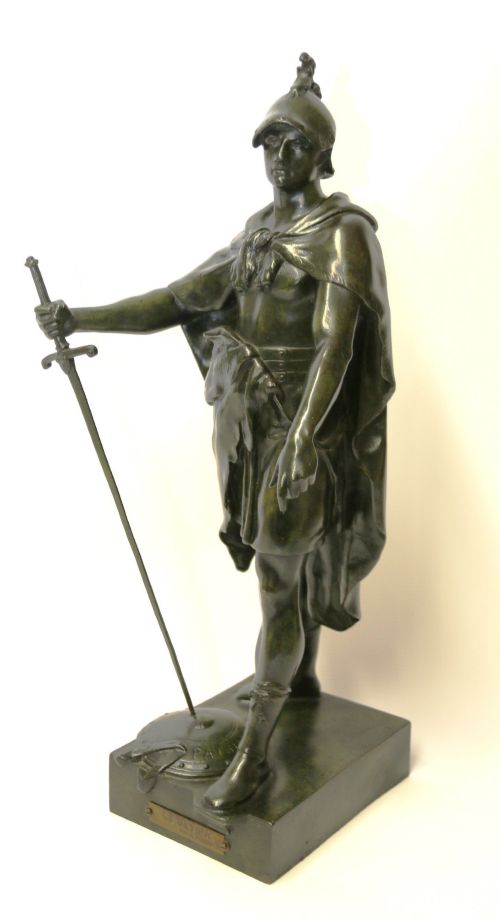
A dark bronze warrior figure stands ready to hold a desk or mantel, bringing classical muscle and heroic scale to the room.
Dark Bronze Warrior Figure
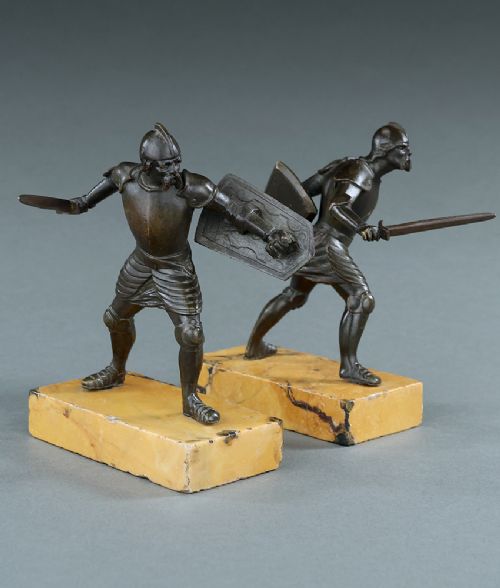
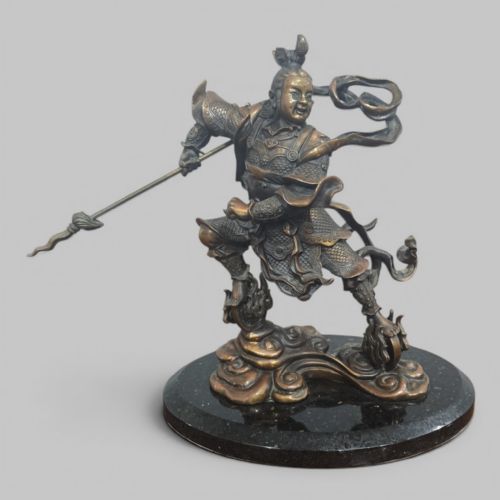
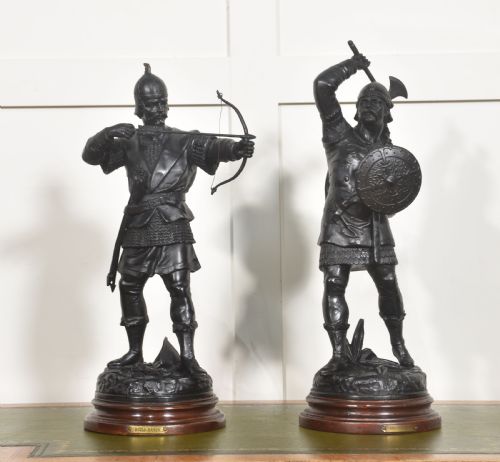
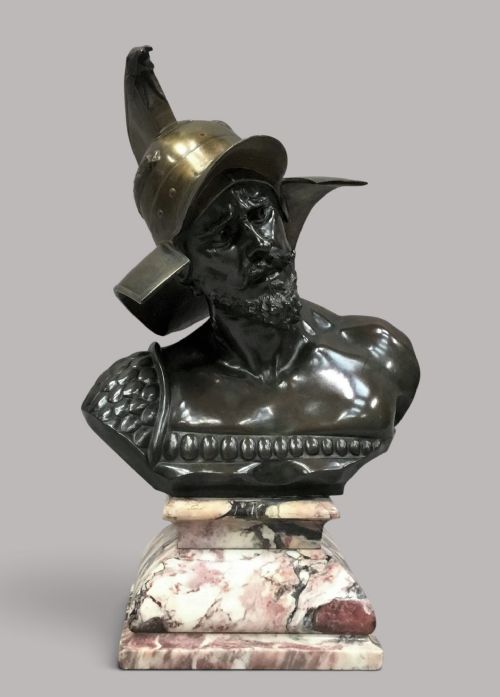
A dark bronze warrior figure represents historical, mythological and classical combatants, spanning Roman gladiators, Greek archers, Renaissance knights and Celtic rulers. These sculptures emerge primarily from the nineteenth century, including Grand Tour souvenirs, French academic works and Victorian productions.
Buyers encounter distinct standing figures, equestrian bronzes, busts and duelling pairs cast in varied sizes, from small cabinet pieces to large floor-standing statues. The subjects range from classical figures like Ajax and the Borghese Gladiator to medieval knights and exotic sentinels.
French and Italian foundries dominate the output of this period, producing patinated metal statues that translate antique stone and larger monuments into domestic cabinet bronzes.
Materials and casting
Foundries cast these pieces using bronze, patinated bronze, and occasionally zinc alloy or spelter for more commercial outputs. Metal components receive chemical patination to produce dark brown, black or greenish tones that mimic ancient patinas.
Many heavy figures incorporate marble bases, including Sienna marble, anchoring the metal sculpture and providing a formal plinth. Casting quality depends on the precision of the lost-wax or sand-casting method, ensuring crisp detail in armour, drapery and facial expressions.
Dark Bronze Warrior Figure Retail Price Guide 2026
Typical asking prices for dark bronze warrior figure among the pieces listed under this phrase on Sellingantiques today, from the lower quarter to the upper quarter. They describe what is for sale here now, not the wider market.
Spartan kings and Roman gladiators stand shoulder to shoulder on marble plinths, maintaining stern vigilance over modern coffee tables.
Casting and detail
The sophistication of the original model dictates the artistic merit, distinguishing skilled reductions of classical antiquities or named academic sculptors from anonymous decorative factory output.
Émile Louis Picault·Eugene Barillot·Raoul Francois Larche·Franz Iffland·Emile Laporte·Richard Aurili
The Dark Bronze Warrior Figure Glossary
- Patinated bronze
- Bronze treated with chemical solutions to alter the surface colour, creating dark brown, black or verdigris tones. This protective layer adds visual depth to the metal surface.
- Spelter
- A zinc alloy used as a cheaper alternative to bronze for nineteenth-century figures. It is lighter, softer and typically painted or electroplated to simulate bronze.
- Grand Tour
- A nineteenth-century cultural journey through Europe undertaken by young gentry, bringing home bronze reductions of classical antiquities and famous statues as souvenirs.
- Lost-wax casting
- A traditional method where a wax model is melted out of a mould to create a cavity for molten bronze. This technique allows for intricate detail and undercut forms.
Dark Bronze Warrior Figure: Frequently Asked Questions
How do I clean bronze?
Dust the surface gently with a soft, dry cloth to remove accumulated particles. Avoid commercial polishes and abrasive cleaners that strip the chemical patina.
Apply a light microcrystalline wax occasionally if the metal requires protection against atmospheric moisture. Buff gently with a clean cloth to maintain the original finish without creating a bright shine.
What is spelter?
Spelter is a zinc-based metal alloy utilised during the nineteenth century as an economical substitute for bronze. Figures cast in this material are significantly lighter and softer than true bronze.
These pieces usually feature an applied bronze-coloured paint or electroplate finish to mimic genuine patinated metal. Inspecting the underside or areas of wear reveals the paler grey metal beneath the coating.
What was a Grand Tour souvenir?
Grand Tour souvenirs were portable artworks and reduced-scale bronzes purchased by wealthy travellers touring continental Europe. These pieces replicated famous classical sculptures found in Italian museums and archaeological sites.
Such objects allowed collectors to display classical taste and education within their nineteenth-century homes. They remain identifiable by their fine reduction quality and dark antique patination.
How do I date these figures?
Dating relies on stylistic evidence, foundry marks, material composition and the construction methods used for fixings and bases. Nineteenth-century pieces frequently exhibit specific patination styles and mechanical fastenings like threaded bolts.
Comparing the sculpture to documented works by known academic sculptors helps narrow the period of production. Examining the wear on the underside of the base also indicates age.