



Damask Pattern Settee
A damask pattern settee brings rich texture and historic elegance into a room, offering a seating choice that grounds an interior with traditional authority.
Damask Pattern Settee
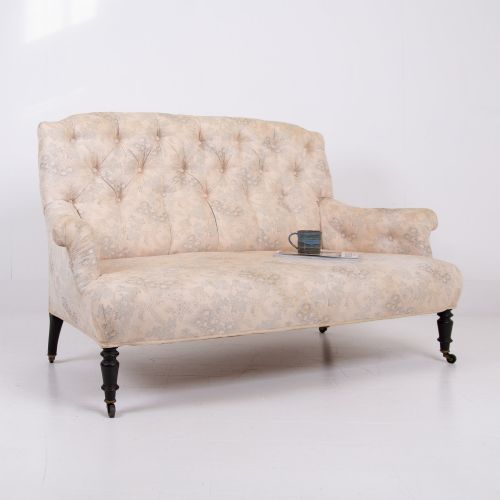
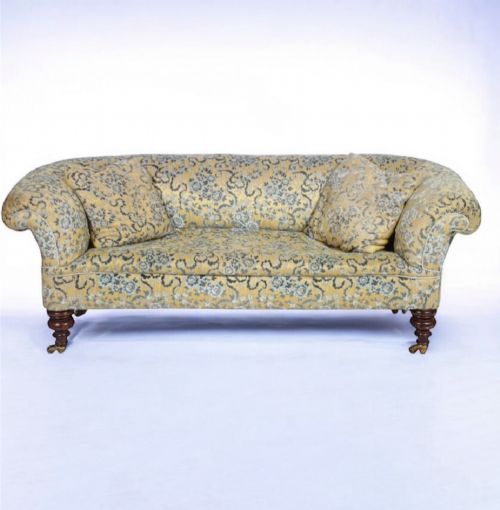
A damask pattern settee encompasses historic seating forms ranging from button-backed French Napoleon III designs to classic English Chesterfields and Edwardian Knole sofas. These pieces arrive in various configurations, including two-seater sofas, double-ended frames, and larger salon suites complete with matching chairs.
The prevailing examples on this page date primarily from the nineteenth century through the early twentieth century, spanning Victorian, Edwardian, and William IV periods. French Chateau and English Country House styles heavily influence the aesthetic, providing distinct silhouettes built for formal reception rooms and parlours.
Buyers encountering this selection will find frames upholstered in patterned fabrics, specifically damask, set against exposed timber structures. These settees function as statement seating, combining deep upholstery with the ornate woodwork characteristic of their respective eras.
How they were made
The construction relies on sturdy timbers such as mahogany and walnut, forming the structural frames and visible legs, which often feature turned details. Brass components occasionally appear in castors or decorative hardware, supporting the heavy wooden underpinnings of these large seats.
Upholstery defines the surface execution, utilising woven damask fabric stretched over deep padding and secured frequently with traditional methods like button backs. Fringes sometimes finish the lower borders, concealing the castors and framing the base of the settee.
Damask Pattern Settee Retail Price Guide 2026
Typical asking prices for damask pattern settee among the pieces listed under this phrase on Sellingantiques today, from the lower quarter to the upper quarter. They describe what is for sale here now, not the wider market.
Listings feature settees spanning the Victorian, Edwardian, and William IV periods, constructed from mahogany, walnut, brass, and damask fabric.
What varies in quality
Quality reveals itself in the integrity of the timber frame and the precision of the turning on legs made from walnut or mahogany. Superior examples maintain structural firmness in the underlying woodwork, ensuring the settee supports weight without shifting at the joints.
The execution of the upholstery and the richness of the damask fabric dictate the upper tier of the range. Finer pieces display careful pattern matching across cushions and backrests, alongside durable textile weaves that withstand regular use while preserving the integrity of the historical design.
Howard and Sons
The Damask Pattern Settee Glossary
- Damask
- A reversible figured fabric with patterns formed by contrasting warp and weft threads. It provides the characteristic textured surface seen on these settees.
- Chesterfield
- A traditional deep-buttoned sofa style featuring arms and back of the same height. This form offers formal upholstered seating with rolled arms.
- Knole Sofa
- An early English sofa style featuring adjustable or hinged arms that can be lowered or raised. It represents a distinctive historic seating form often draped in heavy textiles.
- Turned legs
- Furniture supports shaped on a lathe to create cylindrical, spiral, or tapered profiles. Walnut and mahogany frequently receive this treatment on Victorian and Edwardian frames.
- Salon suite
- A coordinated set of upholstered seating comprising a settee and matching armchairs. These groupings furnish formal drawing rooms in a unified style.
Damask Pattern Settee: Frequently Asked Questions
What is a damask pattern settee?
A damask pattern settee is a historic upholstered seat featuring woven fabric with reversible decorative motifs. These pieces span nineteenth and early twentieth century periods, including Chesterfield and Knole styles.
They serve as decorative and functional seating options, often incorporating wood frames made from walnut or mahogany.
How do I identify a Victorian settee?
Victorian settees often display darker wood frames, turned walnut legs, and deep button-backed upholstery. Stylistic cues draw from French Napoleon III or traditional English country house aesthetics.
Examining the timber and the method of button tufting helps distinguish these nineteenth-century pieces from later Edwardian reproductions.
Where should I place a settee?
These settees suit formal living rooms, reception hallways, or large studies where traditional furniture forms fit the interior. Their patterned damask upholstery works best as a focal point in a balanced room layout.
Ensure adequate space around the piece to display the turned legs and overall silhouette properly.
What materials make up these settees?
The primary materials include timber frames made from walnut, mahogany, or general wood, paired with woven damask fabric upholstery. Brass elements frequently appear on castors or decorative mounts.
Some examples also incorporate fringe trim along the lower border to conceal the base structure.