



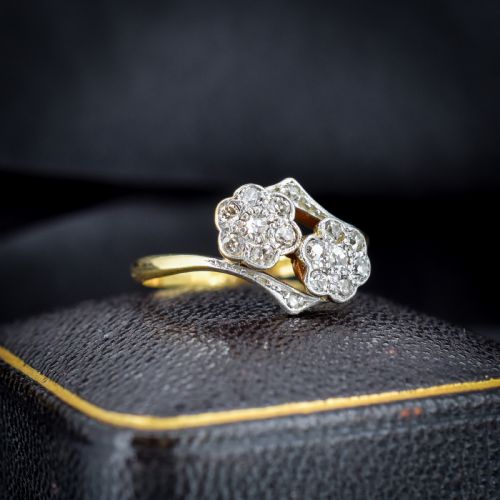
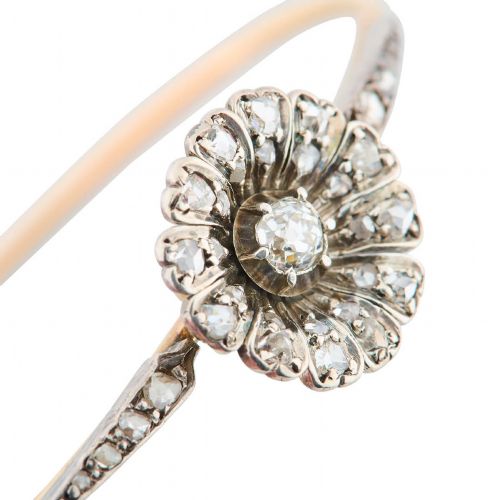


Daisy Flower Jewellery
Daisy flower jewellery encompasses rings, earrings, necklaces, and brooches formed into floral motifs across the Victorian, Edwardian, Art Deco, and Mid-Century periods.
Daisy Flower Jewellery
Daisy flower jewellery spans rings, earrings, necklaces, pendants, brooches, and bangles shaped around a central floral cluster motif. These pieces date across the Victorian, Edwardian, Art Deco, Retro, and Mid-Century eras, showing distinct design shifts from naturalistic nineteenth-century work to geometric twentieth-century settings.
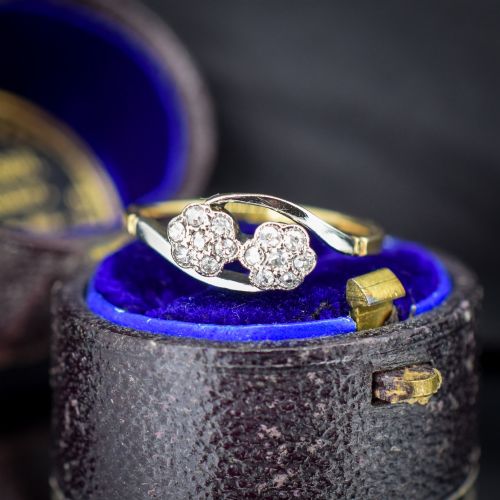
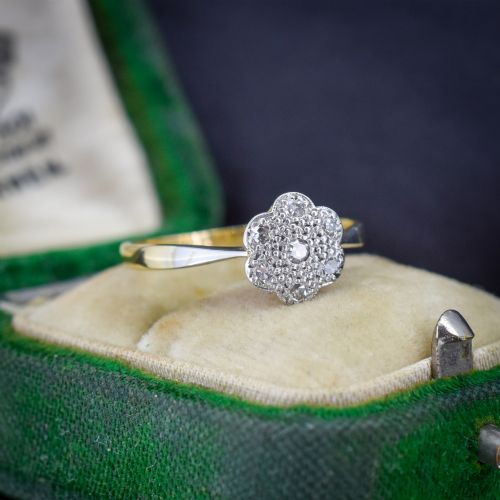
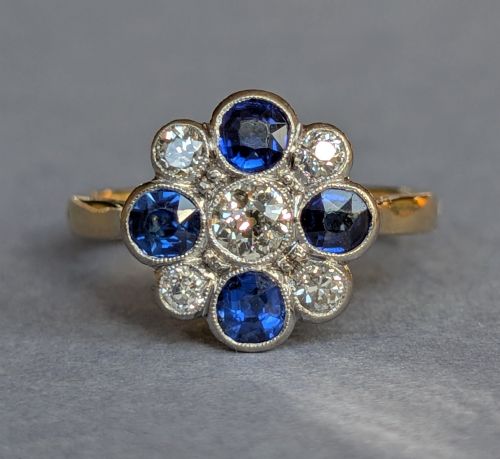
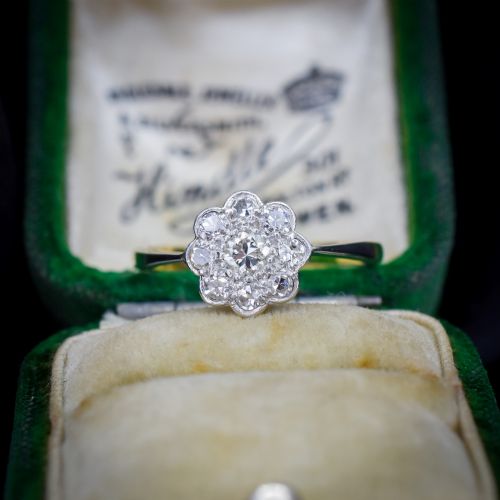
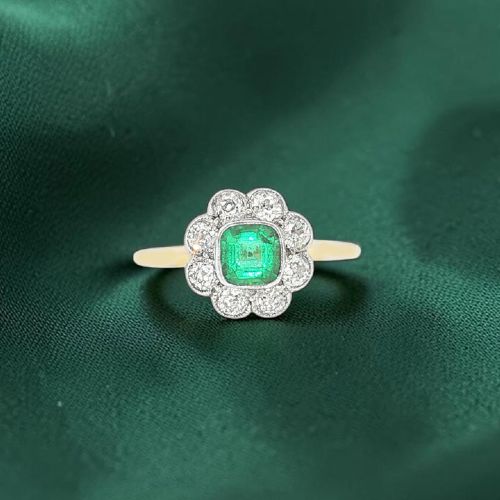
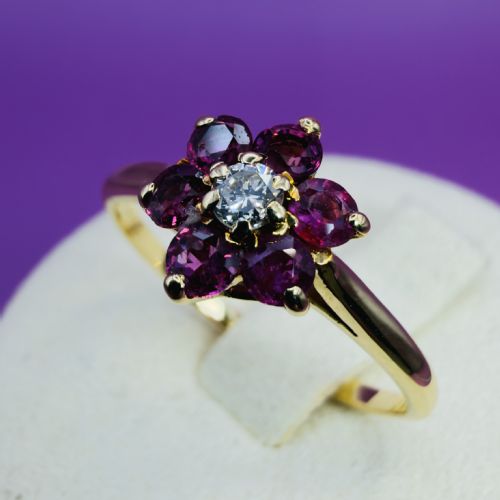
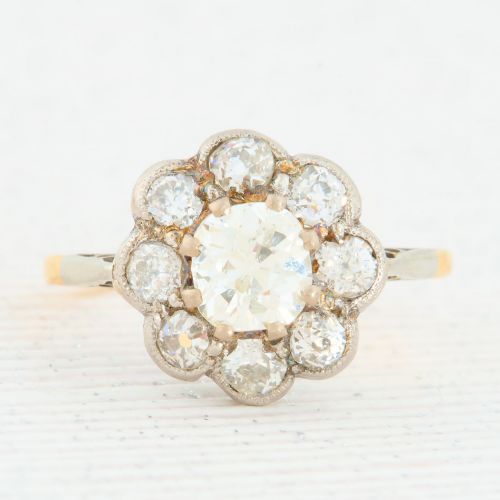
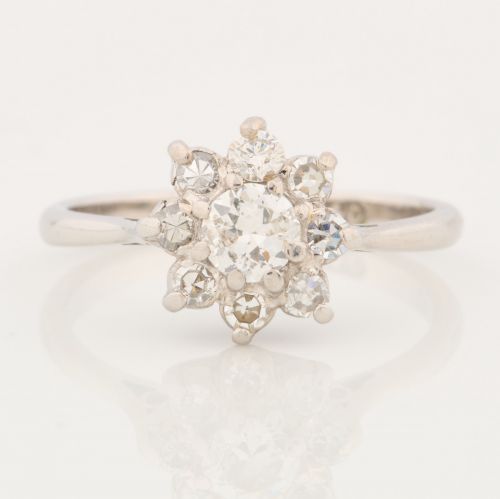
The most common pieces to encounter are cluster rings set in eighteen-carat gold and platinum. These Edwardian and Art Deco rings arrange diamonds or coloured gemstones in a circular floral pattern around a central stone, mimicking the petals and centre of a daisy.
Materials and technique
Makers utilised eighteen-carat yellow gold, eighteen-carat white gold, silver, and platinum to fabricate these floral pieces. Platinum appeared frequently in Edwardian and Art Deco settings to hold small pavé or old-cut diamonds securely in delicate claw or bezel mounts.
Goldsmiths combined diamonds with sapphires, rubies, emeralds, pearls, enamel, and opals to delineate the petals and centres of the flowers. Stones were commonly old-cut or brilliant-cut, set tightly together to form the characteristic cluster profile.
Daisy Flower Jewellery Retail Price Guide 2026
Typical asking prices for daisy flower jewellery among the pieces listed under this phrase on Sellingantiques today, from the lower quarter to the upper quarter. They describe what is for sale here now, not the wider market.
Quality differences
The distinction between tiers rests on the proportion of the stones, the matching of the gems, and the refinement of the metalwork. Superior cluster pieces display uniform stone sizing, clean colour matching in diamonds or sapphires, and subtle integration of platinum with yellow gold.
Simpler or later examples rely on heavier metal casting and less distinctive stone selection, where the floral silhouette is functional rather than balanced. The precision of the setting work and the integration of the central stone relative to the surrounding petals determine the distinction.
A H Darby And Son·Merrin
The Daisy Flower Jewellery Glossary
- Cluster ring
- A ring design featuring a central gemstone encircled by a ring of smaller stones. This arrangement forms the primary structure for floral and daisy motifs.
- Old-cut diamond
- A hand-cut diamond shape common in Victorian and Edwardian jewellery. These stones possess smaller tables and deeper pavilions than modern brilliant cuts.
- Platinum
- A dense, durable white metal utilised extensively in Edwardian and Art Deco mountings. Its strength allowed jewellers to create fine, delicate settings that held stones securely.
- Double twist ring
- A band configuration where the shoulders of the ring twist as they approach the central cluster. This style appears frequently in Edwardian daisy rings.
- Enamel
- A fused glass material applied to metal surfaces to add colour. In floral pieces, it provides vibrant petals or leaves.
Daisy Flower Jewellery: Frequently Asked Questions
What periods are common?
The pieces span the Victorian, Edwardian, Art Deco, and Mid-Century periods. Edwardian and Art Deco examples dominate the available selection.
Victorian pieces lean toward naturalistic floral forms, while Edwardian and Art Deco creations use platinum and yellow gold to structure precise geometric daisy clusters.
How do I wear these?
Cluster rings and delicate earrings suit daily wear when paired with secure settings. Care should be taken with older claw mounts.
Necklaces and brooches work well as standalone focal pieces against plain fabrics, letting the floral motif stand out clearly.
What stones are used?
Diamonds form the majority of the petal and centre configurations, often paired with coloured gemstones. Sapphires, rubies, emeralds, pearls, and opals frequently accent the floral designs.
Coloured stones usually serve as the central eye of the flower, surrounded by white diamonds acting as petals.
How do I tell eras apart?
Victorian pieces often incorporate heavier gold weights and naturalistic leaf details alongside old-cut diamonds. Edwardian designs introduce platinum-topped gold with delicate wirework.
Art Deco items shift towards geometric symmetry and sharp lines, while Mid-Century pieces utilise clean, bold lines with yellow gold and occasional textured finishes.