



D Shaped Folding Table
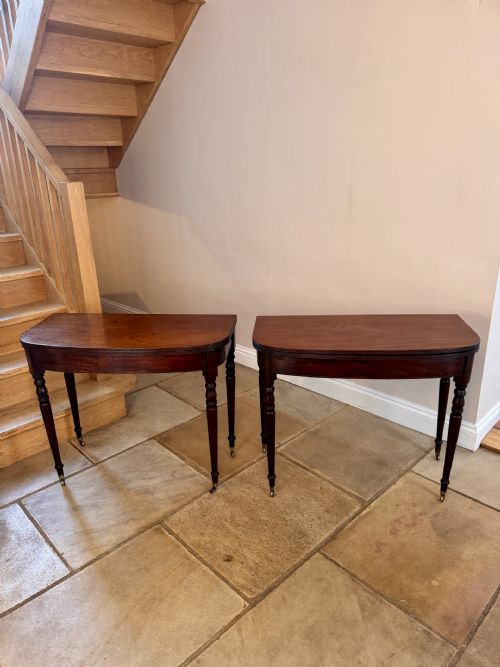
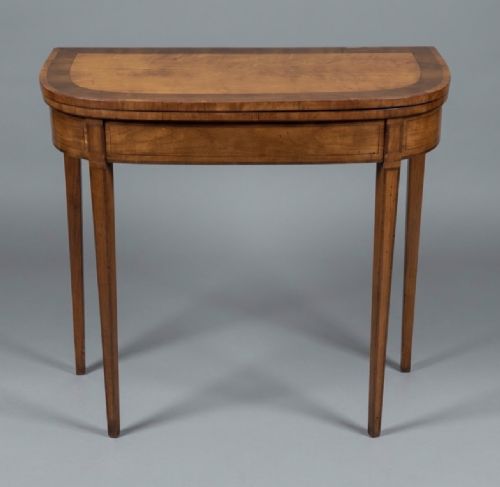
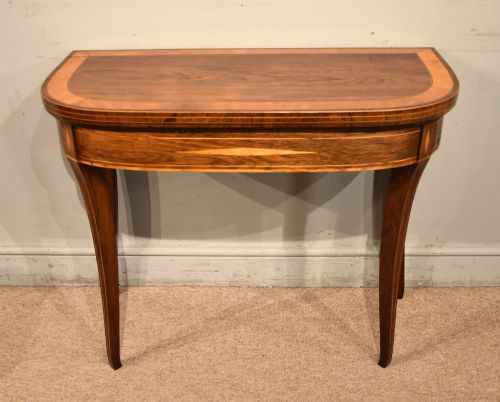
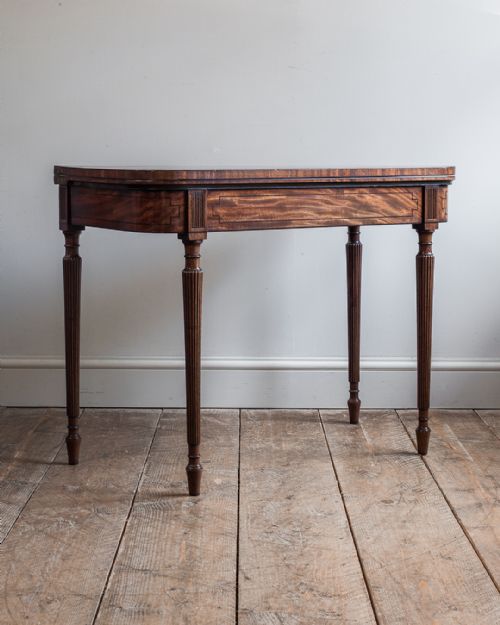
A d shaped folding table provides the dual surface of a tea or card table while folding flat against the wall when space demands it.
D Shaped Folding Table
A d shaped folding table sits flat against a wall with a semi-circular top, opening upon a hinged leaf or swinging rear leg to reveal a baize-lined playing surface or a polished wood top for tea. These pieces date principally from the eighteenth and nineteenth centuries, spanning the Georgian, Regency, and Victorian periods.
How they were made
Cabinetmakers constructed these tables using solid timbers and decorative veneers such as satinwood, burr walnut, and rosewood applied over a stable secondary wood. Crossbanding in contrasting timbers and fine boxwood stringing define the perimeters of the folding tops.
Joinery relies on sturdy pivot hinges, rule joints, and swing-leg mechanisms to support the heavy fold-over leaves safely. Brass fittings occasionally appear on castors or internal pivoting components.
D Shaped Folding Table Retail Price Guide 2026
Typical asking prices for d shaped folding table among the pieces listed under this phrase on Sellingantiques today, from the lower quarter to the upper quarter. They describe what is for sale here now, not the wider market.
Card tables dominate the available forms, accompanied by tea tables, games tables, and occasional Sutherland tables.
What varies in quality
The distinction between standard workshop output and superior cabinet work rests on the choice of timber figurations and the precision of the crossbanding. Dense burr walnut and finely figured satinwood indicate a higher tier of production.
Structural integrity of the folding mechanism and the crispness of inlaid details separate master joinery from simpler regional manufacture. The alignment of the top when closed reveals the original accuracy of the hinge placement.
William Trotter of Edinburgh
The D Shaped Folding Table Glossary
- Crossbanding
- A border of veneer laid with the grain running perpendicular to the surrounding surface. This technique frames the primary top of a card table.
- Demi-lune
- A half-moon shape used to describe tables with a straight back edge and a curved front. These pieces fit snugly against a wall.
- Rule joint
- A moulding profile used on folding table leaves to conceal the gap of the hinge. It allows the leaf to drop smoothly when closed.
- Sutherland table
- A narrow drop-leaf table with deep folding leaves supported by swing legs. The form emerged in the Victorian era.
D Shaped Folding Table: Frequently Asked Questions
How do I use a d shaped folding table?
These tables function primarily as console or side tables against a wall during the day. When evening arrives, the top folds open to serve guests for tea or card games.
The hinged leaf swings out on a pivot leg or gate leg to support the expanded weight safely. This dual purpose made them essential items in historic drawing rooms.
What is the difference between a tea table and a card table?
Tea tables generally feature plain wooden tops designed to hold porcelain service during afternoon gatherings. Card tables typically conceal a baize or felt lined interior surface intended for gaming.
Some examples bridge both functions through clever top construction. Inspect the interior lining to determine the primary intended use of the piece.
How do I distinguish Georgian from Victorian tables?
Georgian examples often display restrained mahogany veneers, square tapered legs, and subtle stringing. They reflect classical proportions and understated elegance.
Victorian pieces frequently utilise burr walnut or rosewood with heavier serpentine shaping and elaborate pedestal bases. Revival styles from the later nineteenth century draw heavily upon these earlier idioms.
Where should I place a folding table in my home?
Position the piece flat against an entrance hallway wall or beneath a mirror in a sitting room to display decorative objects. The shallow profile requires minimal floor space in narrow rooms.
Pull the table into the centre of the room and unfold the top whenever extra surface area is required. Ensure the hinge mechanism has clearance on all sides before opening.