

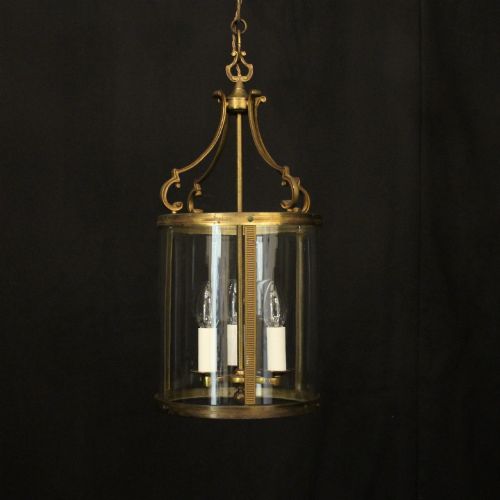
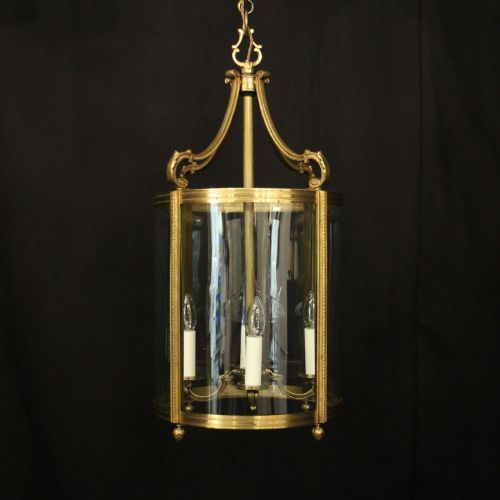


Cylindrical Pendant Lights
These cylindrical pendant lights offer architectural suspension for high-ceilinged hallways and vestibules.
Cylindrical Pendant Lights
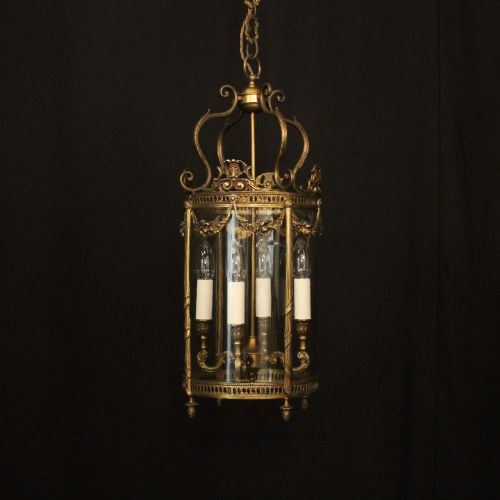
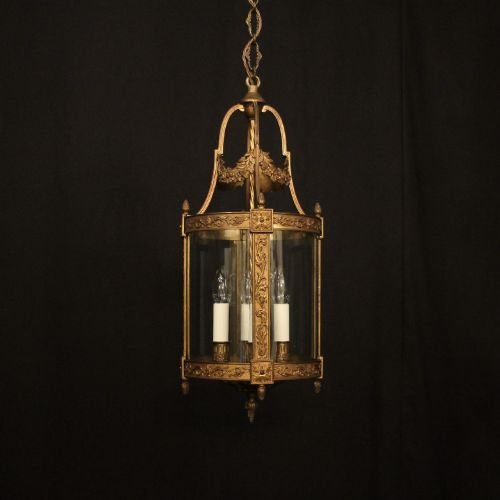
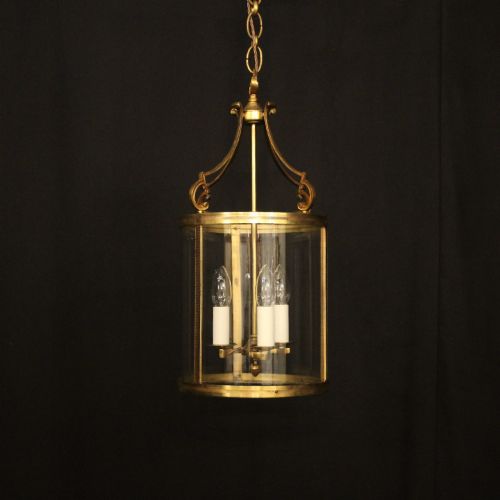
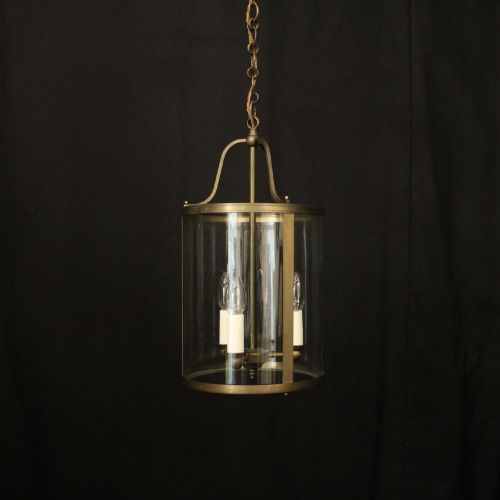
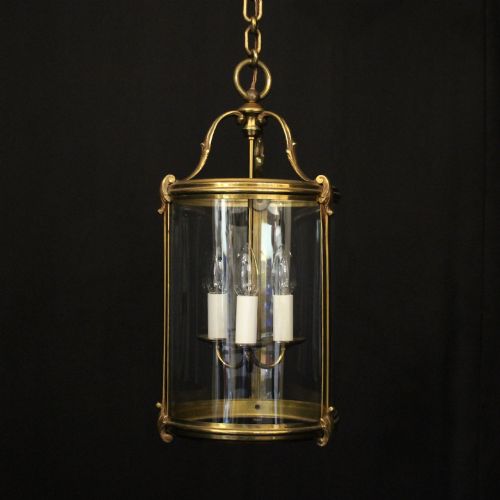
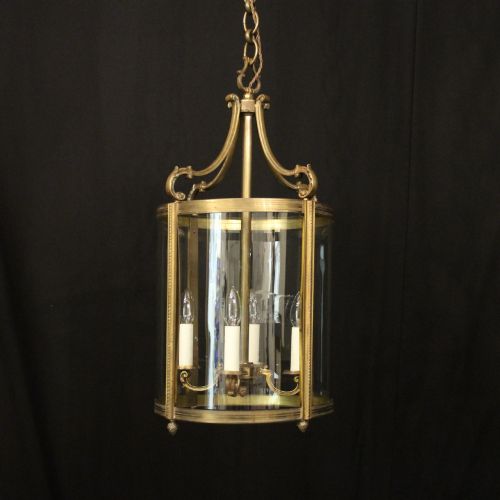
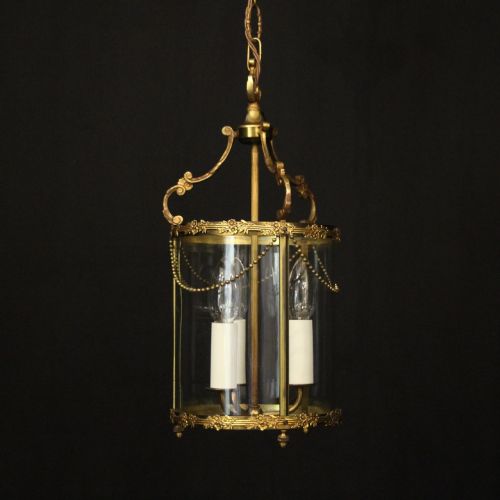
When you search for cylindrical pendant lights, you find overhead hanging fixtures designed primarily for entrance halls and stairwells. The listings here rely heavily on French hall lanterns and hanging lanterns shaped with vertical frames.
You are most likely to meet French examples carrying dates from the 1920s and 1930s, alongside nineteenth-century and Edwardian pieces. These fixtures often feature multiple internal lights configured to cast downward illumination through glass panes.
How they were made
The construction combines structural metalwork with glazed panels, utilising brass, bronze, and gilt bronze. Metal frames are cast or fabricated to hold curved or flat glass securely within rigid geometric housings.
Surface treatments range from polished brass to heavy gilding over bronze and brass components. Convex glass is frequently employed to soften the interior light distribution while maintaining the cylindrical silhouette.
Cylindrical Pendant Lights Retail Price Guide 2026
Typical asking prices for cylindrical pendant lights among the pieces listed under this phrase on Sellingantiques today, from the lower quarter to the upper quarter. They describe what is for sale here now, not the wider market.
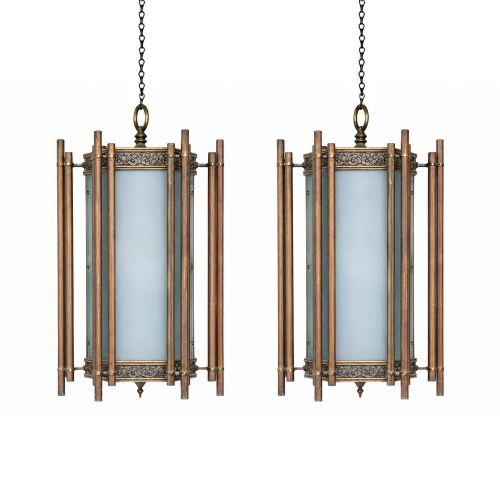
Materials documented across the inventory include glass, frosted glass, brass, copper, bronze, gilt bronze, and gilded brass.
What varies in quality
The distinction between tiers rests on the weight of the metal casting and the crispness of applied detail. Heavier bronze and thick gilt frames provide structural integrity that lighter brass constructions lack.
Glazing quality dictates the upper and lower ranges, particularly where convex glass requires precision moulding. Richer surface gilding and multi-light internal cluster configurations further separate standard production from monumental pieces.
The Cylindrical Pendant Lights Glossary
- Gilt bronze
- Bronze that has been treated with a thin layer of gold or gold-coloured alloy. This finish provides a warm, reflective surface that resists tarnishing over decades of exposure.
- Convex glass
- Curved glass panes fitted into the lantern frame. This shape disperses light more broadly than flat panels and adds physical depth to the profile.
- Hall lantern
- An enclosed hanging light fixture designed specifically for narrow transitional spaces. These pieces combine secure ceiling suspension with protective side panels.
- Art Deco
- A design style prominent in the 1920s and 1930s characterised by clean lines and stylised geometric forms. It appears here in streamlined brass and copper constructions.
- French Empire
- A classical revival style originating in nineteenth-century France, drawing on ancient Roman motifs. It influences the formal proportion and decorative mounts found on several lanterns.
Cylindrical Pendant Lights: Frequently Asked Questions
Where should I hang a cylindrical pendant light?
These fixtures suit high-ceilinged entryways, grand hallways, and stairwells where vertical clearance allows proper suspension.
Their enclosed design protects internal bulbs from drafts while directing illumination downward through the glass panels.
How do I date a brass hall lantern?
Dating relies on stylistic clues like French Neo-Classical mounts or Art Deco geometric lines. Material thickness and the presence of hand-finished cast bronze elements also point to specific periods.
Edwardian and nineteenth-century examples often display heavier structural framing compared to later twentieth-century iterations.
What is the difference between brass and gilt bronze?
Brass is an alloy of copper and zinc, offering a bright metallic finish that can be polished or aged. Gilt bronze uses a bronze base overlaid with a gold finish, producing a deeper and more lustrous tone.
Bronze castings generally provide heavier weight and finer surface detail than standard brass work.
How many bulbs do these lanterns take?
Many of the listed pieces accommodate multiple lights, ranging from triple-light configurations to four-light arrangements. These setups ensure adequate illumination in large vestibules.
Internal clusters are wired to distribute light evenly through the surrounding glass panes.