


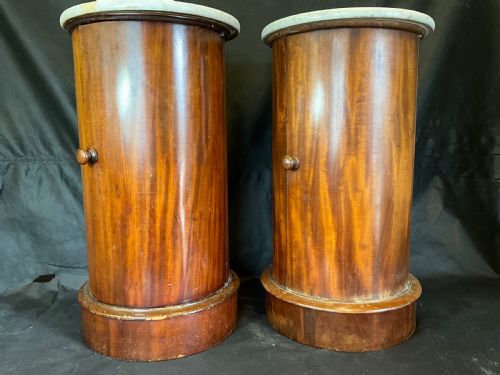
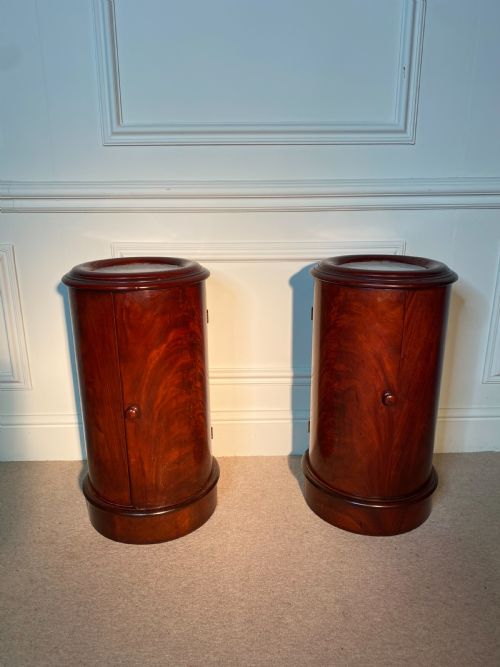


Cylindrical Cabinet Table
These cylindrical cabinet tables offer ingenious enclosed bedside storage in timber and marble, combining compact footprints with smooth, turning lines.
Cylindrical Cabinet Table
A cylindrical cabinet table is a compact form designed primarily for the bedroom, functioning variously as a bedside cabinet, nightstand, or pot cupboard. The pieces found on this page span the Regency, Victorian, and early Victorian periods, showing how the round bedside storage format evolved through the nineteenth century.
Most examples you encounter here are constructed from rich timbers like flame mahogany and walnut, frequently topped with fitted marble slabs. These cylindrical cupboard stands offer concealed storage behind a curved door, keeping bedside essentials neatly out of sight within a distinctive circular footprint.
Makers often drew inspiration from French Empire design, creating columnar pedestals that double as functional side stands or display plinths. Whether matched in pairs or standing alone, these cylindrical units bring architectural presence and practical enclosed space to smaller interiors.
How they were made
Makers constructed these curved bodies using layered wood substrates, expertly veneered with figured timbers such as flame mahogany and walnut to achieve continuous grain around the cylinder. This technique demanded precise joinery so the curved door would hang truly within its circular frame without binding.
Many cabinets incorporate heavy inset marble tops, requiring careful stonemasonry to fit the curved perimeters of the wooden carcase precisely. Brass hardware and painted faux marble finishes appear among the materials, showing how cabinetmakers balanced luxury stone surfaces with accessible timber alternatives.
Cylindrical Cabinet Table Retail Price Guide 2026
Typical asking prices for cylindrical cabinet table among the pieces listed under this phrase on Sellingantiques today, from the lower quarter to the upper quarter. They describe what is for sale here now, not the wider market.
Secretly designed to hold nineteenth-century chamber pots, these round cabinets now quietly store modern book collections and phone chargers.
What varies in quality
Quality rests heavily on the selection of timber veneers and the seamless execution of the curved carcase. Finer examples display symmetrical flame mahogany figuring that wraps uninterrupted around the cylindrical body, whereas simpler versions rely on plain timber or painted faux marble finishes.
The integration of the fitted marble top and the smooth operation of the curved door distinguish workshop standards. Superior pieces maintain tight door clearances and stable joints despite the natural movement of circular timber construction over time.
The Cylindrical Cabinet Table Glossary
- Cylindrical cabinet table
- A circular bedside storage piece featuring a curved cupboard door within a round wooden carcase. These items often include marble tops and serve as nightstands or pot cupboards.
- Flame mahogany
- A highly figured tropical hardwood veneer displaying distinctive rippled patterns resembling flames. Cabinetmakers selected these cuts to accentuate the curved surfaces of nineteenth-century furniture.
- Pot cupboard
- A dedicated bedside cabinet historically designed to enclose a chamber pot behind a single door. The cylindrical format efficiently concealed these utilities while providing a stable surface for a lamp.
- French Empire
- A neoclassical design style influencing nineteenth-century British cabinetmaking through monumental classical proportions. Pieces from this tradition favour architectural columns and restrained geometric forms.
Cylindrical Cabinet Table: Frequently Asked Questions
What is a cylindrical cabinet table used for?
These pieces function primarily as bedside tables or nightstands, offering enclosed storage behind a curved door for personal items. Their round footprint makes them versatile as side stands or display pedestals in tight spaces.
The flat top surface typically accommodates a lamp or water jug, while the interior compartment keeps smaller objects hidden from view.
How do I date a cylindrical bedside cabinet?
Dating relies on identifying period characteristics such as timber choice, hardware style, and structural framing methods. Regency and early Victorian examples often feature intense flame mahogany veneers, whereas mid-Victorian pieces frequently introduce inset marble tops.
Looking at the interior construction and timber preparation helps confirm whether a piece belongs to the nineteenth-century periods represented here.
Are marble tops original to these cabinets?
Many nineteenth-century cylindrical cabinets were manufactured specifically to receive heavy inset marble slabs to protect the wood from liquid spills. These stone tops were integrated into the design to provide a durable, wipe-clean surface for bedside use.
Matching the stone profile to the circular timber rebate indicates whether the top belongs to the original construction.
Do these cabinets come in matching pairs?
While many nineteenth-century bedside cabinets were produced as individual items, matched pairs do appear from the same period. Sourcing two identical cylindrical cabinets for opposite sides of a bed requires careful attention to dimensions and wood grain.
Pairs listed together usually share identical timber selection, marble colour, and internal shelving arrangements.