



Cylinder Pot Cupboard
A cylinder pot cupboard brings discrete bedside storage and classical form to a bedroom, prized for its enclosed circular shape.
Cylinder Pot Cupboard
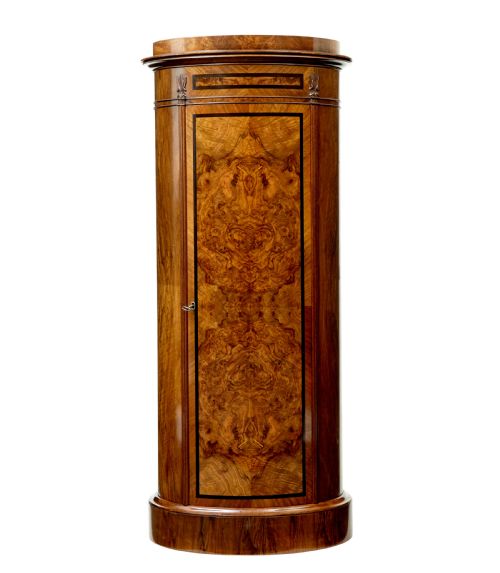
A cylinder pot cupboard is a compact bedside cabinet or pedestal designed to conceal chamber pots and personal items behind a curved door. Buyers searching this phrase encounter circular and cylindrical forms dating from the Regency period through the Victorian era.
The pieces on this page span the 19th century, including Early Victorian examples and French Empire designs. They appear as bedside cabinets, lamp stands, and pedestals alongside standard cupboards.
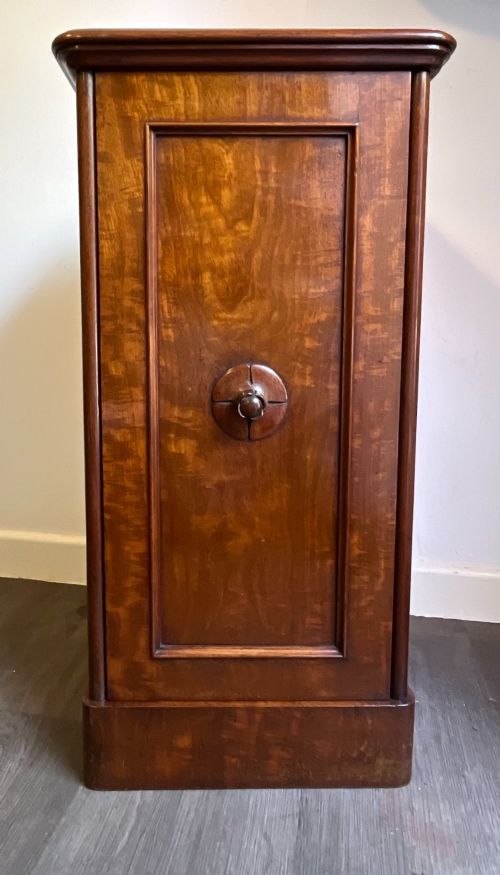
Makers shaped these items from timber, often utilising flame mahogany, burr walnut, and ebony. Many feature stone tops or faux marble surfaces suited to practical bedroom use.
How they were made
Cabinetmakers constructed the curved bodies of these cupboards using dense timbers such as mahogany and walnut, frequently selecting flame mahogany veneers for exterior grain patterns. Burr walnut and ebony also provide contrasting visual texture on specific 19th-century examples.
Many of these cabinets incorporate fitted marble or faux marble tops designed to withstand bedside usage and moisture. Brass hardware occasionally appears on doors and mounts, particularly within French Empire and Regency pieces.
Cylinder Pot Cupboard Retail Price Guide 2026
Typical asking prices for cylinder pot cupboard among the pieces listed under this phrase on Sellingantiques today, from the lower quarter to the upper quarter. They describe what is for sale here now, not the wider market.
Listings span the nineteenth century, including Regency, French Empire, and Victorian periods.
What varies in quality
The standard of a cylinder pot cupboard depends upon the selection of timber veneers and the precision required to build a curved wooden door that operates smoothly. Superior examples display seamless grain alignment across the cylindrical body.
The integration of heavy marble or faux marble tops relative to the timber base distinguishes finer production. Finer proportioning in the turning and overall height separates standard utility pieces from high-style Regency and French Empire designs.
The Cylinder Pot Cupboard Glossary
- Cylinder pot cupboard
- A bedside cabinet featuring a circular or cylindrical body designed to enclose chamber storage. This form became popular during the Regency and Victorian periods.
- Flame mahogany
- A veneer cut from mahogany branches where the grain creates a flickering, flame-like pattern. Cabinetmakers used this on prominent exterior surfaces.
- Burr walnut
- Timber taken from walnut tree growths, producing an intricate, swirling grain. It denotes decorative refinement on nineteenth-century furniture.
- Pedestal cupboard
- A single-pedestal cabinet standing on a base, serving functions similar to a bedside cabinet or lamp stand. These share the vertical proportions seen in cylindrical designs.
- French Empire
- A neoclassical design style spanning the late eighteenth and early nineteenth centuries. Pieces from this period often incorporate architectural mahogany forms and brass detailing.
Cylinder Pot Cupboard: Frequently Asked Questions
What is a cylinder pot cupboard used for?
These pieces were originally manufactured to house chamber pots discreetly beside a bed within nineteenth-century bedrooms.
Today, buyers utilise them as bedside tables, lamp stands, or small cabinets for general storage in compact spaces.
How do I date a cylinder pot cupboard?
Dating relies on identifying timber choices such as flame mahogany or burr walnut alongside stylistic markers from the Regency, French Empire, or Victorian periods.
Structural details and the presence of marble or faux marble tops further narrow the decade of production.
Are all cylinder pot cupboards circular?
Most examples maintain a true cylindrical form with a curved door that follows the circumference of the cabinet body.
Variations in the evidence include hexagonal side tables and pedestal forms that share similar vertical proportions.
Did these cabinets always have marble tops?
Many Victorian and French Empire examples incorporate marble or faux marble surfaces to protect the wood from water and nighttime use.
Other pieces feature plain timber tops constructed from solid mahogany or walnut.