



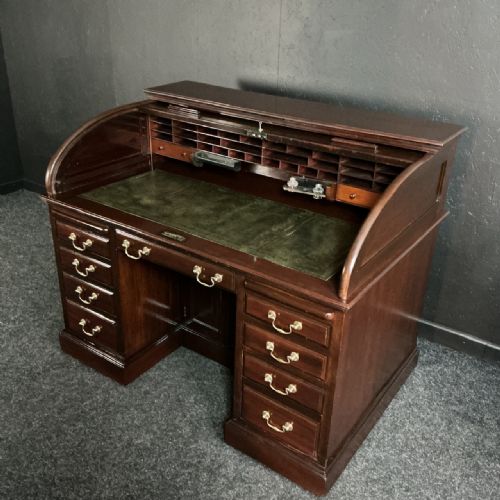


Cylinder Pedestal Table
These cylinder pedestal table examples combine enclosed storage and compact timber engineering, offering a practical surface for writing or bedside use.
Cylinder Pedestal Table
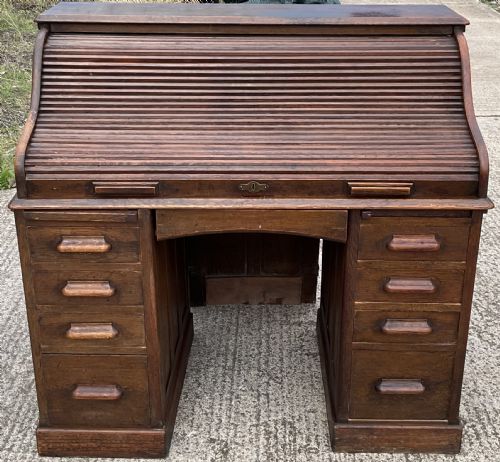
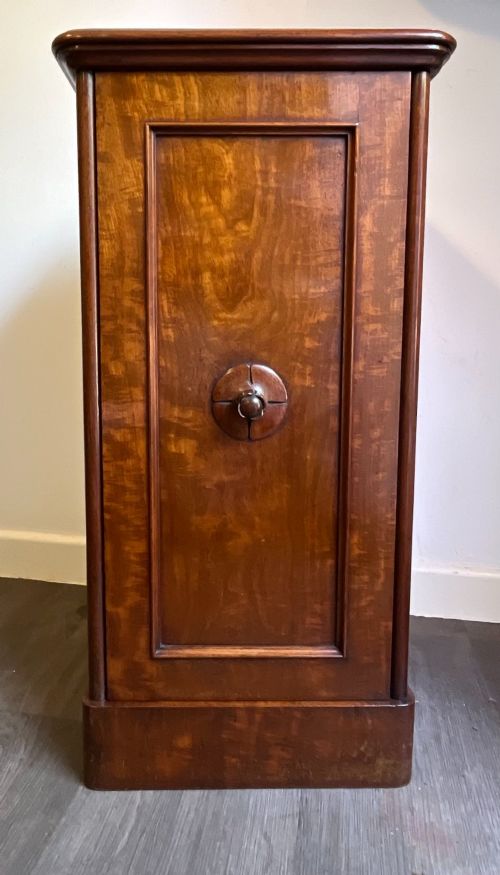
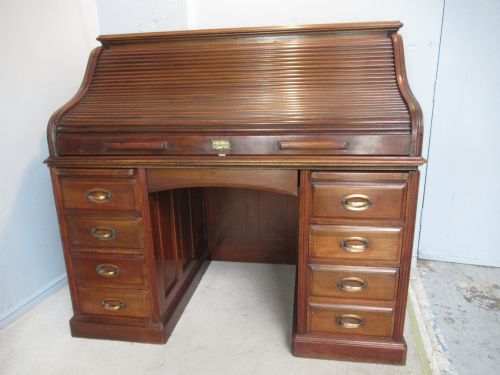
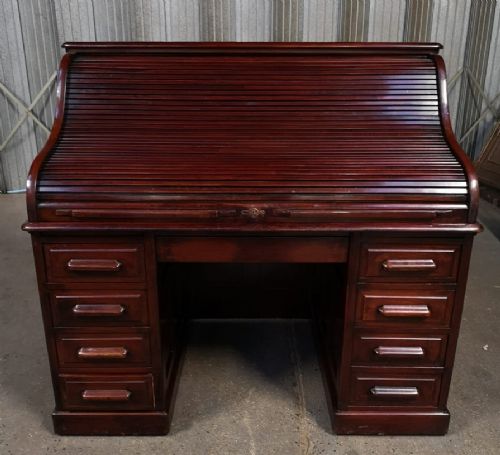
When you search for cylinder pedestal table, you encounter a specialised form of antique furniture that merges cupboard storage with a circular or curved wooden enclosing mechanism. The selection ranges from compact bedside cabinets and pot cupboards to larger desks and writing tables, spanning periods from the Georgian era through to the Edwardian period and nineteen-thirty.
The pieces on this page lean heavily towards nineteenth-century craftsmanship, specifically Victorian and Edwardian iterations alongside Regency and French Empire examples. You will frequently find variants featuring marble tops, tambour shutters, or roll-top actions atop a single central pedestal or cylindrical body.
Forms vary from small bedside tables and bedside cabinets to substantial estate writing desks and typewriter desks. The underlying architecture relies on curved wooden panels that slide to conceal the interior compartments, defining the distinct mechanical character of the group.
How they were made
Cabinet makers utilised dense hardwoods such as mahogany, flame mahogany, walnut, and oak to construct the curving cylindrical bodies and structural pedestals. Flame mahogany veneers provide striking grain patterns across the curved shutters and doors, requiring precise timber selection.
Secondary materials like brass hardware and inset marble slabs appear frequently on the top surfaces, adding weight and a contrasting texture to the timber construction. Tambour strips and sliding roll-top mechanisms demand meticulous joinery to ensure smooth movement along the curved tracks.
Cylinder Pedestal Table Retail Price Guide 2026
Typical asking prices for cylinder pedestal table among the pieces listed under this phrase on Sellingantiques today, from the lower quarter to the upper quarter. They describe what is for sale here now, not the wider market.
Materials recorded across the selection include mahogany, flame mahogany, walnut, oak, brass, leather, and marble.
What varies in quality
The calibre of timber preparation and veneer matching separates standard utility pieces from finer cabinet work. Grain continuity across a rolling cylinder or tambour door indicates superior workshop practice.
Mechanical smoothness of the sliding mechanism determines the functional standard of each piece. Well-fitted brass components and substantial marble tops indicate higher execution levels within the period.
The Cylinder Pedestal Table Glossary
- Cylinder
- A rounded architectural form that defines the enclosed rolling mechanism or main body of these tables. It allows the cabinet door or writing cover to slide smoothly along a curved track.
- Tambour
- A series of narrow wooden slats glued to a canvas or leather backing to form a flexible shutter. This technique enables the wooden surface to bend around tight curves.
- Flame mahogany
- A highly figured veneer cut from the fork of the mahogany tree where the branch meets the trunk. Cabinet makers prize this cut for its dramatic, flame-like patterns.
- Pedestal
- A single central support or column rising from a base to hold the upper cabinet or table top. It provides structural stability while maintaining a compact footprint.
Cylinder Pedestal Table: Frequently Asked Questions
What is a cylinder pedestal table?
It is an item of antique furniture featuring a rounded or cylindrical body, often supported by a central column. These pieces combine cupboard or desk storage with a curved sliding shutter.
They encompass a variety of forms including bedside cabinets, pot cupboards, and compact writing desks dating from the Georgian period to the twentieth century.
How do you use a cylinder bedside cabinet?
The curved door rolls back to reveal internal shelving or storage space for bedside items, keeping the surface orderly. The enclosed design protects the contents from dust.
Many examples feature a marble top which provides a durable, wipe-clean surface suitable for lighting and bedroom accessories.
How do you date an antique roll top desk?
Dating relies on timber selection, construction methods, and hardware styles. Earlier examples from the Georgian and Regency periods utilise solid mahogany and fine hand-cut dovetails.
Later Victorian and Edwardian pieces often incorporate mass-produced brass fittings and different veneering techniques alongside oak or walnut structures.
Are tambour shutters difficult to maintain?
Tambour tracks require occasional cleaning and minor lubrication to ensure the wooden slats glide smoothly without binding. The flexibility comes from the fabric backing behind the slats.
Keeping the timber conditioned in stable humidity prevents the wood from warping within the curved channel.