


Cwpwrdd Press Cupboard
These cwpwrdd press cupboard examples are substantial Welsh country storage furniture built to hold provisions, household linen and dry goods.
Cwpwrdd Press Cupboard
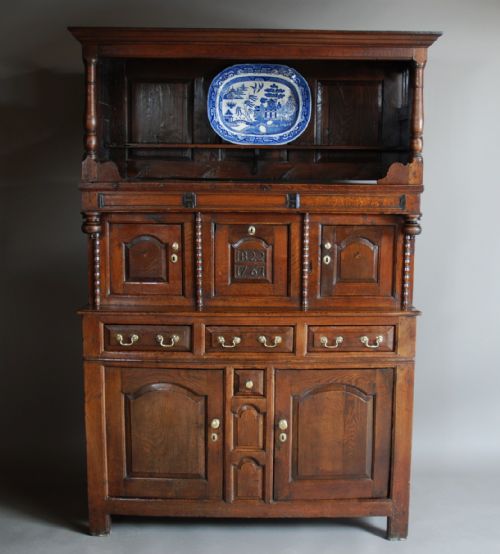
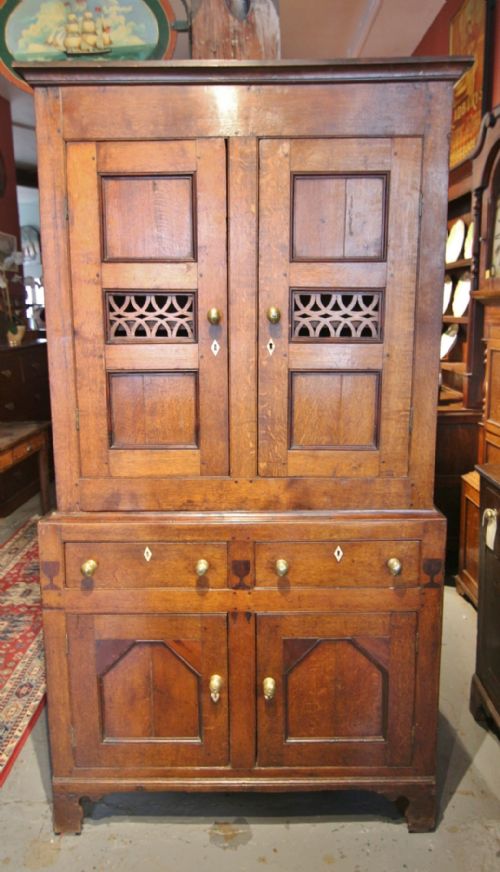
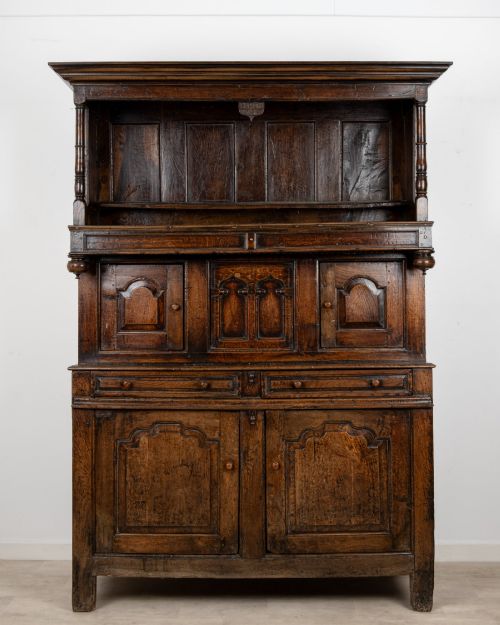
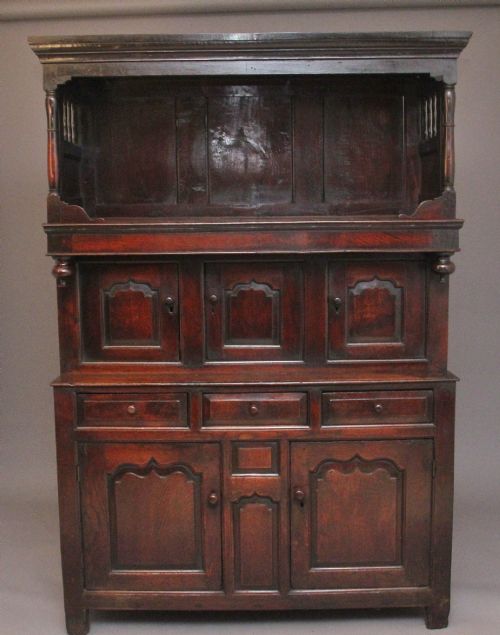
A cwpwrdd press cupboard encompasses traditional Welsh vernacular storage forms, primarily the cwpwrdd deuddarn, the cwpwrdd tridarn, and the bread and cheese food cupboard. These pieces emerge from Welsh country workshops across the seventeenth, eighteenth, and nineteenth centuries, serving domestic utility in rural homes.
The regional variety ranges from two-part deuddarn cupboards and three-part tridarn constructions to glazed cwpwrdd gwydr and vernacular cupboards. Buyers encounter forms rooted firmly in Georgian Welsh country design traditions, often reflecting specific localities such as Snowdonia.
How they were made
Makers utilised solid oak as the primary structural material, occasionally incorporating yew-wood alongside inlays, brass hardware, bone, and iron details. Surfaces display natural timber grain enhanced through age, whilst structural joints rely on traditional carpentry without modern mechanical fasteners.
Carving and panel construction define the regional decorative approach, producing distinct architectural tiers on tridarn and deuddarn forms. Regional joiners shaped these cupboards to withstand heavy daily use whilst maintaining balanced proportions.
Some seventeenth-century cupboards retain traces of early household bread storage, quietly connecting a modern room to centuries of rural domestic life.
What varies in quality
Scale and proportion separate standard regional examples from exceptional ones, with smaller proportions holding particular interest among collectors. The integrity of the timber patination and the survival of original brass or iron hardware determine the overall character.
The crispness of seventeenth-century carved detailing or the precision of inlaid wood accents demonstrates the maker's skill. Pieces retaining their original three-part structure or early surface finish represent the higher echelon of surviving regional output.
The Cwpwrdd Press Cupboard Glossary
- Cwpwrdd deuddarn
- A traditional Welsh two-part press cupboard featuring an upper and lower section. This form provides enclosed shelving for domestic storage.
- Cwpwrdd tridarn
- A three-part Welsh press cupboard incorporating an open middle stage or canopy between the upper cabinet and lower base. It represents a more ambitious architectural scale.
- Cwpwrdd gwydr
- A Welsh glazed display cupboard intended for showing household ceramics and glassware. It bridges the transition from closed provision storage to display furniture.
- Patina
- The surface sheen and colour developed by oak and yew over centuries of handling and polishing. This quality indicates age and authenticity.
- Vernacular
- Regional furniture built by local carpenters using traditional domestic styles rather than metropolitan academic designs. These pieces reflect the functional needs of rural communities.
Cwpwrdd Press Cupboard: Frequently Asked Questions
What is a cwpwrdd deuddarn?
A cwpwrdd deuddarn is a traditional Welsh two-part cupboard designed for household storage in country homes. The structure consists of an upper cabinet placed securely upon a deeper lower base.
These pieces typically feature panelled doors and substantial oak framing, reflecting regional vernacular joinery traditions from the eighteenth and nineteenth centuries.
How do I identify a tridarn?
A tridarn is distinguished by its three-tier construction, featuring an open middle section or canopy supported by turned columns between the upper cabinet and lower cupboard.
This form evolved during the seventeenth and eighteenth centuries in Wales, providing both enclosed storage and an open stage for displaying valued household items.
What woods were used?
Oak forms the primary structural timber for the vast majority of these Welsh cupboards, chosen for its strength and local availability. Makers also utilised yew-wood for specific high-status regional pieces.
Secondary decorative details occasionally incorporate inlaid wood, bone, and iron hardware to accent the main timber frame.
Where were they made?
These cupboards originated in Welsh country workshops, with particular examples associated with regional centres such as Snowdonia. Local carpenters built them to serve the daily needs of rural households.
The regional vernacular styles vary subtly according to the valley or district where the maker practiced.
How do I care for oak?
Maintain antique oak furniture in stable environmental conditions away from direct heat sources and sudden humidity changes. Regular gentle dusting preserves the natural timber surface.
Avoid modern silicon-based polishes, allowing the historic oak surface and natural patination to breathe and age gracefully.