
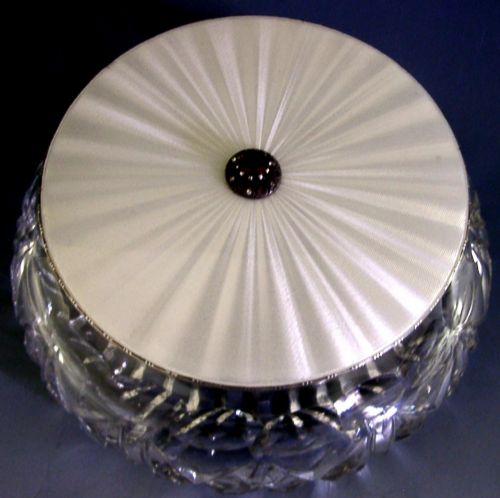


Cut Glass Trinket Pot
A cut glass trinket pot brings weight and sparkle to a dressing table, holding small treasures inside heavy, polished crystal.
Cut Glass Trinket Pot
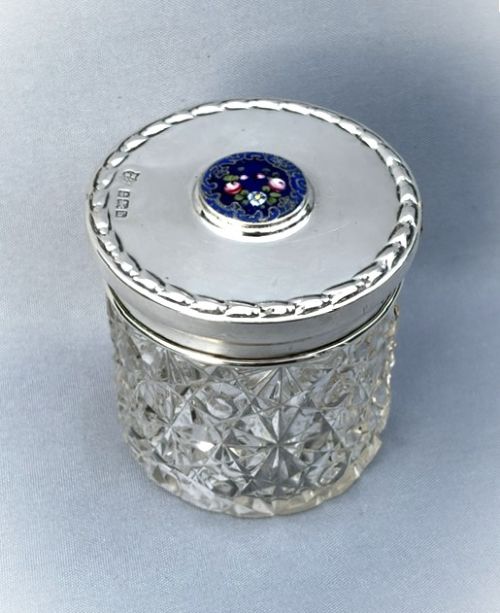
A cut glass trinket pot serves as a dressing table accessory for holding rings, pins, and small cosmetics. These pieces combine heavy glass or crystal bodies with precious metal lids, often finished with coloured enamel or tortoiseshell.
The pieces on this page span several periods, from the Georgian era through Edwardian designs to Art Deco and Mid-Century Modern creations. Edwardian and Art Deco examples appear most frequently, showing distinct geometric or floral motifs on their lids.
Makers fashioned these vessels into various forms, including vanity jars, lidded bowls, heart-shaped boxes, and pot pourri baskets. French and English glassmakers contribute significantly to the variety found here, alongside Birmingham silversmiths.
How they were made
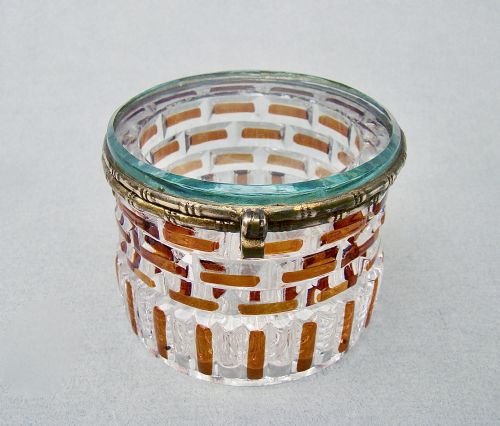
Craftsmen shaped the glass bodies by cutting deep facets, flutes, and geometric patterns into heavy clear or coloured crystal. This cutting creates sharp refraction and gives the glass its characteristic weight and brilliance.
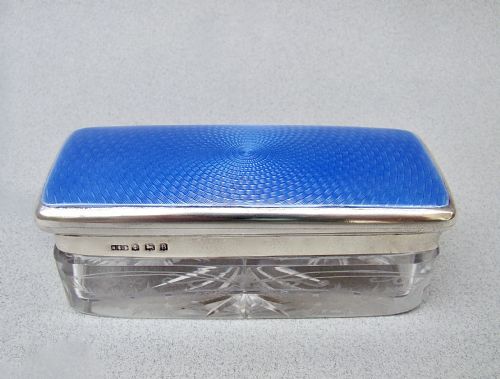
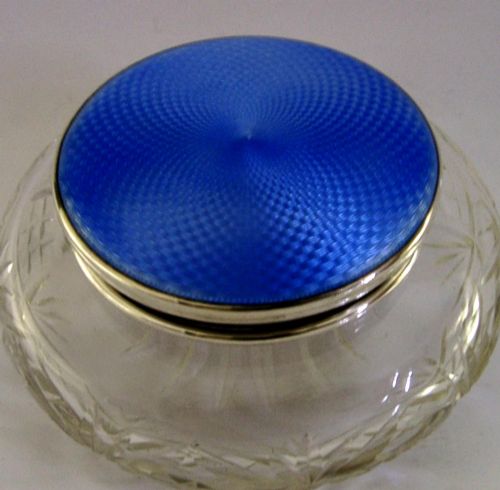
Lids utilise sterling silver mounts, often bearing hallmarks from Birmingham or London that record the year of assay. Artisans frequently applied guilloche enamel, translucent pink or blue enamelling, and polished tortoiseshell directly onto these silver covers.
Object forms include heart-shaped boxes, pot pourri baskets, and lidded bowls alongside standard vanity and dressing table jars.
What varies in quality
The distinction between standard pieces and the finest examples lies in the depth and crispness of the glass cutting. Superior items feature sharp, clean facets that catch the light directly, paired with substantial sterling silver mounts rather than thin rims.
Enamel work and decorative additions also dictate distinction. Intricate guilloche patterns beneath translucent enamel and undamaged tortoiseshell panels show a higher degree of initial craftsmanship and better preservation over time.
Henry Clifford Davis·Jonathan Douglas
The Cut Glass Trinket Pot Glossary
- Guilloche enamel
- A decorative technique where precise geometric patterns are machined into metal before translucent enamel is applied over the top. This lets the underlying pattern show through in coloured light.
- Sterling silver
- An alloy consisting of silver and other metals, predominantly copper, standard for British decorative metalwork. It provides the rigid structure for the lidded mounts on these jars.
- Tortoiseshell
- The mottled brown and amber shell of certain turtle species used historically for decorative luxury items. It appears inset into silver lids on dressing table boxes.
- Cut crystal
- Glass containing lead oxide that increases its weight, clarity, and refractive index before being carved with decorative patterns. It forms the heavy base of many trinket pots.
- Hallmark
- A series of official marks stamped onto precious metal items indicating the maker, assay office, and year of manufacture. Birmingham and London marks are common on these pieces.
Cut Glass Trinket Pot: Frequently Asked Questions
How do I date a silver lidded pot?
Look for the hallmarks stamped into the silver mount on the lid or rim. These typically include a maker's mark, a lion passant for sterling silver, a town mark, and a date letter.
Matching the date letter to assay office tables reveals the exact year the metal component was tested and certified.
What is the difference between glass and cut crystal?
Crystal contains a proportion of lead oxide, which adds substantial weight, increases durability for deep cutting, and disperses light into prismatic colours. Standard glass is lighter and harder to carve deeply.
Running a finger over the facets reveals sharper edges on crystal vessels compared to softer pressed glass alternatives.
How should I clean my trinket pot?
Wash the glass body gently in warm soapy water using a soft cloth, taking care to keep moisture away from any glued tortoiseshell or paper linings. Silver mounts benefit from dry polishing with a soft microfibre cloth rather than liquid dips that damage enamel.
Avoid submerging pieces with enamel or tortoiseshell inserts entirely in water to prevent lifting.
Were these pots made as sets?
Many dressing table jars formed part of larger fitted luggage cases or matching vanity sets intended for wealthy travellers or boudoir use. Multi-piece sets share identical silver decoration and monogramming across several jars and brushes.
Single pots often survive from dismantled sets or were purchased individually as gift items.