

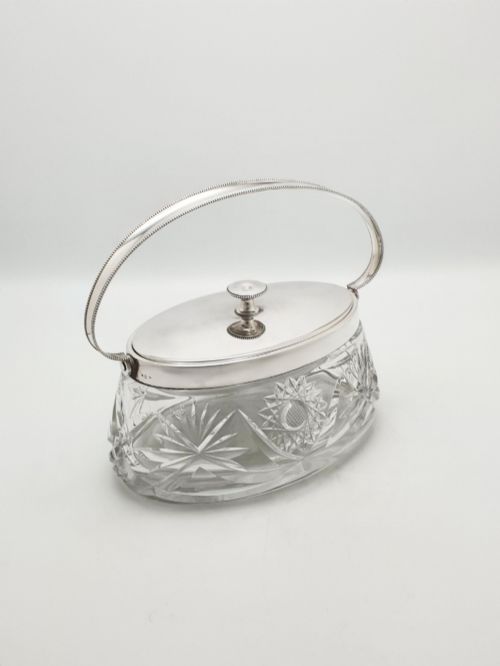


Cut Glass Sweetmeat
These cut glass sweetmeat pieces bring sparkle and weight to a room, holding small confections or anchoring a table with period craftsmanship.
Cut Glass Sweetmeat
When searching for cut glass sweetmeat pieces, buyers encounter covered jars, lidded vases, and open dishes designed for preserves or sugar confections. These objects span from the Georgian era through to the Edwardian period, incorporating Victorian examples alongside specific styles like Jugendstil and Regency.
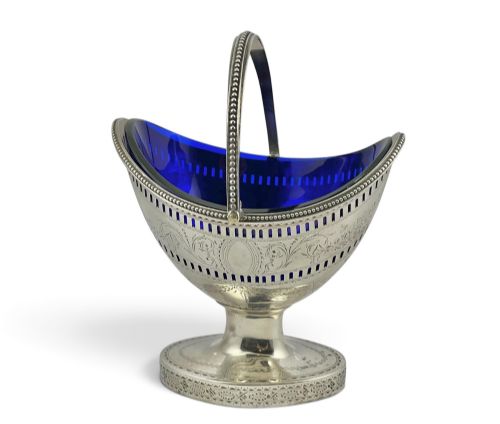
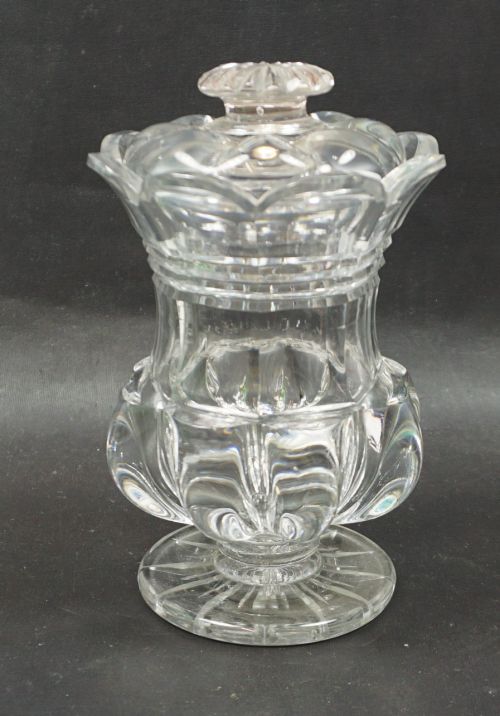
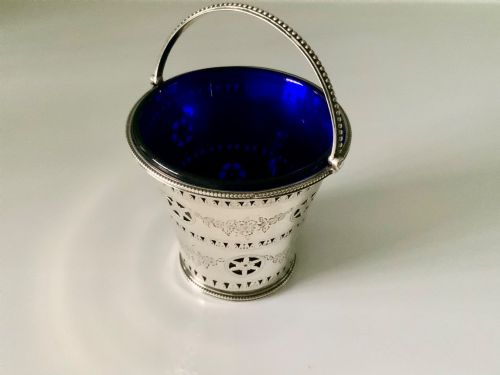
The pieces appearing on this page include biscuit barrels, storage jars, centrepiece bowls, and sugar baskets. Lead crystal and cut glass dominate the selection, often accompanied by silver or silver plate mounts.
Origin details vary across the inventory, with Irish pieces appearing alongside English and continental European examples. Lidded sweetmeat jars and covered candy bowls represent the core form associated with this search phrase.
How they were made
The primary material is heavy lead crystal or cut glass, shaped and faceted by hand to catch candlelight and daylight. Master cutters applied deep geometric or linear patterns across the surface of the vessel.
Metal mounts in silver and silver plate provide structural handles, rims, and swinging Baskets. These metal elements were cast and soldered to fit the glass bodies precisely, particularly on biscuit boxes and sweet dishes.
Cut Glass Sweetmeat Retail Price Guide 2026
Typical asking prices for cut glass sweetmeat among the pieces listed under this phrase on Sellingantiques today, from the lower quarter to the upper quarter. They describe what is for sale here now, not the wider market.
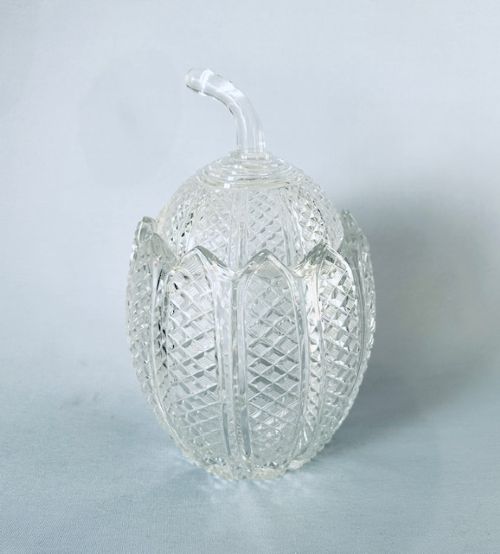
A melon biscuit barrel brings an unexpected slice of horticultural geometry directly to the Victorian dining table.
What varies in quality
Quality rests upon the crispness and depth of the glass cutting, where sharp, clean facets demonstrate superior handwork. Weight and clarity of the lead crystal further distinguish finer vessels from standard production.
The integration of metal components defines the upper tier of these pieces, especially where hallmarked silver or quality silver plating frames the glass. Thick-walled vessels with well-fitted lids show superior craftsmanship.
WMF
The Cut Glass Sweetmeat Glossary
- Cut glass
- Glass decorated by grinding facets or patterns into the surface using rotating wheels. This technique creates sharp edges and high optical brilliance.
- Lead crystal
- Glass containing a high proportion of lead oxide, which increases weight, clarity, and refractive index. It allows deeper and sharper cutting than standard soda-lime glass.
- Sweetmeat
- A traditional term for a small confection, sweet, or preserved fruit. Vessels made for these treats included lidded jars and small bowls.
- Biscuit barrel
- A covered container designed to store dry biscuits or crackers at the dining table. They frequently feature ceramic or glass bodies with metal lids and swing handles.
- Silver plate
- A base metal coated with a thin layer of silver through electroplating or older fusion methods. It provides the appearance of solid silver at a different cost.
Cut Glass Sweetmeat: Frequently Asked Questions
What were cut glass sweetmeat jars used for?
These jars held small sweets, preserved fruits, and luxury confectioneries served at the end of formal meals.
Guests would help themselves from the covered vessels placed centrally on the dining table or sideboard.
How do I date a cut glass sweetmeat jar?
Dating relies on the cutting style, the thickness of the glass, and the design of any associated metal mounts.
Georgian pieces often feature heavier, simpler forms, while Victorian and Edwardian examples show more intricate machine or hand faceting alongside silver plating.
How should I clean antique cut glass?
Wash the glass gently in warm, soapy water using a soft cloth rather than abrasive scrubbers. Remove any silver or metal mounts first if possible to protect plated or solid metal surfaces from prolonged moisture.