

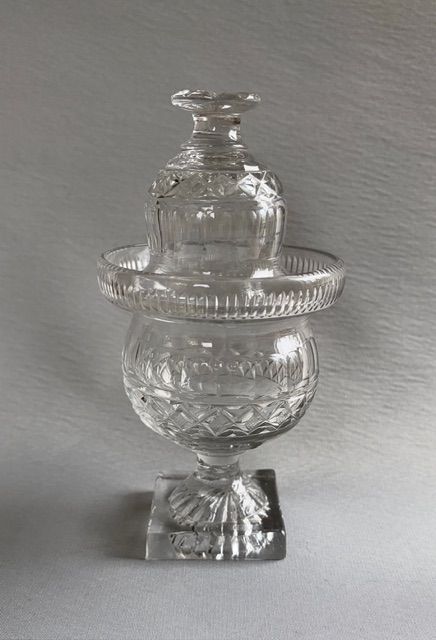
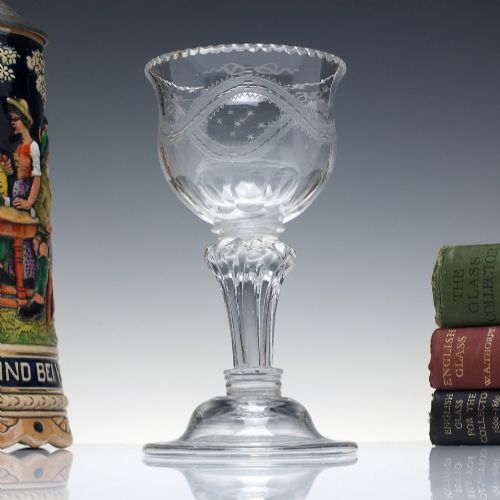
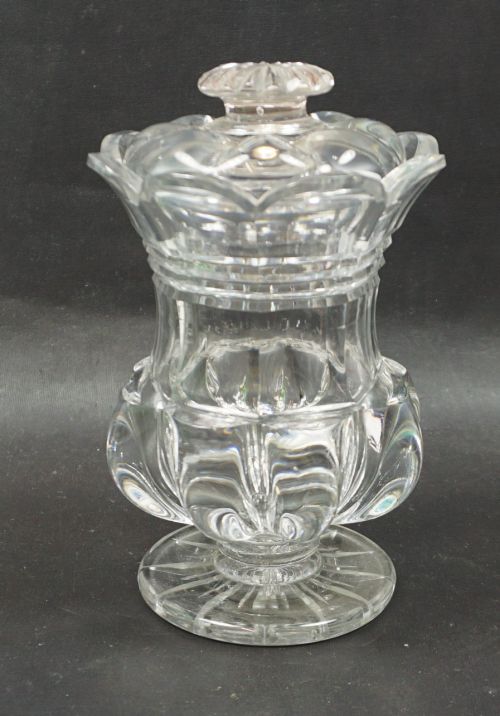
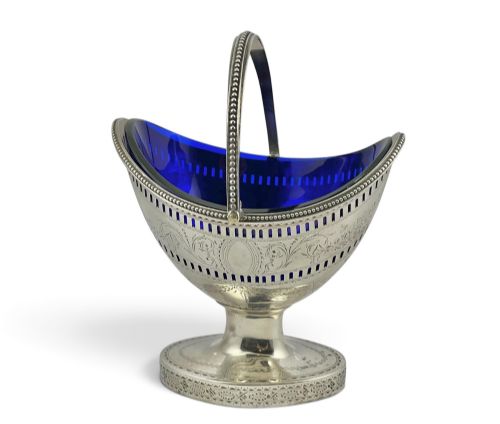


Cut Glass Sweetmeat Glasses
Cut glass sweetmeat glasses are crisp table vessels designed for confectionery, offering bright optical facets that catch candle or daylight.
Cut Glass Sweetmeat Glasses
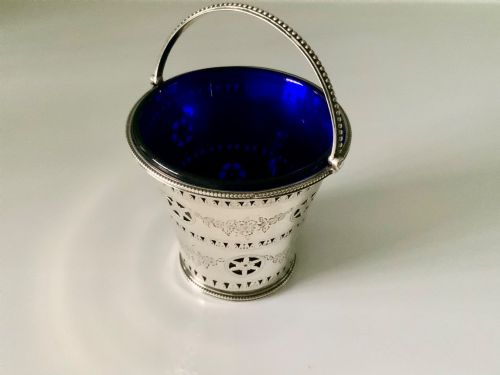
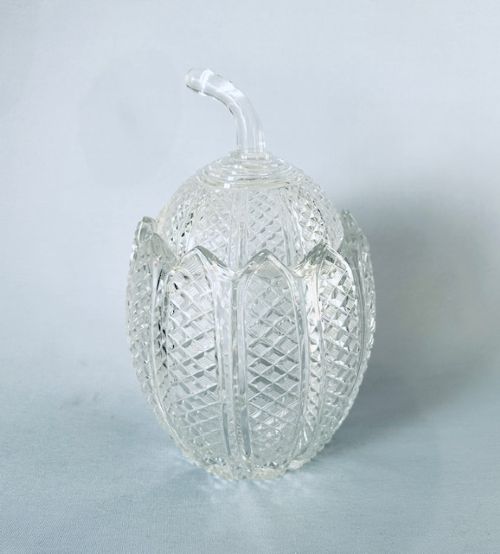
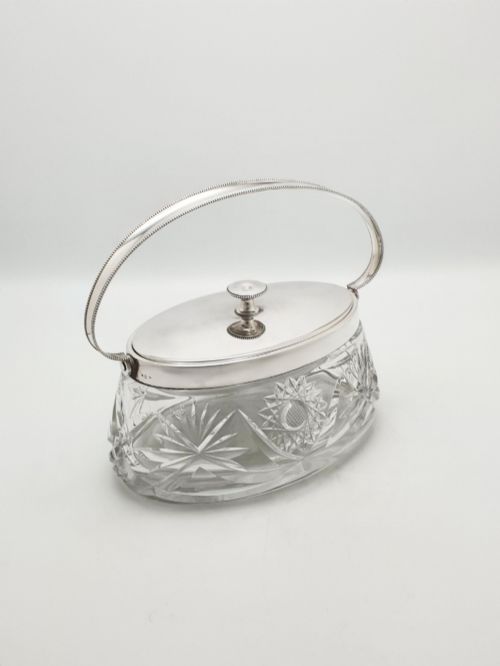
Cut glass sweetmeat glasses encompass various table containers designed for serving sugar, biscuits, or sweet treats, appearing across Georgian, Victorian, and Edwardian periods. Collectors encounter diverse forms ranging from lidded jars and covered candy bowls to sugar baskets and novelty melon biscuit barrels.
The pieces on this page span several decades of British and European domestic dining, utilising lead crystal, cut glass, and ruby glass alongside metal mounts. These items serve as functional table wares and decorative objects, reflecting the shifting dining fashions of the eighteenth and nineteenth centuries.
How they were made
The manufacture of these vessels relies on heavy lead crystal and cut glass, shaped by blowing into moulds or free-blowing before artisans applied deep wheel-cut facets. This cutting technique creates sharp geometric patterns that refract light across the surface of each bowl or jar.
Many examples incorporate fitted silver or silver-plated metalwork, including swing handles, rims, and covers supplied by firms such as WMF or Dutch silversmiths. These metal mounts secure the glass bodies and add structural contrast to the bright crystal.
Cut Glass Sweetmeat Glasses Retail Price Guide 2026
Typical asking prices for cut glass sweetmeat glasses among the pieces listed under this phrase on Sellingantiques today, from the lower quarter to the upper quarter. They describe what is for sale here now, not the wider market.
The listings on this page span the Georgian, Victorian, and Edwardian eras, utilising cut crystal, ruby glass, and silver plate.
What varies in quality
Quality in these vessels rests upon the crispness of the wheel-cutting and the weight of the lead crystal, where deeper and sharper facets produce superior brilliance. Finer examples display precise symmetry in their pattern work and substantial metal fittings that sit flush against the glass.
The presence of matching lids or original silver and silver-plated mounts distinguishes superior vessels from simpler utilitarian jars. Balance in proportion and clarity in the glass body further elevate a piece above standard domestic production.
WMF
The Cut Glass Sweetmeat Glasses Glossary
- Sweetmeat glass
- A vessel specifically formed for serving small sweet confections, nuts, or preserved fruits during formal dining. These pieces often feature pedestal feet and matching covers.
- Lead crystal
- A heavy variety of glass containing lead oxide, which increases refractive index and makes the material softer for deep wheel-cutting. It provides the characteristic weight and ring associated with fine tablewares.
- Turnover bowl
- A form of open bowl featuring a folded or turned rim, commonly found in eighteenth-century Irish and English glass production. This shaping technique strengthens the upper edge while creating a decorative profile.
- Biscuit barrel
- A covered container designed for storing dry biscuits on the dining table or sideboard, frequently fitted with a metal lid and swing handle. They appear in cut glass and novelty shapes during the Victorian era.
Cut Glass Sweetmeat Glasses: Frequently Asked Questions
What were sweetmeat glasses used for?
These vessels held sweet confections, sugar plums, and preserved fruits served at the conclusion of formal meals. They sat centrally on the dining table for guests to help themselves.
Over time, their domestic role shifted, and many surviving examples transitioned into general decorative jars or biscuit containers as dining habits changed.
How do I date an antique glass jar?
Dating relies on examining the weight of the metal, the style of the cutting, and the tint of the glass itself. Georgian and eighteenth-century pieces often display heavier pontil marks and softer metal colours.
Victorian and Edwardian examples introduce sharper machine-cut facets and standardised silver-plated mounts, occasionally accompanied by maker marks or registration numbers.
Are sweetmeat glasses dishwasher safe?
Antique glass and delicate silver-plated mounts require careful hand washing in warm, soapy water. Thermal shock can easily crack eighteenth and nineteenth-century lead crystal.
Harsh detergents and mechanical dishwashers will damage the polished surface of the glass and ruin any silver plating on associated handles and rims.
How can I tell lead crystal from normal glass?
Lead crystal is noticeably heavier than standard soda-lime glass and produces a resonant, lingering bell-like tone when gently tapped. The material also exhibits a higher refractive index, making cut facets appear sharper and brighter.
Older pieces may show subtle surface wear on the base from sliding across wooden sideboards over generations.