

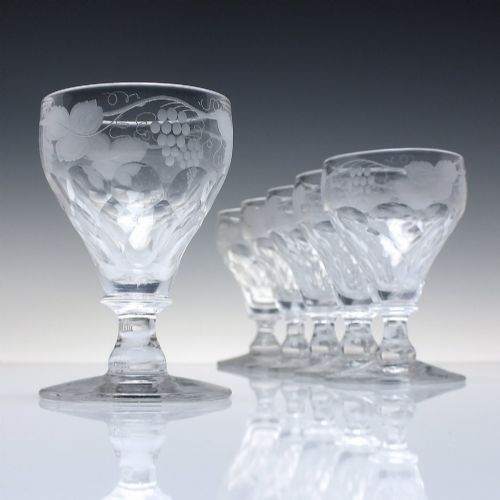
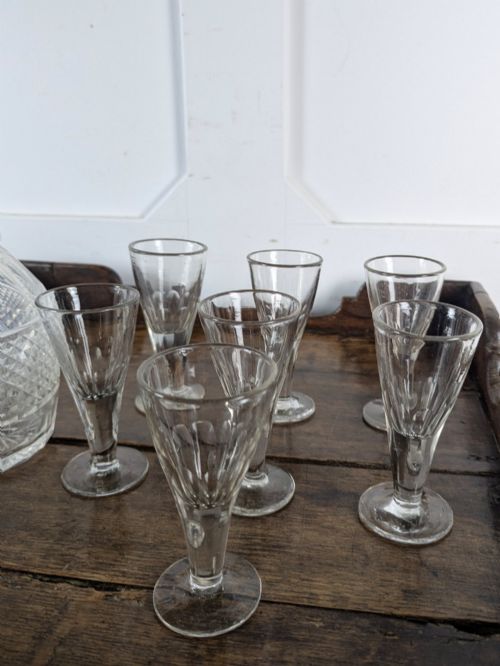


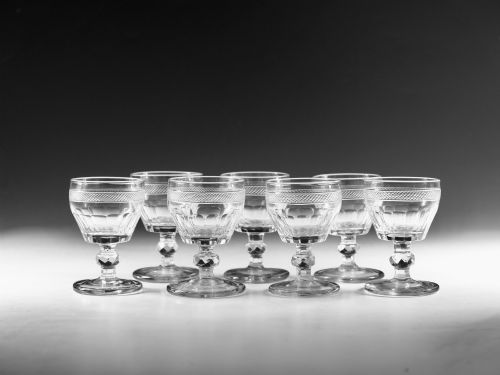


Cut Glass Sherry Glass
These cut glass sherry glass pieces are bright drinking vessels designed for fortified wines, offering crisp brilliance and satisfying weight for the table.
Cut Glass Sherry Glass
A cut glass sherry glass provides a traditional vessel for serving sherry, port, and cordials at the table. These pieces draw attention for their sparkling facets and pleasing proportions.
The selections on this page span the Georgian, Victorian, and Edwardian eras, alongside later twentieth-century examples. Most meet the eye as stemware or flutes, frequently accompanied by matching decanters and drinks sets.
Objects range from early nineteenth-century Irish designs to French crystal sets enriched with gold leaf. Buyers encounter both single serving vessels and matched sets intended for formal entertaining.
Materials and Manufacture
The primary material across these pieces is glass, frequently noted as lead crystal or clear glass, which permits deep, sharp cutting and exceptional refraction of light. Certain items incorporate uranium glass or coloured variants to achieve distinct visual effects.
Decoration is achieved through wheel-cutting, thumb-cutting, and etching to pattern the surface with geometric facets or delicate motifs. Additional components involve silver plate mounted on decanters and spirit bottles, as well as applied twenty-four-carat gold leaf.
Cut Glass Sherry Glass Retail Price Guide 2026
Typical asking prices for cut glass sherry glass among the pieces listed under this phrase on Sellingantiques today, from the lower quarter to the upper quarter. They describe what is for sale here now, not the wider market.
Certain Victorian wine glasses contain uranium, causing them to glow an unmistakable bright green under ultraviolet light.
Judging Quality and Execution
Quality rests upon the crispness of the cutting and the weight of the metal. Finer examples display deep, clean facets that catch the light evenly without blurring or softness.
The balance of the stem and the clarity of the material distinguish superior vessels. Matched sets with uniform thickness and consistent colour across every piece command greater attention from collectors.
Saint Louis
The Cut Glass Sherry Glass Glossary
- Thumb-cut
- A decorative technique featuring shallow, concave depressions shaped like a thumbprint, often aligned in rows around the bowl or base of a glass.
- Lead crystal
- Glass containing metallic oxide that increases weight, brilliance, and the softness required for deep wheel-cutting.
- Cordial glass
- A small stemmed vessel designed for drinking thick, sweet liqueurs or fortified wines after a meal.
- Etched glass
- A surface decorated by applying acid or mechanical abrasion to create frosted or translucent patterns.
- Decanter set
- A matched grouping consisting of a serving bottle and associated drinking vessels presented together on a tray.
Cut Glass Sherry Glass: Frequently Asked Questions
What is a cut glass sherry glass?
A cut glass sherry glass is a small stemmed drinking vessel featuring faceted or engraved geometric patterns designed to enhance the appearance of fortified wine. These items provide both decorative appeal and traditional utility for formal dining.
Such pieces are typically encountered in historical styles ranging from the Georgian period through the Edwardian era. They often appear as part of larger stemware collections or matched decanter sets.
How were antique sherry glasses used?
Historically, these glasses served to hold sweet fortified wines offered to guests after dinner or during formal afternoon calls. Their compact size suited the modest measures poured for stronger vintages.
They formed part of larger drinks services kept in sideboards or displayed on silver-plated trays. Today, owners continue to use them for aperitifs and dessert wines.
How do I tell Victorian glasses apart?
Victorian examples frequently display heavier proportions, thumb-cuts, or pressed and etched botanical motifs. The clarity of the material and the style of the cutting reflect the manufacturing methods of the nineteenth century.
Comparing the stem formation and bowl shape helps distinguish these mid-to-late nineteenth-century pieces from earlier Georgian designs or later Edwardian productions.
Can I use these glasses daily?
Many collectors prefer to use antique glassware for special occasions rather than everyday dining to preserve the delicate rims and polished surfaces. Hand washing in warm water helps protect historical materials.
Sturdy lead crystal pieces tolerate careful handling well, provided they are kept away from modern dishwashers and sudden temperature changes.